
Anthaxia candens
Anthaxia candens
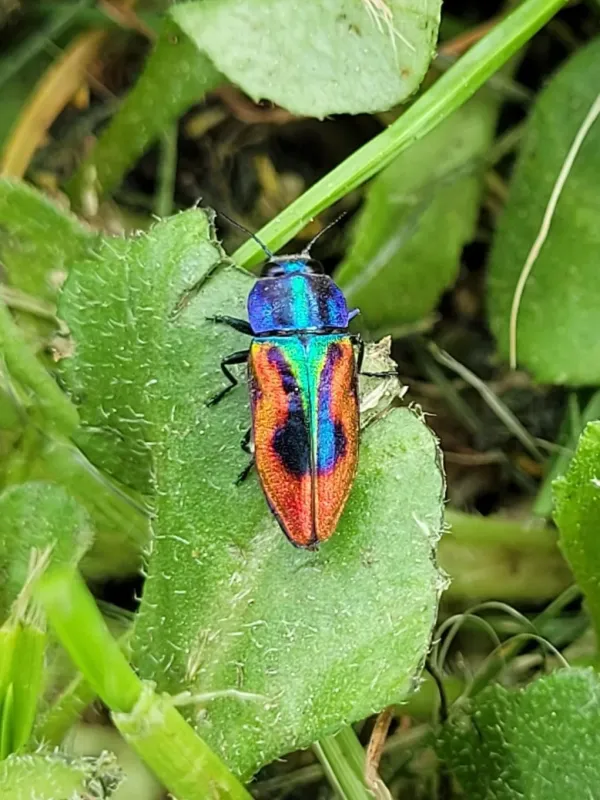
Description
How to identify
Anthaxia candens is a species of jewel beetle belonging to the family Buprestidae, within the order Coleoptera. Adult beetles are typically 7 to 11 millimeters in length.
They are characterized by an elongated body shape and a brilliant metallic sheen, which can range from copper-red to golden-green in color.
The larvae are legless with a flattened thorax and a creamy-white appearance, specially adapted for boring through the cambium and wood of host plants.
Adult beetles are diurnal, often found basking on leaves and branches in sunny, well-exposed areas of an orchard during the peak of the day.
The life cycle of this insect usually spans from one to two years, depending heavily on environmental conditions and the overall health of the host tree.
What it damages
This pest primarily targets stone fruit species, including cherry, sweet cherry, plum, apricot, and almond trees, causing significant physiological stress.
Damage is primarily inflicted by the larvae, which create winding galleries under the bark, destroying the cambium and the outer layers of the wood.
By disrupting the flow of water and nutrients, the feeding activity of the larvae weakens the tree, often leading to the dieback of individual branches.
Severe infestations can result in the total death of young trees, as the vascular system is effectively girdled by the larvae's feeding tunnels.
While adult beetles may feed on foliage and buds, this damage is generally minor compared to the structural destruction caused by the larval stage.
When it appears
Adult beetles typically emerge from their overwintering sites in late spring or early summer, coinciding with the flowering phase of stone fruit trees.
Maximum adult activity occurs during hot, sunny weather, when they mate and lay eggs in bark crevices or existing mechanical wounds on the tree trunk.
Upon hatching, the larvae immediately tunnel into the bark, where they feed throughout the remainder of the growing season and through the following year.
Overwintering occurs in the larval stage within the wood of the host tree, providing protection against external environmental factors.
Pupation takes place under the bark or within the wood in the spring, leading to the emergence of the next generation of adults.
Signs of infestation
One of the earliest signs of infestation is the appearance of small, D-shaped exit holes on the bark where adult beetles have emerged.
Gummosis, or the secretion of resin from the bark, is a common reaction of the tree to the tunneling activities of the larvae.
Visible symptoms include the premature yellowing and dropping of leaves, followed by the progressive dieback of specific branches or the entire canopy.
Peeling back dead bark often reveals extensive galleries filled with "frass" (a mixture of wood dust and larval excrement), indicating long-term infestation.
The tree appears generally weakened, with stunted growth, sparse foliage, and a lack of vigor compared to uninfested specimens.
Control measures
Effective management begins with sound horticultural practices, as the beetle preferentially targets trees that are already stressed or neglected.
- Pruning and destroying infested branches to reduce the local population of larvae.
- Applying whitewash to tree trunks to deter females from laying eggs in bark crevices.
- Optimizing irrigation and fertilization schedules to maintain vigorous tree health and natural defenses.
During the adult flight period, targeted applications of contact or systemic insecticides can be used to prevent egg-laying on the bark surface.
Monitoring using light or pheromone traps can help determine the exact timing for control measures to ensure maximum efficacy.
Taxonomy
- Latin name
- Anthaxia candens
- Order
- Coleoptera (beetles)
- Family
- Buprestidae
- EPPO code
- ANTXCA
Discussion
No discussions yet — be the first.