
Anthaxia beetle
Anthaxia
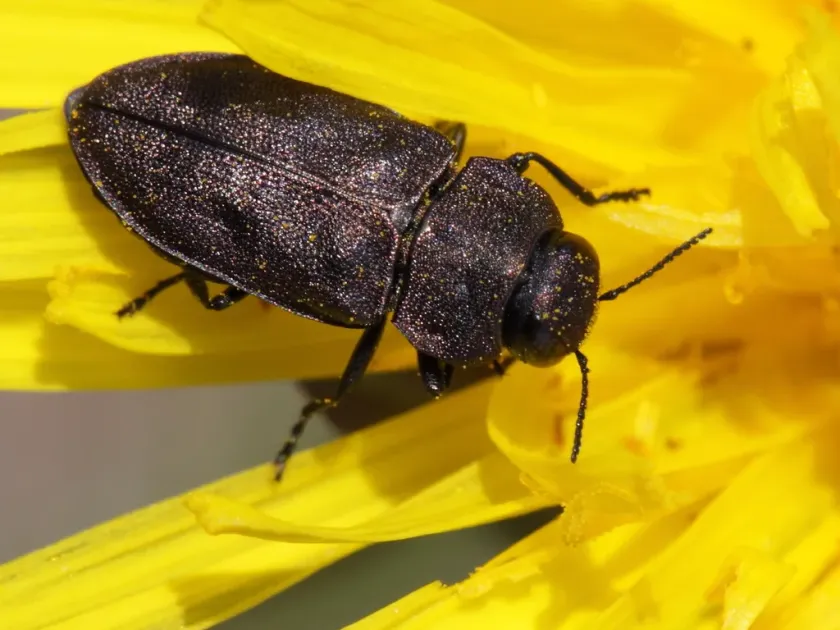
Description
How to identify
Beetles of the genus Anthaxia are small, typically ranging from 4 to 10 mm in length. They often exhibit a distinct metallic sheen, frequently with green, bronze, or copper reflections, which serves as a camouflage against bark and leaves.
The body is elongated and flattened, a characteristic shape for the Buprestidae family. They possess short, serrated antennae, which serve as a primary diagnostic feature for field identification of the species.
Adults are diurnal insects and are frequently found on the flowers of various plants, where they feed on pollen and petals, usually causing no significant harm to the flowers themselves.
The larvae are legless, whitish, and have an enlarged thoracic segment. They have a cryptic lifestyle, boring tunnels deep into plant tissues, which makes early detection extremely difficult.
Systematically, the genus belongs to the order Coleoptera and the family Buprestidae. Many species within this genus are specialized pests that target various trees and shrub species worldwide.
What it damages
The primary damage is caused by the larvae, which tunnel under the bark and destroy the cambium, phloem, and outer wood layers. This disrupts the tree's vascular system, leading to the gradual dieback of individual branches or the entire tree.
Affected crops primarily include fruit trees of the Rosaceae family: apples, pears, plums, cherries, almonds, and peaches. Stressed or previously weakened trees are particularly susceptible to infestation.
In forestry and ornamental landscaping, Anthaxia beetles can infest various deciduous species, including oak and beech, favoring trees that are already suffering from physiological stress.
A high population density of these pests in an orchard can result in widespread branch dieback, significantly reducing fruit yield and potentially killing young saplings in nursery environments.
The extent of damage depends on the tree's health: strong trees may sometimes "drown" the larvae with sap, but chronic infestations inevitably sap the tree's vitality over several seasons.
When it appears
Adult emergence typically begins in late spring and continues throughout the summer months, specifically May, June, and July. During this time, they mate and lay eggs in bark crevices.
The lifecycle of one generation usually lasts between one and two years, depending heavily on the regional climate and the quality of the host plant's wood.
Larvae develop beneath the bark and within branches almost year-round, but feeding activity peaks during the spring and summer when the tree's sap flow is most active.
They overwinter most commonly as larvae inside their excavated galleries within the wood, which provide excellent protection against cold temperatures and harsh weather conditions.
Pupation occurs in the spring or early summer within specialized cells located just under the bark, after which the new generation of adult beetles emerges through characteristic oval-shaped holes.
Signs of infestation
The primary visual sign of infestation is the presence of characteristic emergence holes on the surface of tree trunks or branches, which appear as distinct, flattened, oval shapes.
Gradual wilting and death of individual branches during the height of the growing season often indicate a disruption of water and nutrient transport caused by the larval tunneling.
At entry points, one might notice bark discoloration or localized "weeping" of sap, as the tree attempts to seal off the damaged areas or restrict the pest's movement.
When the bark is removed from infected areas, winding galleries packed with frass (fine wood dust and larval excrement) are clearly visible, indicating the path taken by the larvae.
General tree decline, sparse foliage, premature yellowing, and leaf drop are all secondary symptoms suggesting that wood-boring pests have established themselves inside the trunk or branches.
Control measures
Cultural practices form the foundation of management: it is essential to promptly remove and burn dry or infested branches to prevent the beetles from spreading throughout the orchard.
Maintaining high orchard standards, including proper irrigation, fertilization, and whitewashing trunks with lime solution, reduces the tree's attractiveness for egg-laying.
Chemical control is most effective during the period when adults emerge from hibernation and begin feeding. Targeted application of systemic or contact-stomach insecticides is recommended.
- Implement timely sanitary pruning and disposal of infested wood.
- Apply trunk whitewash as a preventative measure against bark damage.
- Use approved insecticides during peak adult flight periods.
In large-scale or commercial orchards, pheromone traps can be used to monitor population numbers and determine the precise timing for necessary protective spray treatments.
Taxonomy
- Latin name
- Anthaxia
- Order
- Coleoptera (beetles)
- Family
- Buprestidae
- EPPO code
- ANTXSP
Discussion
No discussions yet — be the first.