
Sculptured Staphylinid Beetle
Anotylus sculpturatus
Description
How to identify
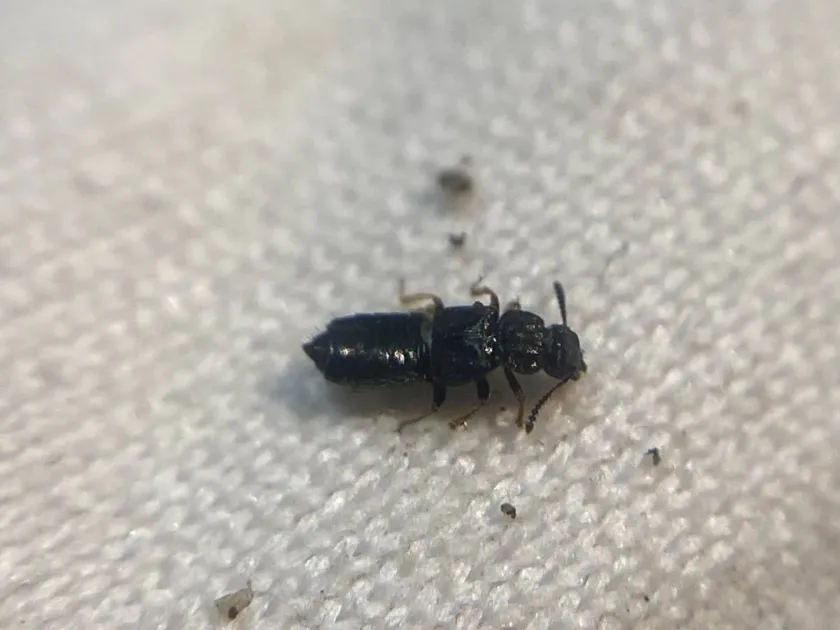
The sculptured staphylinid beetle (Anotylus sculpturatus) is a small rove beetle, typically measuring between 3 to 4 mm in length. Its body is elongated and dark, usually black or brownish, with a distinct matte texture caused by fine punctures on the pronotum.
Like other Staphylinidae members, this beetle features shortened elytra that leave a significant portion of its segmented abdomen exposed. The antennae consist of 11 segments, ending in a subtle club, which is a key diagnostic feature for precise identification.
The larvae are whitish, slender, and worm-like, adapted for mobility within moist soil or organic debris. They possess well-developed mouthparts capable of damaging tender plant tissues.
To identify them in the field, agronomists often use a hand lens to inspect the soil surface near the base of the plant. These beetles are skittish and quickly retreat into soil crevices when disturbed.
The species belongs to the Coleoptera order. While many rove beetles are predatory, Anotylus sculpturatus is known for its ability to transition to feeding on organic matter and living plant tissues in high-humidity agricultural environments.
What it damages
This beetle primarily poses a threat to seedlings and young vegetable crops grown in greenhouses or nurseries. Crops such as tomatoes, cucumbers, and lettuce are particularly susceptible to their feeding habits.
Adults and larvae cause mechanical damage to the root collar of young plants. By chewing small cavities into the stem, they weaken the plant and disrupt the transport of nutrients and water, often leading to sudden wilting.
Beyond direct feeding, the wounds inflicted by the beetles serve as entry points for various soil-borne pathogens, including fungi and bacteria that cause root and stem rots.
The severity of the damage is closely linked to soil moisture levels and the presence of decomposing organic material, which provides an ideal habitat and supplementary food source for the beetles.
In high-density greenhouse production, a population outbreak can cause significant economic losses by destroying a large percentage of the nursery stock within a short timeframe.
When it appears
Activity typically begins in early spring, once soil temperatures rise to 10–12 degrees Celsius. The species thrives in environments with high moisture and stable temperatures ranging between 18 and 24 degrees Celsius.
Under greenhouse conditions, multiple generations can occur within a single growing season. Their population dynamics are highly responsive to irrigation patterns, with activity increasing immediately after watering.
During the summer months, if the soil dries out, the beetles retreat deeper into the soil or find cool, moist refugia. Their activity level spikes again with the return of frequent irrigation.
As autumn approaches, the beetles prepare for overwintering. They seek shelter in compost piles, accumulated plant debris, and the structural cracks of greenhouse frames.
The ability of adult beetles to survive in protected locations ensures that they remain a recurring pest in subsequent growing seasons if sanitation measures are not implemented.
Signs of infestation
The most common sign of infestation is sudden plant wilting that occurs despite adequate watering. Closer inspection of the root collar reveals pitted or eaten areas indicating pest activity.
Adult beetles can be spotted moving on the soil surface during evening hours or under damp debris. Their movement is rapid and characteristically nervous compared to other soil-dwelling insects.
Presence in the soil can be confirmed by placing damp cardboard strips on the soil surface, which the beetles use as shelter, or by washing soil samples to extract the larvae.
Secondary infections are common indicators; when the base of a stem shows soft decay or mold, it is often a sign that insects have already compromised the plant's natural defenses.
Uniformly slow growth in a seedling tray, contrasting with healthy areas of the nursery, often points to a concentrated population of these beetles feeding on the roots below ground.
Control measures
Strict sanitation is the first line of defense. Sterilizing greenhouse soil and ensuring that compost is fully decomposed before use prevents the introduction of overwintering populations.
Managing soil moisture is critical; avoiding excessive or uneven watering limits the favorable microhabitat these beetles require to complete their life cycle.
Biological control using entomopathogenic nematodes (such as Steinernema feltiae) is highly recommended, as it effectively targets the larval stages within the growing medium.
If chemical control is necessary, use registered soil-applied insecticides in accordance with label instructions, focusing on applications that target the soil-surface layer.
- Maintaining good ventilation to keep surfaces dry
- Cleaning equipment and trays between planting cycles
- Using yellow sticky traps to monitor adult flight
- Removing all dead plant debris immediately after harvest
Taxonomy
- Latin name
- Anotylus sculpturatus
- Order
- Coleoptera (beetles)
- Family
- Staphylinidae
- EPPO code
- ANOYSC
Discussion
No discussions yet — be the first.