
Orange-striped oakworm
Anisota virginiensis
Description
How to identify
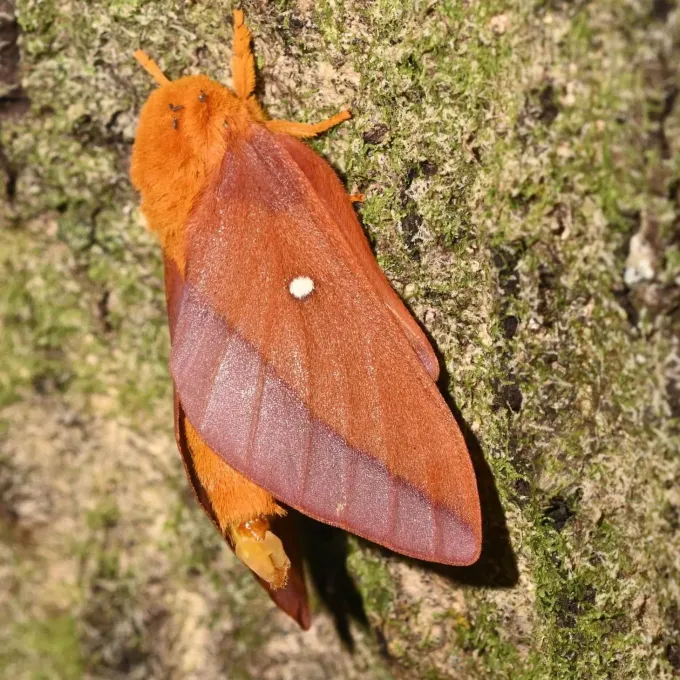
The orange-striped oakworm (Anisota virginiensis) belongs to the family Saturniidae. The adults are medium-sized moths with orange-brown wings, typically active during the summer months.
The caterpillars are highly distinctive, characterized by a dark body with yellow longitudinal stripes and prominent horn-like projections on the thoracic segments.
Females lay eggs in large clusters on the underside of host leaves, and newly hatched larvae initially feed gregariously, which makes them easier to spot early in the season.
The life cycle consists of complete metamorphosis: egg, larva, pupa, and adult. There is generally one generation per year across most of its North American range.
The pupal stage occurs in the soil or leaf litter beneath the host tree, where the insect overwinters, remaining dormant until the following spring.
What it damages
This species primarily feeds on various species of oak (Quercus), making it a significant defoliator in deciduous forests and urban landscaping.
Secondary host plants may include hazel and other members of the beech family, especially when oak foliage is scarce or population pressure is high.
Young larvae skeletonize the leaf surfaces, while mature caterpillars consume entire leaves, often leaving only the midribs and larger veins intact.
Heavy infestations can lead to complete defoliation, which severely stresses the trees, reducing their vigor and ability to store carbohydrates for the following year.
Repeated defoliation by this pest can make trees susceptible to opportunistic diseases and attacks by secondary wood-boring insects, potentially leading to tree mortality.
When it appears
Adult moths emerge and are active during the summer, typically peaking in June and July, when mating and egg-laying occur in the tree canopy.
Larval feeding is most intense during late summer and early autumn, specifically from August through September, as the caterpillars grow rapidly before pupation.
Once the feeding period concludes in the fall, the larvae descend to the ground to pupate in the leaf litter, entering a state of diapause for the winter.
Field scouting for the caterpillars should be intensified during August, as this is when their feeding damage becomes most apparent and significant.
Favorable weather conditions, such as warm, moist summers, can accelerate larval development and increase the survival rate of the population.
Signs of infestation
The presence of frass (caterpillar excrement) accumulating on the ground or on lower foliage is often the first visible sign of an infestation in the upper canopy.
Skeletonized leaves and partial defoliation are classic indicators that active feeding by larval colonies is occurring within the tree's branches.
Large, visible aggregations of larvae feeding together on leaves are a reliable sign of their presence, especially before the caterpillars disperse to feed individually.
Thinning of the crown and premature browning of leaves are advanced signs of severe infestation that necessitate immediate management actions.
- clusters of caterpillars on the underside of leaves
- notable amounts of frass on the ground
- noticeable defoliation of oak branches
Control measures
Biological control using formulations of Bacillus thuringiensis (Bt) is highly effective and recommended for treating young larvae while minimizing environmental impact.
For small ornamental trees or landscape settings, manual removal of caterpillar clusters can effectively manage local populations before they spread.
Maintaining a healthy environment that supports natural predators, such as parasitoid wasps and birds, is a key component of integrated pest management for this species.
Soil cultivation or the removal of heavy leaf litter in late fall may help destroy overwintering pupae, although this is usually impractical for large forest areas.
Chemical insecticides should be reserved for severe outbreaks and applied with caution to ensure the protection of beneficial insects and the surrounding ecosystem.
Taxonomy
- Latin name
- Anisota virginiensis
- Order
- Lepidoptera (butterflies)
- Family
- Saturniidae
- EPPO code
- ANITVI
Discussion
No discussions yet — be the first.