
Oak gall wasp
Andricus testaceipes
Description
How to identify
The oak gall wasp (Andricus testaceipes) is a small hymenopteran insect belonging to the family Cynipidae. It is widely known for its ability to manipulate host plant tissues to create specialized structures known as galls.
Adult wasps are tiny, measuring only a few millimeters in length. Their dark bodies make them inconspicuous, and they are rarely seen by the casual observer, despite the visible damage they cause to their host trees.
The life cycle of this species is complex and often involves an alternation of generations, where different broods may produce different types of galls or utilize different parts of the host plant.
The formation of the gall is triggered by the secretion injected by the female during oviposition, which forces the oak tree to create a protective, nutrient-rich environment for the developing larvae.
Inside these protective structures, the larvae are shielded from most environmental hazards and predators, ensuring a high survival rate until they emerge as adults.
What it damages
The primary host for Andricus testaceipes is the oak tree, particularly the pedunculate oak. The pest affects young shoots, petioles, and leaf veins by inducing gall growth.
This redirection of plant resources is detrimental because the energy that would normally support growth or nutrient storage is instead diverted to the maintenance and development of the galls.
In nursery settings, heavy infestations on young saplings can be significant, as they can stunt growth and distort the development of the primary canopy structure.
While mature, healthy oak trees generally tolerate these wasps well, chronic and severe infestation may weaken the tree's vigor and make it more susceptible to other stressors or diseases.
The aesthetic impact on ornamental oaks is also a concern, as distorted leaves and abundant gall formations can significantly reduce the visual appeal of park or garden trees.
When it appears
Adult emergence typically occurs in the spring, coinciding with the flushing of new oak buds, which provides the necessary soft tissue for egg-laying.
The gall development process takes place throughout the summer months. During this period, the larvae remain encased within the plant tissues, consuming the interior of the gall.
By late summer or early autumn, the galls become lignified and hardened. They often remain on the branches or fall with the leaves to the ground, depending on the wasp's life cycle stage.
The insect typically overwinters in the larval or pupal stage inside the hardened gall, which provides excellent insulation against freezing temperatures during the winter.
Understanding the timing of these life stages is crucial for developing effective management strategies, particularly for those looking to prevent spread in susceptible landscapes.
Signs of infestation
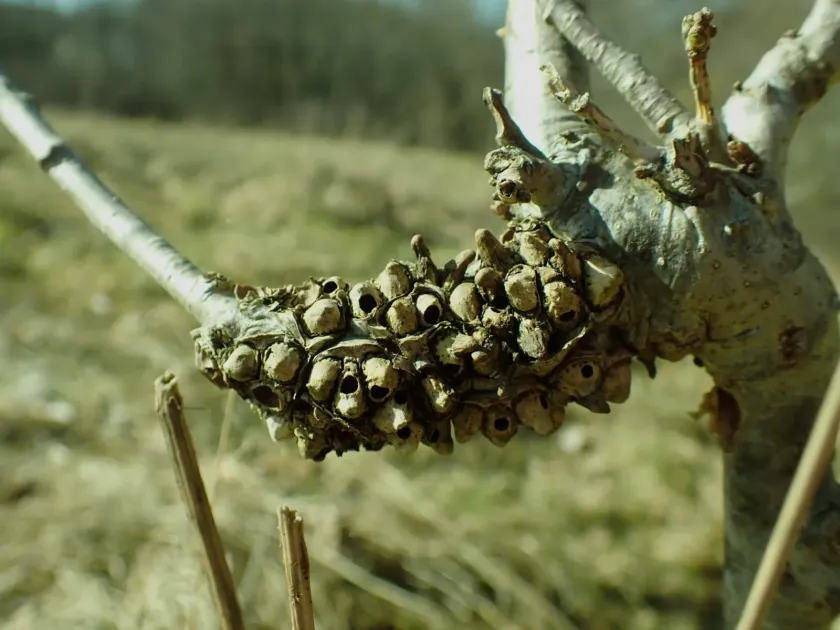
The most diagnostic sign of an infestation is the presence of conical or bulbous galls located on the underside of leaves, along the midribs, or on the leaf stalks.
Initially, these galls appear fleshy and green or reddish, eventually turning brown and woody as the season progresses and the tissue matures.
- Conical growth formations on leaves and petioles.
- Twisting or curling of the affected leaf tissue.
- Premature leaf drop in highly infested branches.
- Tiny exit holes on the surface of old galls, indicating the emergence of adult wasps.
- Reduced photosynthetic area on individual leaves due to gall occupation.
During autumn inspections, the presence of numerous brown, hardened galls on fallen leaves or twigs clearly confirms the activity of this species in the local population.
It is important to differentiate these specific conical galls from those caused by other gall-forming insects that might also inhabit oak ecosystems.
Control measures
The primary control method for oak gall wasps in ornamental or nursery settings is the mechanical removal and destruction of infested twigs and branches.
Raking and disposing of leaf litter in the autumn is a highly recommended practice, as it removes the overwintering population of the wasps and reduces future outbreaks.
In cases where individual trees are highly valued and the infestation is severe, systemic insecticides may be used to target larvae feeding within the gall tissues.
Maintaining optimal horticultural practices, such as proper irrigation and fertilization, ensures the trees remain vigorous and better able to withstand gall wasp pressure.
Encouraging natural predators, such as parasitoid wasps that feed on gall-dwelling larvae, is a sustainable and long-term approach to managing these populations in forest environments.
Taxonomy
- Latin name
- Andricus testaceipes
- Order
- Hymenoptera
- Family
- Cynipidae
- EPPO code
- ANDITE
Discussion
No discussions yet — be the first.