
Andricus similis
Andricus similis
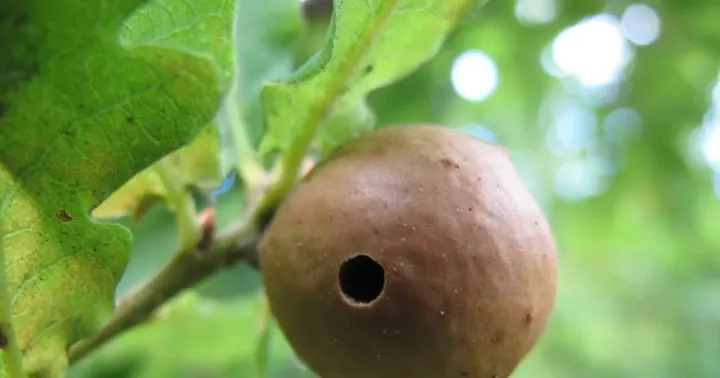
Description
How to identify
Andricus similis is a species of gall wasp belonging to the family Cynipidae within the order Hymenoptera. Like other members of this family, it is known for inducing abnormal growth in plant tissues, known as galls, to support its larvae.
Adult wasps are minute insects, typically measuring only a few millimeters in length. Because their lifespan is very short and they spend most of their existence hidden inside host tissues, they are rarely seen by the casual observer.
The taxonomic classification of this insect highlights its evolutionary relationship with various oak species. The life cycle is complex and involves specific physiological interactions between the insect's larvae and the plant's vascular system.
Identification is primarily based on the distinctive morphology of the galls they create. These structures are specific to the species and serve as a shelter and food source for the developing insect.
Understanding the biology of Andricus similis requires focusing on the plant-insect interface, as the gall is a result of a highly specialized chemical manipulation of the plant's growth hormones.
What it damages
This pest is highly host-specific and exclusively attacks oak trees (Quercus). It causes the development of galls on leaves, buds, or young twigs, depending on the specific gall type induced by the insect.
The primary impact is the physiological drain on the host tree. The plant redirects energy and nutrients toward the creation of the gall rather than towards healthy vegetative growth, which can lead to localized weakness in the affected branches.
While a mature, healthy oak tree can easily withstand moderate levels of infestation, heavy outbreaks can lead to premature leaf drop and the potential weakening of young or already stressed trees.
The damage is mostly cosmetic in low-population scenarios, but it can be significant in ornamental landscapes where the aesthetic quality of the oak trees is a priority.
Secondary infections of the tree may occur if the plant's overall health is compromised by severe and repeated infestation over several growing seasons.
When it appears
The activity of Andricus similis is governed by the phenology of the oak tree. The cycle begins in early spring, synchronized with bud break, when the adult females lay eggs into the vulnerable, developing tissues.
The development of the gall occurs throughout the spring and summer months. The growth is gradual, matching the metabolic activity of the oak during its primary growing season.
By late summer and early autumn, the larvae complete their development within the gall. They often overwinter inside these protective structures, which provide insulation against environmental extremes.
The adult wasps emerge in the following spring, continuing the annual cycle. Thus, the presence of these insects is marked by visible changes in the canopy from late spring through autumn.
Regular monitoring during the mid-summer period is most effective for assessing the severity of the infestation and planning potential interventions for the following year.
Signs of infestation
The presence of Andricus similis is signaled by the emergence of galls. These are abnormal, hardened, spherical, or oblong swellings found on the undersides of leaves or along twigs.
The appearance of the galls changes over time, transitioning from a fleshy green or reddish hue when young to a woody, brown color as the season progresses and the tissue hardens.
Disruption in the normal shape of the leaves and distorted twig growth are key indicators. In many cases, the affected foliage may show chlorosis or early wilting due to the redirection of sap toward the gall.
Small circular exit holes on the surface of the gall are a definitive sign that the adult wasp has already emerged and moved on to the next phase of its lifecycle.
Finding a carpet of fallen, distorted leaves or detached galls beneath the tree canopy in mid-to-late summer is a clear diagnostic feature of this wasp's activity.
Control measures
In ornamental settings, manual removal and destruction of the galls before the adult wasps emerge is the most environmentally friendly and effective method of control.
Sanitary pruning of infested twigs can significantly reduce the pest population. This should be performed while the larvae are still contained within the plant material.
Chemical control is rarely recommended due to the difficulty of reaching the canopy of large trees and the potential for harming beneficial insect populations that naturally predate on the wasps.
Encouraging natural predators, such as parasitic wasps and birds, is the best long-term strategy for managing gall wasp populations in wooded areas and large landscapes.
- Inspect oak trees annually during the late spring.
- Prune and destroy heavily infested branches in early summer.
- Collect and discard fallen leaves and debris.
Taxonomy
- Latin name
- Andricus similis
- Order
- Hymenoptera
- Family
- Cynipidae
- EPPO code
- ANDISM
Discussion
No discussions yet — be the first.