
Oak gall wasp
Andricus punctatus
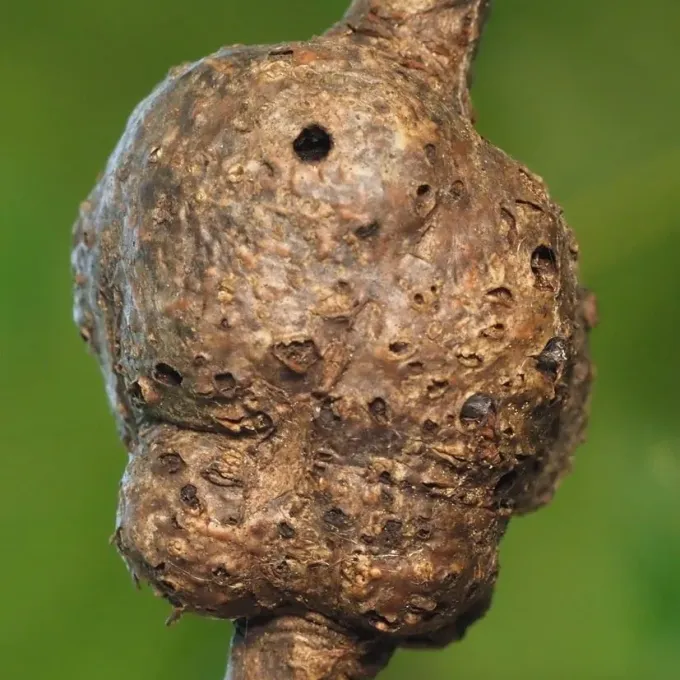
Description
How to identify
The oak gall wasp, scientifically known as Andricus punctatus, is a tiny Hymenopteran insect belonging to the family Cynipidae. Adults are remarkably small, typically measuring only a few millimeters in length, and are often overlooked in dense forest canopies.
The most distinctive way to identify this pest is by observing the galls it induces on oak tissues. These growths appear as peculiar, often dot-like or rounded structures on leaves, buds, or young twigs, caused by the plant's reaction to larval secretions.
The insect possesses a complex life cycle involving alternation of generations, where different stages may have varying reproductive strategies. Each generation requires precise environmental triggers to emerge and begin the formation of new galls.
The female wasp utilizes a specialized ovipositor to insert eggs into the host plant's tissues. Once the larvae emerge within the plant, they manipulate the host's cellular growth, resulting in the characteristic gall that serves as both a nursery and food source.
Entomologists classify this species by the specific shape and location of the galls on the host oak tree. Recognizing these features early is essential for arborists to distinguish between harmful gall-inducing insects and benign ones.
What it damages
This pest exclusively targets various oak species, causing significant stress to the host tree. By diverting nutrients to the growing galls, the larvae deprive the plant of resources needed for normal foliage development and height growth.
Heavy infestations lead to stunted growth in young trees, significantly reducing their vigor. In nursery environments, this can render saplings unfit for sale or transplanting, representing a direct financial loss for growers.
The presence of large numbers of galls can cause premature leaf drop and the deformation of twigs. This damage compromises the tree's photosynthetic capability and leaves it more susceptible to secondary infections from fungi or bacteria.
In urban landscapes, the damage is primarily aesthetic, as the tree becomes covered in unsightly growths. However, if left unchecked, the accumulation of these wounds can lead to localized necrosis in the branches of ornamental oaks.
While an individual gall might seem insignificant, the cumulative effect of hundreds of larvae feeding on a single tree creates systemic weakness. Over several years, this can lead to a decline in the tree's overall health and structural integrity.
When it appears
The annual cycle of the oak gall wasp begins in early spring, synchronized with the bud break of oak trees. Adult wasps emerge from their overwintering sites, ready to mate and seek suitable tender tissues for oviposition.
Development within the gall continues through the warmer months. During the peak of summer, larvae are most active, consuming plant tissues and gradually enlarging the gall structure to accommodate their rapid physiological maturation.
As autumn approaches, the galls harden, and the larvae enter a period of dormancy or finalize their metamorphosis. Many generations overwinter within these hardened structures, safely insulated from harsh winter temperatures.
Environmental conditions, particularly temperature fluctuations, dictate the exact timing of adult emergence. Farmers and foresters monitor weather data closely to anticipate the start of the infestation season and prepare interventions.
Professional monitoring should be concentrated during the mid-summer period when galls are fully formed and easily detectable. This timing allows for the most accurate assessment of the infestation's severity across the canopy.
Control measures
Mechanical control through pruning and destruction of infested branches is the most effective approach for small-scale infestations. By removing the galls before the adult wasps emerge, one can drastically lower the local population.
Chemical control with systemic insecticides is reserved for high-value ornamental trees or nursery settings where severe outbreaks occur. Applications must be timed precisely to coincide with the emergence of adult wasps from the galls.
- Prune infested twigs during the dormant season to remove dormant larvae.
- Collect and burn fallen leaves and debris that may harbor gall wasp stages.
- Promote tree vigor through proper irrigation and balanced fertilization to improve resistance.
- Encourage natural predators and parasitoids that feed on gall wasp larvae.
- Conduct regular canopy inspections to detect early signs of gall formation.
Integrated Pest Management (IPM) strategies are highly recommended for forest settings to preserve ecological balance. By maintaining a diverse ecosystem, the need for chemical intervention is minimized as natural enemies suppress wasp populations.
Ongoing research focuses on pheromone traps and biological suppressants to provide more sustainable alternatives to traditional pesticides. Protecting oak stands requires a long-term commitment to monitoring and early detection of Andricus punctatus.
Taxonomy
- Latin name
- Andricus punctatus
- Order
- Hymenoptera
- Family
- Cynipidae
- EPPO code
- ANDIPU
Discussion
No discussions yet — be the first.