
Andricus pilosus
Andricus pilosus
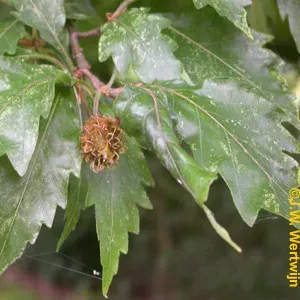
Description
How to identify
Andricus pilosus is a species of gall wasp belonging to the family Cynipidae within the order Hymenoptera. It is a small insect known for its complex life cycle and its interaction with host plants.
The adults are small wasps that are often overlooked in nature, but the results of their activity — the galls — are easily identified by trained foresters and arborists.
Like many species in the Cynipidae family, this wasp exhibits heterogony, involving alternating generations that may produce different types of galls or occur at different times of the year.
Identification is primarily based on the morphology of the galls, which are pathological outgrowths of plant tissue stimulated by the chemical secretions of the wasp's larvae.
The species is native to Europe and primarily associated with oak trees, which serve as its sole host for larval development and maturation.
What it damages
The primary host for Andricus pilosus is the oak tree (Quercus spp.). The wasp specifically targets the buds and young shoots of these trees to lay its eggs.
The feeding activity of the developing larvae triggers the growth of galls, which draw vital nutrients away from the healthy tissues of the plant.
While the galls are the most visible sign of infestation, they can cause structural deformations in young shoots and affect the overall vitality of the infested branches.
Severe infestations on young saplings can lead to stunted growth and reduced vigor, making the trees more susceptible to environmental stress.
In mature trees, the aesthetic impact of numerous galls is often more significant than any long-term damage, though massive outbreaks can still reduce the tree's overall leaf production.
When it appears
The life cycle of Andricus pilosus is intricately tied to the phenology of oak trees. Infestation begins in early spring as buds begin to burst.
Adult females deposit eggs into the developing tissues, starting the formation process of the characteristic galls during the peak growth season.
Larval development occurs within these galls throughout the spring and summer months, as the insects remain sheltered inside the plant-derived structures.
Adult emergence typically happens in late summer or early autumn, after which the wasps mate to start the next cycle.
Environmental conditions such as temperature and humidity levels play a crucial role in determining the speed of larval development and the success rate of emergence.
Signs of infestation
The most reliable sign of an Andricus pilosus infestation is the presence of distinctive, hairy galls on the leaves or buds of the oak tree.
These galls often exhibit a fuzzy or "hairy" appearance, ranging in color from light green to reddish-brown as they mature through the season.
- Deformed leaves showing irregular growth or curling near the gall sites.
- Small exit holes on the galls, indicating that the adult wasps have emerged.
- Reduced vigor in terminal shoots compared to non-infested branches.
- Premature leaf drop in heavily infested areas of the tree canopy.
- General weakening of the tree's resilience, which may open pathways for secondary pests or pathogens.
Control measures
Managing Andricus pilosus is challenging due to the fact that the larvae are protected by the physical structure of the gall, which makes them immune to many contact-based insecticides.
The most effective management practice is the removal and destruction of infested twigs and leaves before the adult wasps have a chance to emerge.
Sanitation practices should be carried out in nurseries and ornamental gardens to prevent the local spread of the wasp to healthy neighboring trees.
Chemical control with systemic insecticides might be considered in high-value landscapes, but only if timed correctly with the period of adult flight and egg-laying.
Maintaining strong tree health through proper fertilization and irrigation helps reduce the tree's susceptibility to heavy galling and improves its recovery from infestation.
Taxonomy
- Latin name
- Andricus pilosus
- Order
- Hymenoptera
- Family
- Cynipidae
- EPPO code
- ANDIPI
Discussion
No discussions yet — be the first.