
Petiole gall wasp
Andricus petiolicola
Description
How to identify
The petiole gall wasp (Andricus petiolicola) belongs to the Cynipidae family and is known for inducing specific gall formations on its host plants.
These insects are tiny wasps, often measuring only a few millimeters in length, making them extremely difficult to observe during the adult stage.
The life cycle is complex, involving sexual and asexual generations, which often produce morphologically different galls on the host tree.
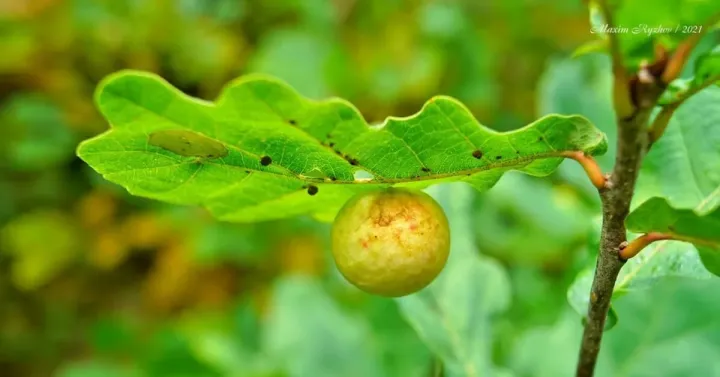
Identification is primarily based on the presence of distinct woody or fleshy growths known as galls, which form on leaves and petioles.
Each species of gall wasp creates a unique gall structure, which serves as a specialized microhabitat for the developing larvae.
What it damages
The primary hosts for Andricus petiolicola are oak trees (Quercus species), where the wasps target developing vegetative tissues.
The larvae feed within the petiole, causing the plant to redirect nutrients into the gall, which restricts normal growth in the affected area.
High infestation levels lead to localized stunted growth, leaf deformation, and reduced photosynthetic capacity of the canopy.
While mature trees can generally tolerate minor infestations, younger trees or those in weakened states may suffer from canopy dieback.
These gall sites often create entry points for secondary pathogens like fungi, potentially leading to further branch tissue decay.
When it appears
The cycle begins in early spring, when adult females emerge and oviposit into the developing oak buds or young petioles.
Throughout the spring and summer, larvae grow inside the developing gall, which serves as both food source and protective shelter.
By autumn, the galls harden, providing a durable shell that protects the insect through the winter months on branches or leaf litter.
Adult emergence is synchronized with the timing of oak bud break in the following spring, ensuring immediate access to new tissue.
Temperature and host phenology are the primary drivers regulating the timing of each developmental stage of the wasp.
Signs of infestation
The most visible sign of infestation is the appearance of spherical or globular galls located on the petioles of oak leaves.
The surface of these galls can be smooth or wrinkled and often matches the color of the surrounding plant tissue or turns slightly reddish.
- Noticeable twisting or bending of the leaf petiole.
- Premature yellowing of leaves and early leaf drop.
- Presence of small circular exit holes on the surface of the gall.
- Reduced vigor in the terminal portions of branches.
- Deformed foliage near the site of the gall attachment.
Careful inspection of the foliage during the summer will reveal these abnormal structures before the exit of the adult wasps.
Control measures
Sanitation practices, such as raking and destroying fallen leaves and debris, can significantly reduce the overwintering population.
In high-value ornamental or park settings, systemic insecticides applied before gall formation can provide effective protection.
Encouraging natural predators, including various parasitoid wasps, is essential for maintaining a biological balance in the environment.
Proper tree care, including adequate irrigation and soil management, helps trees remain resilient against gall wasp colonization.
Pruning out infested branches during the early development stages of the galls can help limit the spread within individual trees.
Taxonomy
- Latin name
- Andricus petiolicola
- Order
- Hymenoptera
- Family
- Cynipidae
- EPPO code
- ANDIPE
Discussion
No discussions yet — be the first.