
Oak marble gall wasp
Andricus kollari
Description
How to identify
The Oak marble gall wasp (Andricus kollari) belongs to the order Hymenoptera, family Cynipidae. It is a tiny insect known for its complex life cycle involving an alternation of generations.
The sexual generation of this species is relatively rare, while the parthenogenetic generation is responsible for creating the large, conspicuous marble-like galls found on oak branches.
The adult wasp is small, typically dark-colored, and adapted to target specific growth points on oak trees to induce the formation of protective chambers for its larvae.
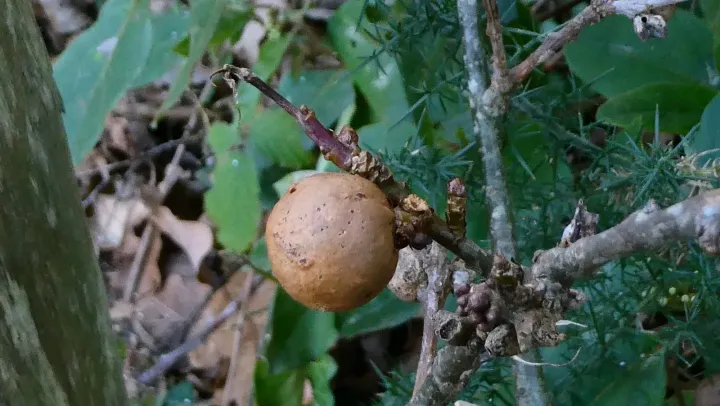
The galls are spherical and can reach up to 2 cm in diameter. Their structure provides an ideal environment for the development of larvae, shielding them from external threats.
These insects are highly host-specific, primarily affecting the Quercus genus, and their distribution is closely linked to the presence of susceptible oak species in the region.
What it damages
The primary damage is caused by the formation of hard, woody galls on twigs and young shoots. This process diverts nutrients away from the plant's normal growth.
Young trees in nurseries are most vulnerable, as heavy infestation can stunt shoot growth and lead to significant malformations in the developing crown.
While mature oaks are rarely killed, the continuous presence of galls impairs the overall physiological health of the tree, potentially reducing its vigor over time.
In urban forestry and landscaping, the aesthetic impact is significant, as the woody galls can persist on the branches for years, detracting from the tree's appearance.
Increased stress from gall formation makes the tree more susceptible to secondary pathogens and other wood-boring insects, which can further aggravate tree health decline.
Signs of infestation
The most diagnostic sign is the presence of hard, round marble-shaped galls on the current or previous year's growth of oak twigs.
Fresh galls are initially green or yellowish, but they eventually turn brown, hardened, and woody, remaining attached to the branch even after the adult insect has emerged.
Small circular exit holes on the surface of the galls are clear evidence that the wasp has completed its development and vacated the gall chamber.
Deformed twigs and stunted leaf growth near the gall sites are common secondary signs that the tree has been heavily infested by the wasp population.
During winter months, the leafless branches make these galls highly visible, allowing for accurate mapping of infested trees within a managed site.
Control measures
Manual removal of galls during the dormant season is the most practical method for managing this pest in small or sensitive areas before the wasps emerge.
Systemic insecticides may be used in commercial nurseries to protect young trees, applied when adult wasps are active and looking for oviposition sites.
Promoting a healthy environment by choosing diverse tree species and maintaining proper tree care reduces the risk of large-scale population outbreaks.
Natural biological control by parasitoid wasps that prey on the larvae within the galls plays a crucial role in maintaining ecological balance in forests.
Regular monitoring of oak plantations helps in identifying early infestations, enabling targeted interventions that prevent the spread of the marble gall wasp.
Taxonomy
- Latin name
- Andricus kollari
- Order
- Hymenoptera
- Family
- Cynipidae
- EPPO code
- ANDIKO
Discussion
No discussions yet — be the first.