
Bud gall wasp
Andricus inflator
Description
How to identify
The bud gall wasp (Andricus inflator) is a member of the Hymenoptera order and the Cynipidae family. These insects are small, typically measuring 3–4 mm in length.
The species exhibits a complex heterogonic life cycle, involving alternating generations that differ in their reproductive strategies and morphology.
Spring generations are often parthenogenetic, composed entirely of females, while summer generations include both males and females for sexual reproduction.
Adult wasps have dark, inconspicuous bodies, allowing them to remain hidden while they navigate oak bark or foliage during their short active lives.
Larvae develop internally within galls, which are pathological plant growths induced by the insect to serve as both food and shelter.
What it damages
The primary host for Andricus inflator is the oak tree (Quercus), where it targets developing buds and young, tender shoots.
By hijacking the plant’s growth processes, the wasp forces the formation of galls that drain nutrients away from healthy tissue development.
This redirection of resources causes stunted growth, bud deformation, and, in severe cases, the death of young terminal shoots.
Repeated infestation can significantly reduce the vitality of trees, leaving them more susceptible to secondary environmental stresses or pathogens.
Nursery seedlings are particularly vulnerable, as the wasp can damage the main leader bud, ruining the tree’s overall shape and commercial value.
When it appears
The adult emergence in spring is closely synchronized with the budburst of oak trees, ensuring that the wasps have immediate access to suitable egg-laying sites.
During the summer months, larvae grow within the maturing galls, slowly transforming the plant's structural development for their own nutritional needs.
Adults of the subsequent summer generation typically emerge in mid-to-late July, prepared to mate and deposit eggs for the next cycle.
Development is temperature-dependent, meaning variations in weather can influence the exact timing of emergence and the duration of the larval stage.
The life cycle is an evolutionary adaptation that ensures the wasp’s success by aligning its growth phases with the host tree’s phenology.
Signs of infestation
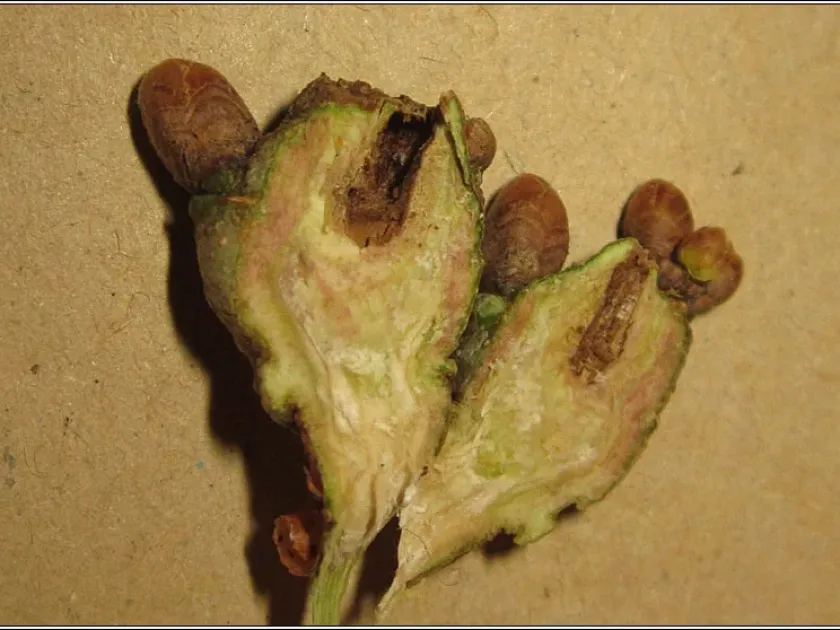
The most visible sign of infestation is the presence of distinct, often spherical galls located at the base of buds or along young stems.
These galls are often smooth, transitioning in color from green to shades of brown as they mature and harden throughout the season.
Careful inspection of damaged shoots often reveals small, neat exit holes, indicating that the adult wasp has successfully completed its life cycle and departed.
Tree appearance may show signs of abnormal branching or localized tissue death near the sites where galls have significantly altered the plant's growth.
During winter, the persistent presence of dry, lignified galls on the twigs provides clear evidence of the previous season's infestation intensity.
Control measures
Sanitation is the most effective manual control method, involving the pruning and destruction of infested twigs before the adult wasps emerge.
Collecting and burning fallen leaves and branches can help reduce the local population of overwintering larvae effectively.
Promoting natural biodiversity, particularly the presence of parasitoid wasps that prey on Andricus inflator, is the best sustainable management strategy.
Chemical control is generally reserved for high-value seedlings or nursery environments and must be timed precisely to target the adult flight period.
Maintaining the general health and vigor of oak trees through proper site selection and care helps trees withstand and recover from minor gall wasp activity.
Taxonomy
- Latin name
- Andricus inflator
- Order
- Hymenoptera
- Family
- Cynipidae
- EPPO code
- ANDIIN
Discussion
No discussions yet — be the first.