
Oak bud gall wasp
Andricus gemmae
Description
How to identify
The oak bud gall wasp (Andricus gemmae) is a tiny insect belonging to the family Cynipidae (gall wasps) in the order Hymenoptera. Due to their small size, adult wasps are rarely seen in the field.
The presence of this pest is identified by the characteristic galls they induce. These galls are abnormal growths of plant tissue that develop directly from the oak buds.
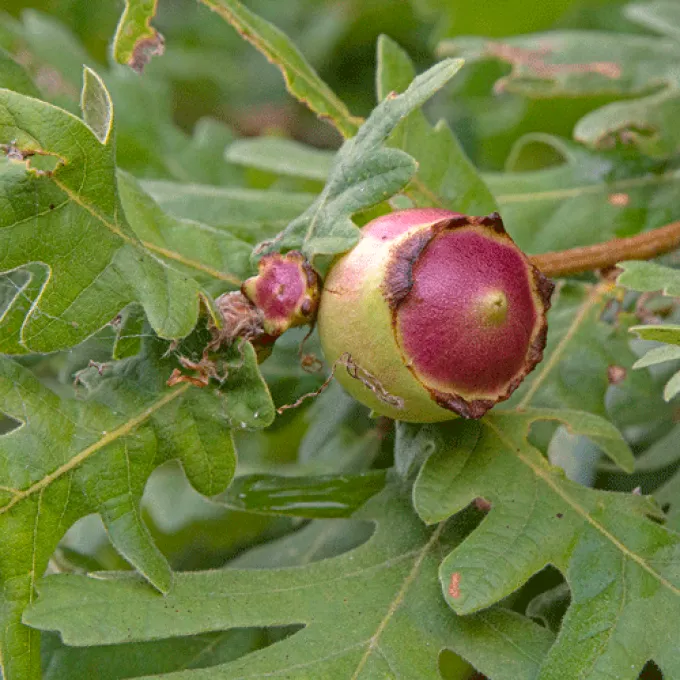
The galls formed by Andricus gemmae are complex, multi-chambered structures. They often display a scaly or conelike appearance, effectively replacing the natural growth of the bud.
The color of these galls changes from greenish or yellow when they are young and actively growing to a woody brown as they mature through the season.
Identification is largely based on the morphology of these galls, which is specific to this species of wasp and serves as a diagnostic feature for arborists and foresters.
What it damages
The primary host for this wasp is the English oak (Quercus robur) and related oak species. The damage is localized specifically to the buds of the tree.
The larvae feed on the tissues within the developing bud, redirecting the tree's energy to produce a gall instead of a healthy shoot or leaf, which disrupts normal development.
While a few galls may not kill a mature tree, severe infestations can significantly stress the tree and reduce its aesthetic value in landscape plantings.
The reduction in healthy buds can affect the overall vigor and growth rate of young oak trees, which is a concern in nurseries and forest regeneration projects.
In addition to physical damage, the presence of these galls can weaken the tree's resistance to secondary stressors such as fungal infections or other opportunistic pests.
When it appears
The life cycle of the oak bud gall wasp is tightly synchronized with the phenology of the oak tree. The cycle begins in early spring as the buds start to swell.
Adult wasps emerge to mate and lay their eggs inside the newly forming buds. This timing is critical for the survival of the offspring.
During the spring and summer months, the larvae develop within the protective environment of the gall, slowly increasing the gall's size as they consume the plant's nutrients.
By late summer or autumn, the galls reach their full size and maturity, and the larvae complete their development within these specialized structures.
The wasp typically completes its cycle within a year, with emergence usually occurring in the following spring, depending on local climatic factors and tree condition.
Signs of infestation
The most obvious sign of an infestation is the transformation of regular buds into unusual, woody, or scaly outgrowths on the branches.
If you observe that a shoot has failed to extend and instead displays a lump-like structure where the bud should be, it is a strong indicator of gall wasp activity.
Small holes appearing on the surface of the galls signify that the adult wasps have emerged, indicating that the current generation has completed its development.
A reduction in the number of healthy, functional shoots on the periphery of the crown is a common secondary symptom of persistent infestations.
- Distorted, conelike bud formations;
- Scab-like or scaly woody galls;
- Tiny emergence holes on old galls;
- Stunted shoot growth in the infested area.
Control measures
Management of the oak bud gall wasp in large forest areas is challenging, as widespread chemical control is usually neither practical nor environmentally desirable.
In ornamental settings or nurseries, the most effective control method is the manual removal and destruction of infested twigs before the adult wasps emerge.
Biological control plays a significant role; supporting local populations of parasitoid wasps that prey on the gall wasp larvae is a natural and effective way to manage their numbers.
Chemical intervention is generally reserved for high-value individual trees or saplings and must be applied at the critical timing during early spring to be effective against adults.
Maintaining the overall health of the oak trees through proper watering, fertilization, and avoiding environmental stress helps the trees withstand and recover from gall wasp pressure.
Taxonomy
- Latin name
- Andricus gemmae
- Order
- Hymenoptera
- Family
- Cynipidae
- EPPO code
- ANDIGE
Discussion
No discussions yet — be the first.