
Common oak gall wasp
Andricus foecundatrix
Description
How to identify
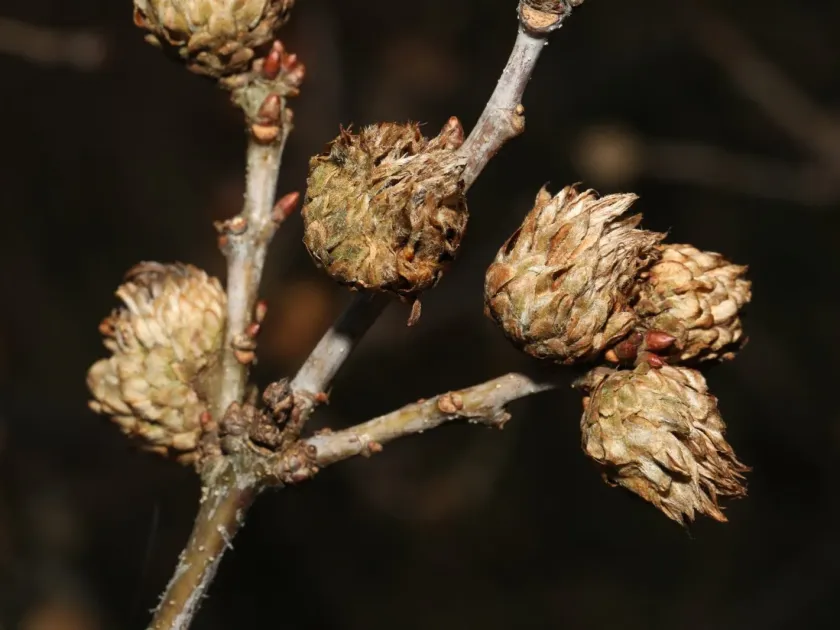
The common oak gall wasp (Andricus foecundatrix) is a member of the Hymenoptera order and the Cynipidae family. This small insect is best known for creating distinctive, pinecone-like galls on oak buds.
Adult wasps are very small, usually measuring 3 to 4 mm in length. They have a dark-colored body and transparent wings with specific venation typical of the gall wasp family.
The most recognizable feature of this species is the gall itself. These structures appear as tight, scale-covered growths that look like small cones, usually developing on the terminal buds of oak branches.
The life cycle is heterogonic, involving a complex alternation between sexual and asexual generations. Each generation produces morphologically different galls to ensure the survival and development of the larvae.
The internal structure of the gall is highly specialized, providing both physical protection from predators and a concentrated source of nutrients for the developing larva inside the bud tissue.
What it damages
The primary host for this species is the pedunculate oak (Quercus robur). The wasp targets young buds, which are diverted from their normal growth pattern to form the protective gall.
Damage occurs because the tree's energy is redirected from producing healthy leaves and branches into supporting the gall. This can weaken specific branches and stunt the tree's overall development.
In cases of heavy infestation, the aesthetic value of park trees and ornamental oaks is significantly reduced. Furthermore, young saplings in nurseries can suffer from suppressed growth due to widespread bud loss.
While mature, established trees are generally resilient, the repeated diversion of resources to gall formation can make them more susceptible to secondary environmental stresses or diseases.
The impact is most significant at the level of individual shoots, as each infected bud is essentially lost, reducing the overall photosynthetic capacity of the affected branch.
When it appears
The lifecycle is tightly synchronized with the host tree's phenology. Adult wasps typically emerge in the spring to lay eggs in newly developing buds during the bud-burst phase.
The characteristic pinecone galls are fully formed by mid-summer, as the larvae inside stimulate the plant tissue to grow rapidly and harden around them.
By autumn, many of these galls fall to the ground. The larvae remain inside these fallen structures, protected by the litter layer, throughout the winter months.
As spring approaches, the larvae complete their development within the safety of the gall, preparing for the emergence of the next generation of adults.
This strict biological timing ensures that the wasp lifecycle matches the availability of tender bud tissues, which are essential for the initial stages of gall development.
Signs of infestation
The primary sign of infestation is the appearance of dense, cone-shaped growths on the twigs. These galls often replace the normal terminal bud structure entirely.
The color of the galls shifts from light green during the initial formation to brown or tan as they mature and harden, making them very noticeable on oak branches.
Lack of normal foliage or stem elongation at the site of the gall is a clear visual indicator that the plant's natural growth process has been disrupted.
Finding numerous hardened, cone-like structures beneath an oak tree in the late autumn is a reliable sign of a local population of the common oak gall wasp.
A cross-section of the gall reveals a central chamber containing a single larva, which is the defining evidence of the wasp's activity and its parasitic relationship with the tree.
Control measures
Sanitation is a key control strategy. Collecting and destroying fallen galls in autumn can significantly reduce the number of overwintering larvae in the area.
In commercial nurseries or young tree plantations, manual removal of infested branches during the early summer can help contain the spread of the wasp before the adults emerge.
Chemical control is rarely recommended or effective, as the galls provide an excellent physical barrier, shielding the larvae from most conventional systemic or contact insecticides.
Encouraging natural biological controls, such as parasitoid wasps that feed on the gall larvae, is the most sustainable approach for managing populations in forestry and park environments.
Maintaining healthy tree vigor through proper irrigation and soil management allows oak trees to better tolerate gall formation and recover more quickly from annual pest pressure.
Taxonomy
- Latin name
- Andricus foecundatrix
- Order
- Hymenoptera
- Family
- Cynipidae
- EPPO code
- ANDIFO
Discussion
No discussions yet — be the first.