
Oak fluff gall wasp
Andricus flocci
Description
How to identify
The oak fluff gall wasp (Andricus flocci) belongs to the order Hymenoptera, family Cynipidae. It is a tiny insect whose life cycle is inextricably linked to the oak tree, which serves as its primary host.
Adult individuals are minute insects, often difficult to spot due to their small size. The pest spends the main part of its life cycle safely hidden inside plant structures known as galls.
The development cycle of this species is heterogonic, meaning it involves an alternation of generations. Consequently, individuals of different generations may differ morphologically and in the specific plant tissues they colonize.
For reproduction, females use a specialized organ called an ovipositor to deposit eggs into the buds or young shoots of the oak. Gall formation begins immediately after the larva invades the tissue and starts secreting specific enzymes.
The biology of this species is adapted to provide maximum protection for the offspring against external factors and predators. By inducing the formation of dense protective structures, the larvae develop in a relatively stable environment.
What it damages
The primary hosts for this species are the English oak (Quercus robur) and related oak species. The insect is selective in choosing host plants to ensure sufficient nutrient supply for its larvae.
Damage occurs mainly on young parts of the tree, which are most susceptible to the chemicals secreted by the parasite. This results in the redirection of the plant's nutrients toward the new gall structures.
Although infestation rarely leads to the death of a healthy mature oak, mass colonization can significantly weaken the tree's immune system. This makes the plant more vulnerable to secondary pests and fungal pathogens.
With systematic infestation over several years, young trees may show stunted growth and branch deformation. This reduces the aesthetic value of plantings in parks, gardens, and forest nurseries.
Economic damage lies in the disruption of normal physiological shoot development, which hinders full crown formation. In forestry, this can negatively affect timber quality in the long term.
When it appears
The adult activity of the gall wasp occurs in early spring, when oak buds begin to open. During this period, mating and egg-laying in young plant tissues take place.
Gall development proceeds throughout the spring and summer. By mid-summer, the formation of typical fluffy galls reaches its peak, making them easily visible on leaves and branches.
The overwintering stage occurs in a state of diapause, usually inside fallen galls or in bark crevices. This allows the insect to successfully survive winter cold while waiting for favorable temperatures for the next cycle.
The population dynamics of the pest are heavily dependent on spring weather conditions. Warm and humid weather at the start of the season promotes more active breeding and spread of the insect.
The emergence of adults from galls can vary depending on the climatic zone; however, the general phenology remains synchronized with the oak tree's biological calendar.
Signs of infestation
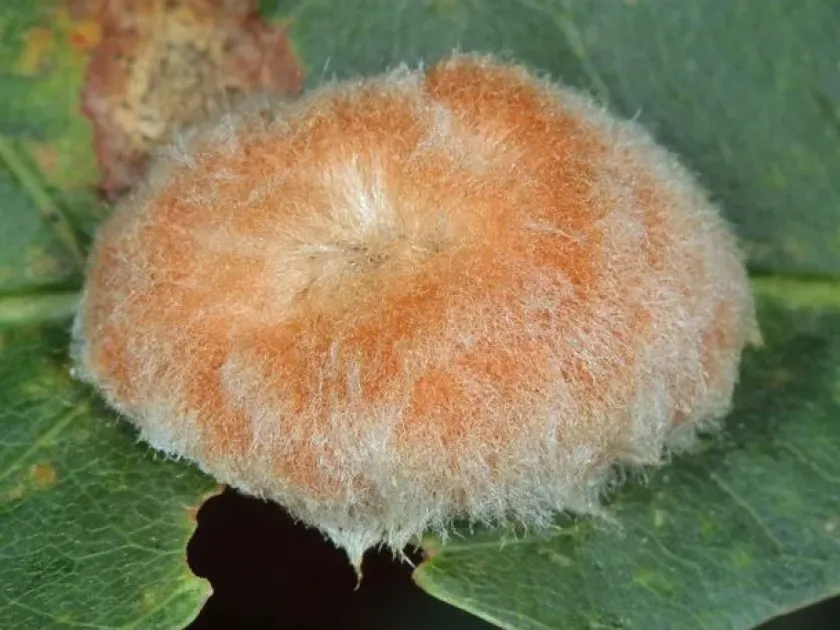
The most characteristic sign of the presence of the oak fluff gall wasp is the specific galls, which resemble small fluffy tufts or pads on the underside of leaves.
The color of these structures often shifts from light yellow to brown as the larva matures inside the gall. The surface of these growths is densely covered with light-colored hairs, which gave the species its name.
Upon closer inspection of the foliage, one may notice that infested leaves often appear asymmetrical or turn yellow prematurely. This is due to the disruption of nutrient flow from the leaf to other parts of the tree.
Opening a fresh gall may reveal one or more white larvae feeding on plant tissue, which confirms the active stage of infestation.
Fallen leaves containing galls found beneath the tree in autumn are also a clear indicator that the wasp population will successfully overwinter in the vicinity.
Control measures
An effective agrotechnical method of control is the timely collection and destruction of fallen leaves, which may contain the overwintering stages of the pest.
In forest nurseries and parks, it is recommended to prune heavily infested branches while the larvae are still inside the galls. This significantly reduces the infection pressure for the following year.
The use of chemical insecticides is effective only during the adult flight period, before the larva retreats inside the protective gall. Once the gall is formed, the efficacy of most conventional treatments is extremely limited.
Biological control methods include encouraging natural entomophages, such as parasitoid wasps, which prey on gall wasp larvae. Preserving biodiversity in forest stands helps to naturally suppress the population.
- Regular monitoring of the crown condition of young trees.
- Adherence to quarantine measures when transporting oak seedlings.
- Use of systemic insecticides in nurseries according to specialist recommendations.
Taxonomy
- Latin name
- Andricus flocci
- Order
- Hymenoptera
- Family
- Cynipidae
- EPPO code
- ANDIFL
Discussion
No discussions yet — be the first.