
Oak gall wasp
Andricus curvator
Description
How to identify
The oak gall wasp (Andricus curvator) is a member of the Hymenoptera order and the Cynipidae family. These are tiny insects, typically measuring 2–3 mm in length.
The biological cycle of this species is complex, involving an alternation of generations that produce distinct types of galls on oak trees.
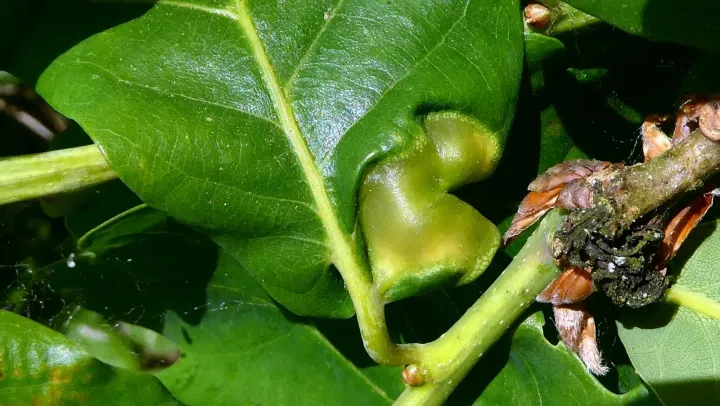
The insect is rarely seen by the naked eye; its presence is primarily identified by the abnormal growths, known as galls, which form on leaves and young shoots.
The gall acts as both a protective shelter and a source of nutrition for the developing larva, which secretes substances to manipulate the host plant's tissues.
This species is highly specialized, co-evolving with oak trees to synchronize its reproductive cycle with the host plant's spring growth period.
What it damages
Andricus curvator exclusively infests various species of oak, particularly the pedunculate oak. The damage is localized to the most tender tissues of the plant.
By creating galls on leaf petioles and young shoots, the wasp causes significant deformation, leading to distorted leaves and impaired structural growth.
In nursery settings, heavy infestations can stunt the growth of young saplings, reducing their commercial value and overall health.
While mature trees are generally resilient, extensive gall formation reduces the photosynthetic capacity of the canopy, stressing the tree during dry seasons.
The physical trauma caused by gall development can facilitate the entry of secondary pathogens, potentially leading to bark or tissue necrosis.
When it appears
The life cycle begins in early spring, synchronized with the budding of oak trees, when overwintered females deposit eggs into the developing buds.
By late spring, in May and June, the characteristic curved galls become fully developed, housing the growing larvae.
The first generation of adults emerges from the galls during the summer to mate and initiate the next phase of the reproductive cycle.
A second generation of wasps is formed later in the season, which produces eggs that overwinter to restart the cycle the following spring.
Climatic factors, specifically humidity and temperature, play a crucial role in determining the success rate and emergence timing of each generation.
Signs of infestation
The most obvious sign of infestation is the presence of distorted, curved galls on the leaves and petioles, often showing reddish or yellowish hues.
Affected shoots exhibit unnatural twisting and stunted growth, making the canopy look malformed during the peak of the growing season.
The leaves associated with these galls are typically smaller than normal and may show asymmetrical development or curling.
Small, circular exit holes on the surface of the galls indicate that the adult wasp has already emerged from its larval chamber.
During the summer, the presence of detached galls under the tree canopy is a clear indicator that the first generation has completed its development.
Control measures
Mechanical control, such as the pruning and disposal of infested branches, is highly effective in small settings like gardens or nurseries.
Collecting and destroying leaf litter in the autumn can significantly reduce the overwintering population of the gall wasps.
Chemical control is rarely necessary but may be considered for young, valuable trees using systemic insecticides during the emergence period.
Promoting a healthy ecosystem that supports natural predators, such as parasitic wasps, is the most sustainable way to manage the population.
- Regular inspection of young oak trees for early gall formation.
- Sanitation measures to remove and burn infested plant debris.
- Use of biological control agents where appropriate.
Taxonomy
- Latin name
- Andricus curvator
- Order
- Hymenoptera
- Family
- Cynipidae
- EPPO code
- ANDICU
Discussion
No discussions yet — be the first.