
Andricus coronus
Andricus coronus
Description
How to identify
Andricus coronus is a species of gall wasp (family Cynipidae) within the order Hymenoptera. It is well-known for its complex lifecycle and its ability to manipulate host plant tissue.
The adult insect is a very small wasp, measuring just a few millimeters. Its dark coloration provides excellent camouflage against the bark of oak trees, making it difficult to spot in nature.
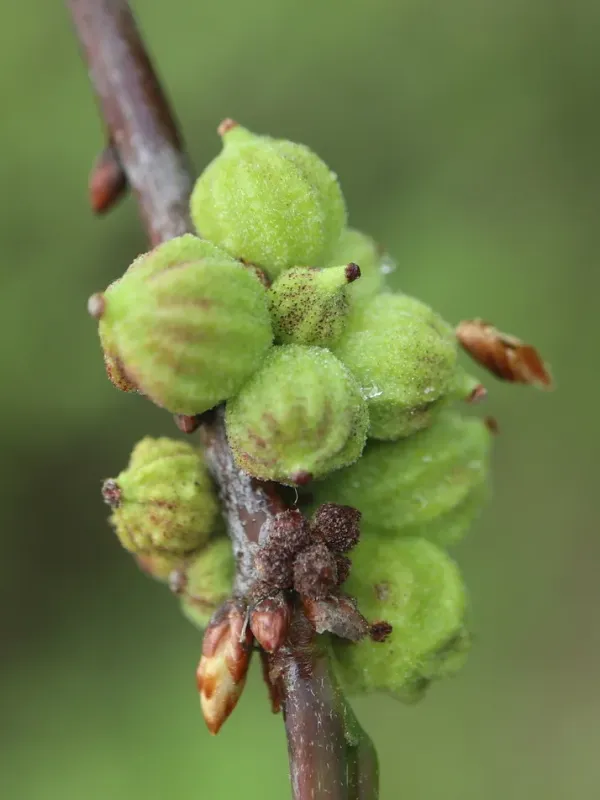
The primary method of identifying this pest is not by spotting the wasp itself, but by observing the unique gall structures it induces on oak branches and buds.
The lifecycle involves a distinct alternation of generations, which is a common trait among Cynipidae, often resulting in different types of galls depending on the season.
Field experts should focus their search on young twigs during the early spring growth period, as this is when the wasp is most active and starts oviposition.
What it damages
The insect primarily attacks oak trees (Quercus species). It induces the growth of structural anomalies known as galls, which serve as protection and a food source for larvae.
The development of these galls diverts essential nutrients from the tree's vascular system, which can negatively impact the host's overall growth and vitality.
Severe infestations can lead to stunted branch growth, deformation of the tree canopy, and in young trees, permanent structural issues such as trunk twisting.
While the tree usually survives the infection, the cosmetic damage to ornamental oaks can be significant, and repeated attacks may weaken the tree's defenses against other pests.
In forest stands, widespread presence of this gall wasp can reduce timber quality and interfere with the normal development of new shoots.
Signs of infestation
The most distinctive sign of Andricus coronus is the presence of crown-shaped galls on the tree, hence its Latin name.
- Crown-like woody growths on buds or young twigs.
- Deformation or abnormal swelling of the infected shoot.
- Small exit holes on the surface of the mature galls.
- Premature browning of foliage on affected branches.
- Localized tissue necrosis around the gall site.
The gall structure acts as a nursery for the larva, providing a safe environment until the adult wasp emerges.
Signs are most visible once the galls reach their full size and start to harden, often remaining on the tree even after the leaves have fallen.
Gardeners and foresters should look for these growths periodically throughout the growing season to catch early infestations.
Control measures
Sanitation is the primary method of management. Affected twigs and branches should be pruned and destroyed to kill the larvae before the adults emerge.
Chemical control is challenging due to the protective nature of the gall tissue, which shields the larvae from contact insecticides.
Systemic insecticides applied during the early bud-burst phase can be effective in reducing the success rate of female wasps laying eggs.
Promoting a healthy environment for natural parasitoids, such as specific species of parasitic wasps, is an effective long-term biological control strategy.
Integrated Pest Management (IPM) practices, including regular monitoring and maintaining overall tree health, are the best defense against Andricus coronus outbreaks.
Taxonomy
- Latin name
- Andricus coronus
- Order
- Hymenoptera
- Family
- Cynipidae
- EPPO code
- ANDICO
Discussion
No discussions yet — be the first.