
Grape hawk moth
Ampelophaga
Description
How to identify
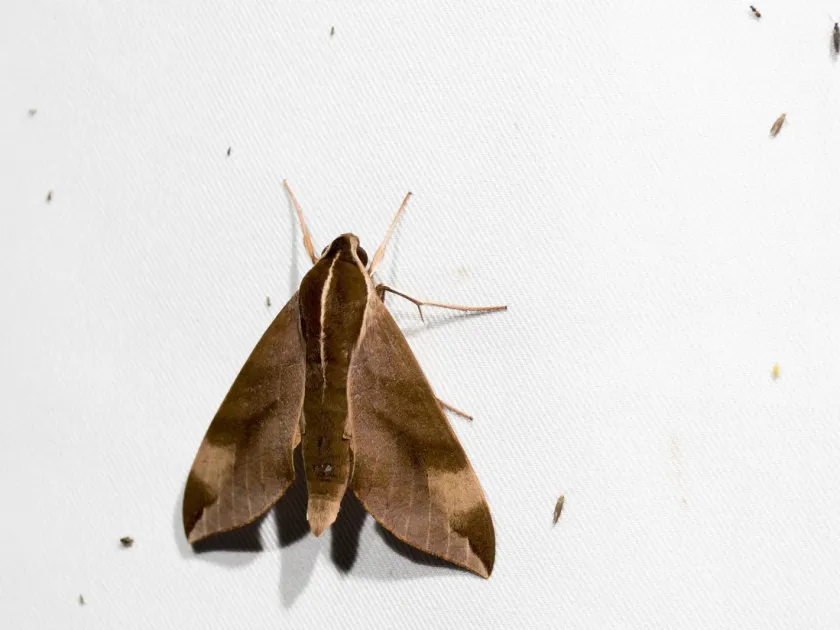
The grape hawk moth (genus Ampelophaga) belongs to the family Sphingidae. These moths are characterized by a streamlined body and powerful wings, adapted for sustained flight and efficient dispersal across vineyards.
The larvae, or caterpillars, are known for their significant size and the presence of a distinct horn on the posterior end. They often exhibit effective camouflage, matching the green hues of grapevine leaves and stems.
Adult moths are primarily crepuscular or nocturnal. They utilize a long proboscis to feed on nectar, though their primary impact on agriculture is limited to the larval stage.
The life cycle involves complete metamorphosis: egg, larva, pupa, and adult. The pupal stage typically occurs in the soil, where the insect overwinters, waiting for favorable spring conditions.
Proper identification of this species is essential for orchard management. Distinguishing these larvae from other Lepidoptera is key to selecting the correct treatment strategy.
What it damages
Larvae are voracious feeders of grapevine foliage. They strip leaves, often leaving behind only the veins, which significantly reduces the photosynthetic capacity of the vines.
In cases of high infestation, the caterpillars may consume green shoots and developing grape clusters, leading to direct yield loss and economic damage to the vineyard.
The damage caused by larvae can weaken the plant's health, making it more susceptible to secondary environmental stresses and various fungal diseases that exploit damaged tissues.
High levels of defoliation prevent proper sugar accumulation in the berries. This is particularly detrimental for wine grape varieties, where berry maturity and quality are critical parameters.
Stunted growth of new shoots is a common consequence of repeated feeding, affecting the plant's structural development and ability to produce fruit in subsequent seasons.
When it appears
Adult flight activity usually commences in late spring or early summer, depending on the climatic zone. Moths emerge from the soil and begin the mating process.
The most active feeding stage for larvae occurs during the mid-summer months of July and August. This is the period when vines are most vulnerable to defoliation.
Depending on regional climate, the species may produce one or two generations per year. Warmer climates tend to favor higher reproductive output and more intense pressure.
Pupation takes place as temperatures begin to drop in late summer. The larvae migrate into the topsoil to create a pupal chamber where they will remain dormant until the following spring.
Early-season monitoring of adult flights helps in predicting the emergence of larvae, allowing for timely intervention before the population reaches damaging levels.
Signs of infestation
The most obvious sign of infestation is the presence of partially consumed leaves. Look for jagged edges or completely skeletonized leaves starting from the canopy foliage.
The presence of large, pellet-like frass on the leaves or the ground beneath the vines is a reliable indicator that large larvae are actively feeding nearby.
Examine the tips of young shoots for missing growth or visible bite marks. Larvae are often found resting near the stems during the day to avoid detection.
A sudden decline in shoot development or visible defoliation in specific sections of the vineyard should trigger a thorough inspection of the canopy.
The presence of the distinct 'horn' on the tail of the caterpillar is the definitive identification feature once a larva has been sighted.
Control measures
Manual removal of caterpillars is a practical control method for small-scale organic vineyards. It avoids the need for chemicals and preserves the vineyard's biodiversity.
Biological control using Bacillus thuringiensis (Bt) products is highly effective against young larvae. These treatments are target-specific and safe for beneficial insects.
Chemical intervention should be considered a last resort. If used, insecticides should be applied during the early larval stages to ensure maximum efficacy and minimal impact.
- Maintain weed-free rows to remove potential alternate host plants.
- Perform deep cultivation under vines in autumn to destroy overwintering pupae.
- Encourage local bird populations, which are natural predators of large caterpillars.
Always adhere to local guidelines regarding pre-harvest intervals to ensure that any residues are safely degraded before the grapes are harvested for processing.
Taxonomy
- Latin name
- Ampelophaga
- Order
- Lepidoptera (butterflies)
- Family
- Sphingidae
- EPPO code
- AMPASP
Discussion
No discussions yet — be the first.