
Citrus flat-headed borer
Agrilus occipitalis
Description
How to identify
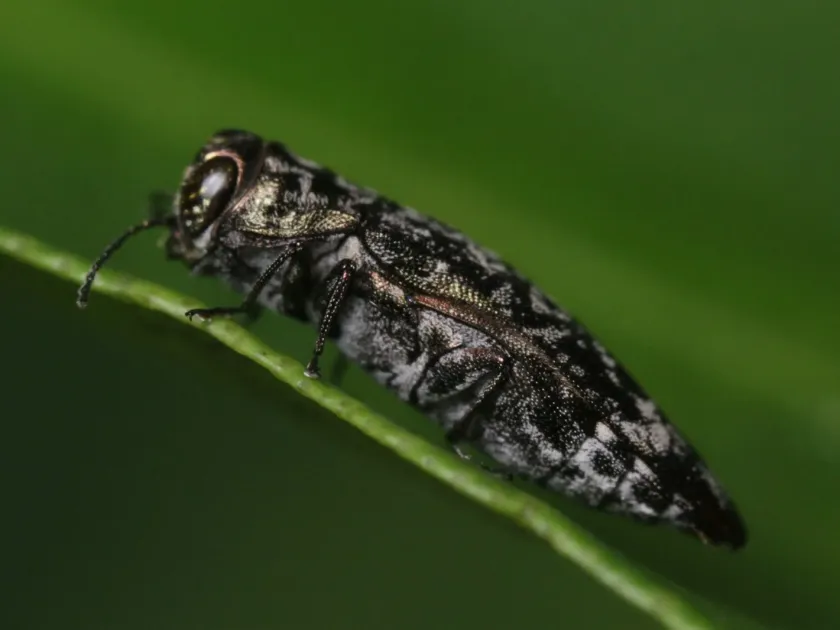
The citrus flat-headed borer, scientifically known as Agrilus occipitalis, belongs to the family Buprestidae within the order Coleoptera. Adult beetles are relatively small, typically measuring 6 to 8 millimeters in length, with an elongated, slender body shape and a distinct metallic sheen.
The coloration of the adult beetle ranges from dark bronze to a greenish-copper hue. The head is partially retracted into the pronotum, and the antennae are serrate. The larvae are creamy white, legless, and possess a characteristic flattened head region, which is the hallmark of the Agrilus genus.
The biological cycle of this pest is intrinsically linked to the health and condition of the host tree's wood. Adults are diurnal and show high activity levels during warm, sunny days, which facilitates their mating and oviposition processes on the bark of young branches and stems.
The life cycle involves four distinct stages: egg, larva, pupa, and imago. Development typically lasts about one year, although local environmental conditions and temperatures can accelerate or delay the progression through these stages, necessitating vigilant monitoring throughout the growing season.
Identifying this pest at an early stage is difficult due to the cryptic nature of the larvae living beneath the bark. The most reliable diagnostic sign of their presence is the appearance of D-shaped exit holes on the bark surface, created by adults when they emerge from their pupal chambers.
What it damages
The primary hosts of this borer are members of the Rutaceae family, particularly citrus species such as limes, lemons, mandarins, and oranges. While the pest prefers trees that are already stressed or weakened, heavy infestations can also severely impact healthy, thriving trees in an orchard.
The larvae are specialized wood-borers that create winding, serpentine galleries directly beneath the bark by feeding on the cambium and phloem layers. This activity disrupts the vascular system, preventing the effective transport of water and nutrients throughout the tree's structure.
Severe infestations often result in the dieback of individual branches or even the loss of primary scaffold limbs. Because the borer impairs the tree's conductive tissues, affected trees become highly susceptible to secondary infections and fungal diseases that exploit the damaged wood.
The economic impact of Agrilus occipitalis is significant, leading to reduced fruit production, poorer fruit quality, and the eventual death of high-value citrus cultivars if management programs are not implemented to mitigate the beetle's spread.
The impact on young nursery stock is particularly devastating. Because small trees have thinner stems, even a limited number of larval tunnels can effectively girdle the plant, cutting off vital supplies and leading to rapid plant death, which presents a major challenge for nursery managers.
Signs of infestation
Initial symptoms of an infestation include a noticeable decline in vigor, general chlorosis, and premature leaf drop. Branches heavily colonized by larvae often show signs of wilting and dieback, while the bark may develop cracks or deformations due to the internal tunneling activity.
Upon close inspection of the trunk or branches, one can observe the characteristic D-shaped exit holes. These holes are the primary indicator for scouts and growers, providing clear evidence that the borer has completed its development and emerged as an adult.
Gummosis, or the excessive secretion of sap from the bark, is a common defensive response of citrus trees to internal boring pests. The presence of dried resin droplets on the bark is a strong indicator that the tree is attempting to seal wounds caused by the feeding larvae.
When the bark is carefully peeled away from a suspected area, the serpentine larval tunnels become visible, often packed with frass (larval excrement and wood shavings). The larvae move in a zig-zagging path, widening their galleries as they grow larger and mature.
In cases of prolonged or heavy infestation, the bark may peel away in large sections, exposing the dead sapwood underneath. This severe damage indicates that the tree has been compromised for a significant period and is unlikely to recover, necessitating immediate removal and destruction.
Control measures
Successful management of the citrus flat-headed borer begins with sound horticultural practices. Maintaining trees in a vigorous state through proper irrigation and balanced fertilization is essential, as healthy trees are less attractive to females seeking sites for oviposition.
Regular sanitary pruning is vital. Infested branches should be identified, removed, and burned immediately to destroy the larvae before they emerge as adults. Removing and destroying heavily infested dead trees is also crucial to prevent the pest from spreading to healthy neighbors.
During the peak flight period of adult beetles, the application of systemic insecticides can be effective. These treatments should be timed precisely with adult activity to reduce the population and prevent females from laying eggs on the bark of susceptible trees.
Biological control strategies include the conservation of natural enemies, such as parasitic wasps, which can help regulate borer populations in the orchard. The deployment of pheromone traps can assist in monitoring pest activity, allowing for more targeted and efficient management decisions.
In commercial orchards, an integrated pest management (IPM) approach is recommended, combining cultural controls, regular scouting, and the judicious use of pesticides. This combination ensures the longevity of the orchard while minimizing the ecological impact of chemical treatments on the environment.
Taxonomy
- Latin name
- Agrilus occipitalis
- Order
- Coleoptera (beetles)
- Family
- Buprestidae
- EPPO code
- AGRLOC
Discussion
No discussions yet — be the first.