
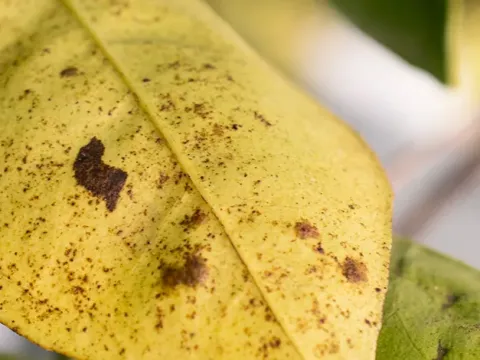
Zasmidium citri-griseum
Zasmidium citri-griseum
Zasmidium citri-griseum is a fungal pathogen belonging to the Dothideomycetes class. It is widely recognized as the causal agent of grey leaf spot in various citrus species and has a complex history of taxonomic classification.
What the section contains
Zasmidium citri-griseum
As a phytopathogenic fungus, it specifically infects the leaves of citrus trees, often leading to significant defoliation if left unchecked. The pathogen is characterized by its ability to colonize leaf tissues through stomata or directly through the epidermis.
The fungus produces mycelium that spreads within the leaf tissue, forming conidial stromata. These structures are responsible for the production of spores that facilitate the spread of the disease within the canopy and between trees.
Accurate identification is typically achieved through microscopic examination of the conidiophores and conidia, which exhibit specific morphological traits. Field identification is supported by the characteristic appearance of the greyish spots on the foliage.
Understanding the biology of this pathogen is crucial for effective management. It thrives in humid conditions and can survive on debris, making it a persistent challenge for citrus producers in suitable climates.
The primary hosts for Zasmidium citri-griseum are species within the Citrus genus, including lemons, oranges, and mandarins. The damage caused by this pathogen can range from minor spotting to severe premature leaf drop.
By infecting the leaves, the fungus disrupts the photosynthetic process. This leads to a reduction in the accumulation of carbohydrates, which are essential for fruit development and the overall health of the tree.
In cases of heavy infestation, the tree's vigor is significantly reduced, making it more susceptible to other biotic and abiotic stresses. Young nursery plants are particularly vulnerable, as the infection can stunt their growth severely.
The aesthetic quality of the fruit can also be compromised if the infection persists during the fruiting season. While the fungus primarily affects leaves, prolonged damp conditions can lead to secondary infections on stems.
Economic losses arise from reduced yields, the cost of fungicides, and the labor associated with maintaining healthy orchards. Effectively managing this pathogen is key to ensuring consistent fruit production.
The spread of Zasmidium citri-griseum is highly dependent on environmental conditions, particularly high humidity and moderate temperatures. The disease is most active during periods of heavy rainfall, especially in spring and autumn.
Spores are disseminated by rain splash, wind, and movement through the orchard. Densely planted orchards provide a microenvironment that facilitates the rapid spread of spores from leaf to leaf.
The incubation period varies based on environmental temperature; however, 20-25 degrees Celsius is considered optimal for the rapid colonization of host tissue. Humidity levels above 80% are strongly associated with outbreaks.
Survival over the winter months occurs in fallen leaves and infected tissues remaining on the tree. As temperatures rise and humidity levels increase, the fungus resumes sporulation, initiating the infection cycle for the new season.
Orchard managers should monitor growth cycles, as emerging leaves are most susceptible to infection. Preventive measures are most effective when applied just before or during periods of high humidity.
Initial infection manifests as small, discrete spots on the leaf surface. As the fungus develops, these spots enlarge and transition into a characteristic grey or ash-colored necrotic lesion.
A yellow halo (chlorosis) frequently develops around these grey spots, signaling the host plant's reaction to the pathogen's toxins. On the underside of the leaf, a greyish fungal growth becomes visible as spores are produced.
- Appearance of grey or ash-colored spots on foliage.
- Yellow halos surrounding the necrotic lesions.
- Premature yellowing and leaf abscission.
- Curling of leaf margins in heavily infected areas.
- Visible greyish fungal sporulation on the leaf underside.
If the infection is not managed, spots can coalesce, leading to large areas of necrotic tissue. This reduces the total leaf area available for photosynthesis and can lead to complete defoliation.
Defoliated trees are less capable of storing energy for the following season, creating a cycle of decline that impacts long-term productivity.
Cultural control is the first line of defense. Proper pruning of the canopy is essential to improve airflow and sunlight penetration, which helps keep the foliage dry and unfavorable for fungal growth.
Sanitation practices, such as the removal and destruction of fallen leaves, are critical. Since the fungus overwinters in leaf litter, removing this source of inoculum significantly reduces the risk of re-infection.
Chemical control involving copper-based fungicides is effective if applied preventively. It is important to ensure thorough coverage of the leaf canopy, especially the undersides where the fungus sporulates.
Systemic fungicides, particularly those in the triazole group, can be used to manage active infections. Rotating different classes of fungicides is recommended to prevent the development of resistant fungal populations.
Maintaining balanced tree nutrition, particularly adequate potassium and phosphorus levels, strengthens the plant's cell walls. A vigorous, well-nourished tree is better equipped to resist fungal attacks and recover from infection.