
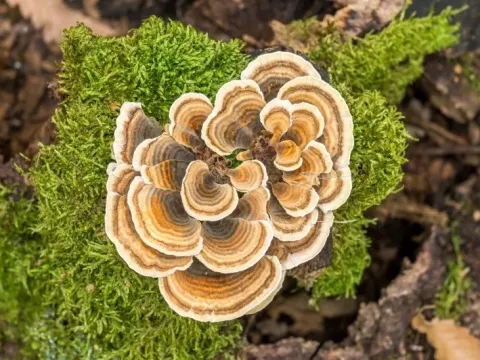
Trametes versicolor
Trametes versicolor
Trametes versicolor, commonly known as the turkey tail fungus, belongs to the kingdom Fungi and the genus Trametes. It is a basidiomycete saprotroph that can act as a facultative parasite under certain conditions.
What the section contains
Trametes versicolor
The fruit bodies have a characteristic semi-circular or fan-shaped bracket appearance, often growing in overlapping, tiered clusters on infected substrates.
The upper surface is covered in fine, velvety hairs and features distinct, multi-colored zones ranging from brown and gray to blue, ochre, and black, which gives the fungus its name.
The underside (hymenophore) is finely pored and cream-white in color, though it may yellow or darken with age, serving as an important diagnostic feature for identification.
Lacking a stem, the fungus attaches itself firmly to the substrate, spreading its mycelium through decaying or weakened wood in both forest and orchard environments.
This phytopathogen affects a wide range of broadleaf tree species, including apple, pear, and plum trees in orchards, as well as various wild forest timber species.
It is a primary cause of white rot, effectively breaking down lignin and cellulose within the wood, which results in a severe loss of mechanical strength in stems and branches.
It poses a significant risk to mature or stressed trees, especially those with existing bark wounds or structural injuries that provide an entry point for fungal spores.
Affected wood eventually becomes soft and spongy, often appearing bleached with distinct dark, irregular lines, known as zone lines, separating areas of decay.
In severe cases, the fungus destroys the heartwood completely, rendering the tree unstable and creating a high risk of sudden collapse during high winds or heavy snow.
The active development cycle of the fungus begins in spring when temperatures consistently rise above freezing and continues until late autumn or the onset of severe winter frost.
Spores are dispersed by air currents throughout the growing season, with significantly higher dissemination rates occurring during humid weather and following rainfall events.
Primary infections often occur during spring pruning or following winter damage, periods when the wood's internal tissues are most exposed to the colonization of fungal mycelium.
Development of fruit bodies on the bark surface can occur year-round if the regional climate allows the fungus to maintain its metabolic activities.
Peak sporulation typically occurs during warm, wet autumn periods, facilitating the widespread distribution of spores to adjacent healthy trees in an orchard or forest stand.
The most visible sign of infection is the presence of the colorful, fan-shaped brackets sprouting from the trunk or main structural branches, indicating significant internal decay.
Indirect symptoms include the sudden dieback of individual branches, premature yellowing of leaves, and excessive leaf drop, which suggest an interruption in the tree's vascular transport system.
When tapping the trunk, affected areas may produce a dull, hollow sound, indicating the presence of internal cavities caused by the wood-decaying activity of the fungus.
Cracks in the bark accompanied by weeping or seeping moisture can also serve as early indicators that a wood-decay fungus is actively colonizing the interior of the tree.
If light-colored patches with dark, defined outlines are observed on old pruning cuts or broken branch stubs, this provides clear evidence of an active Trametes infestation.
Effective prevention centers on proper pruning hygiene, ensuring all cuts are treated immediately with garden paint or specific fungicidal wound dressings to prevent spore entry.
Care should be taken during mechanical orchard maintenance and harvesting to avoid wounding the bark, as any physical trauma creates an opportunity for fungal infection.
Any identified fruit bodies must be physically removed and destroyed via burning to minimize the local spore load and prevent spread to adjacent healthy trees.
- Maintain tree vigor through balanced fertilization and irrigation.
- Remove and dispose of severely infected trees, including roots.
- Keep bark healthy and clean during annual trunk whitening operations.
For localized surface infections, the tissue should be carefully scraped down to healthy wood, disinfected with copper-based fungicides, and sealed to prevent further air and spore access.