
Syspastospora parasitica
Syspastospora parasitica
Syspastospora parasitica is an ascomycete fungus belonging to the Bionectriaceae family. It is a highly specialized mycoparasite that interacts primarily with other fungi.
What the section contains
Syspastospora parasitica
Biologically, it is classified as a fungus that feeds on the hyphae and reproductive structures of other plant pathogenic fungi, effectively acting as a hyperparasite.
It belongs to the phylum Ascomycota. Identification is typically performed through microscopic analysis of the perithecia that develop directly on the mycelial mats of the host fungus.
The fungus is structurally adapted to thrive in environments where powdery mildew is prevalent, using the primary pathogen as its sole nutrient source.
Its life cycle relies on the sexual reproduction phase, resulting in the formation of spores that disperse to find new hosts within the crop canopy.
This fungus does not cause damage to crops. In fact, its presence is generally considered beneficial for agriculture because it suppresses major fungal diseases.
It specifically targets members of the order Erysiphales (powdery mildew fungi), which are responsible for significant losses in cereals, vegetables, and ornamentals.
By infecting the mycelium of the pathogen, Syspastospora parasitica restricts the ability of the primary fungus to spread and produce infectious conidia.
In natural and agricultural ecosystems, it acts as a biological control agent that limits the outbreak intensity of powdery mildew without chemical intervention.
There is no economic damage associated with this species; rather, it is a component of natural disease suppression that can reduce the necessity for synthetic fungicide applications.
The fungus is most active during periods of high humidity and moderate temperatures, coinciding with the peak development stages of powdery mildew.
Seasonal dynamics are strictly dependent on the availability of its host. As the powdery mildew population increases, the colonization by Syspastospora parasitica typically follows.
Winter survival is achieved through resting structures or surviving mycelia on crop debris, allowing the population to emerge when the host pathogen becomes active in the following spring.
Field observation is most successful during the late stages of the growing season when perithecia are fully matured on the surface of infected leaves.
Climatic conditions that favor long-term moisture on leaf surfaces enhance the spread of this mycoparasite across the field.
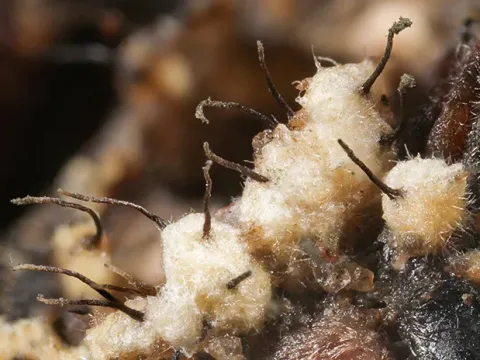
The most diagnostic sign of its presence is the appearance of small, dark, flask-shaped perithecia scattered across the white powdery mildew colonies.
The host colony may exhibit changes in texture and color, often appearing duller or darker as the mycoparasite compromises the integrity of the powdery mildew hyphae.
Microscopic inspection reveals the degradation of conidiophores and the reduction of the overall density of the powdery mildew mycelial network.
The reduction of white fungal growth on the leaves is a clear indicator that the mycoparasitic activity is successfully suppressing the primary pathogen.
The presence of these tiny fruiting bodies on the leaf surface is a reliable indicator that Syspastospora parasitica is colonizing the site.
Management of Syspastospora parasitica usually involves preserving its presence rather than controlling it, as it serves as a natural regulator of powdery mildew.
Agricultural practices should focus on maintaining a balanced ecosystem, avoiding the excessive use of broad-spectrum fungicides that could inadvertently harm the mycoparasite population.
Integrated Pest Management (IPM) programs should consider the presence of natural hyperparasites when scheduling fungicide applications to avoid suppressing beneficial fungal interactions.
Field sanitation that allows for the decomposition of plant debris can affect the inoculum level, but usually, this is not a concern as the fungus is widespread.
Further research into the biological control potential of this species continues to provide insights into sustainable disease management strategies in modern horticulture.