
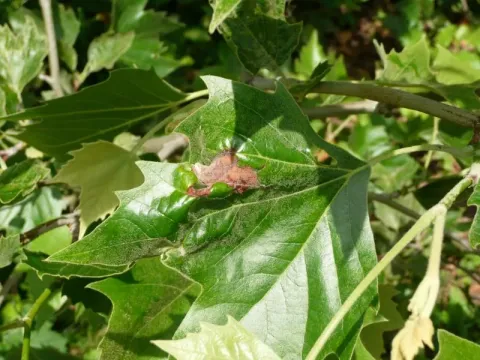
Sycamore anthracnose
Discula platani
Discula platani is a pathogenic fungus and the anamorph of Apiognomonia veneta, widely recognized as the cause of sycamore anthracnose. This fungus is a serious threat to various species within the Platanus genus, particularly the London plane and American sycamore.
What the section contains
Sycamore anthracnose
The fungus functions by colonizing the vascular tissues and parenchymal cells of the host. Its vegetative growth, or mycelium, spreads through the twigs and leaves, disrupting the normal physiological processes and causing localized tissue death.
Biologically, Discula platani is highly adapted to temperate climates. It produces asexual spores, known as conidia, which are massed in structures called acervuli that break through the plant surface during periods of high humidity.
Systemically, this pathogen belongs to the order Diaporthales. Its morphology is characterized by colorless, single-celled conidia, which are essential for the rapid spread of the disease during the growing season.
The fungus is highly resilient. It can survive harsh winters by remaining in a dormant state within fallen debris, twigs, and bark crevices, ensuring that it remains present in the environment for subsequent years.
The primary hosts of this pathogen are trees of the Platanus genus. Infection can affect buds, leaves, petioles, and young succulent twigs, leading to significant structural and aesthetic damage to the trees.
One of the most damaging effects is bud blight, which prevents leaves from emerging properly in the spring. This leads to sparse canopies and significantly weakens the tree's overall vigor and energy storage.
The fungus also creates necrotic lesions on twigs. Over time, these lesions can expand and girdle the branch, causing dieback in parts of the tree and increasing the risk of branch failure during storms.
Defoliation is another major consequence. When the infection is severe, the tree may lose a significant portion of its leaves in early summer, severely impairing the tree’s photosynthetic capacity.
In urban environments, where sycamore trees are commonly used, the chronic stress caused by Discula platani can lead to the long-term decline of these trees, making them more susceptible to other pests and diseases.
The infection cycle typically begins in early spring, as temperatures rise to 10–18°C. Increased rainfall and high humidity levels during this time trigger the release of spores from overwintering structures.
Primary infection commonly occurs on expanding buds and young leaves. It is often during this stage that the disease is most destructive, sometimes mimicking frost damage and delaying proper leaf development.
Throughout the summer, the disease can continue to spread if weather conditions remain cool and wet. Multiple cycles of spore production allow the fungus to infect secondary growth, leading to recurring waves of symptoms.
The autumn season marks the transition phase. As the tree drops its leaves, the fungus shifts its activity toward these fallen remnants, where it prepares for the winter season and forms the structures necessary for survival.
Winter is a period of dormancy rather than mortality for the pathogen. It stays hidden within the bark and necrotic tissues, waiting for the return of favorable spring conditions to resume its life cycle.
Symptoms often manifest as sudden browning and twisting of young leaves, which can look as if they have been burned. This is caused by the fungus obstructing the vascular flow within the leaf tissue.
Distinctive necrotic spots form on the leaves, frequently localized along the main veins. These lesions eventually merge, causing large areas of the leaf to wither, turn brown, and fall off prematurely.
Young shoots may develop sunken, dark-colored lesions. As the pathogen advances, these areas may develop into deep cracks or cankers, which further stress the tree and provide entry points for secondary pathogens.
- Withered and curled young leaves in early spring.
- Brown necrotic spots appearing along the veins of the leaves.
- Premature leaf drop occurring throughout the growing season.
- Visible small, shiny fruiting bodies (acervuli) on infected twigs.
Diagnosis in the field is often confirmed by identifying these microscopic fruiting bodies on the underside of leaves or on dead twigs, which appear as tiny, raised, pustule-like structures.
Cultural management is the first line of defense. Raking and destroying fallen leaves during the autumn is crucial, as this removes the primary source of overwintering inoculum from the site.
Pruning out infected or dead branches is recommended to reduce the overall pathogen load in the tree canopy. Always ensure tools are sanitized between cuts to prevent spreading the fungus to healthy parts of the tree.
Chemical control involving copper-based fungicides can be effective if applied early in the spring before the buds break. This protective barrier helps prevent the initial infection of developing tissues.
For more severe cases, systemic fungicides can be applied during the growing season. It is best to alternate between different chemical groups to reduce the likelihood of the fungus developing resistance.
General tree health is vital. Providing sufficient water during dry periods and ensuring proper soil aeration helps the tree withstand the pressure of Discula platani infection and recover more effectively.