
Scytinostroma galactinum
Scytinostroma galactinum
Scytinostroma galactinum is a basidiomycete fungus in the family Lachnocladiaceae, widely recognized as a causal agent of white rot in woody plant tissues.
What the section contains
Scytinostroma galactinum
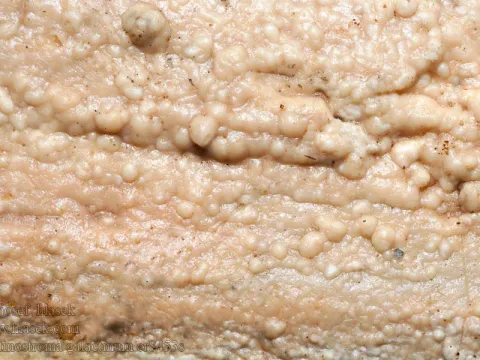
The fungus produces resupinate, coriaceous to waxy fruit bodies that are white to cream in color, typically found on the underside of logs, stumps, or at the base of living trees.
Microscopic identification is based on its distinct hyphal system, which contains skeletonized hyphae and dendrohyphidia, providing a reliable taxonomic characterization.
As a facultative parasite and saprotroph, the fungus is highly adaptive and can survive in diverse environmental conditions, primarily in moist forest ecosystems.
Spore dispersal occurs mainly through the air, but the mycelium can also spread through root grafts between adjacent trees, facilitating the growth of infection centers.
The pathogen infects a variety of conifers and broad-leaved trees, where it primarily targets the root system and the lower bole, causing extensive internal rot.
By degrading lignin and cellulose, the fungus severely weakens the structural integrity of the wood, which leads to increased susceptibility to windthrow and mechanical failure.
In living trees, the colonization of the sapwood and heartwood impairs the hydraulic conductance, resulting in drought stress and progressive crown dieback.
Economic losses in forestry are significant, as the decay reduces the quality of the timber, rendering it unsuitable for structural or high-value industrial use.
The cumulative effect of the disease can lead to the mortality of individual trees and, in favorable conditions, the collapse of entire groups of trees in infected stands.
Initial signs of infestation often include a reduction in foliage density, premature yellowing of needles or leaves, and a noticeable decline in annual twig elongation.
Upon removing the bark at the base of the tree, one can often detect white mycelial mats that invade the vascular cambium and sapwood layers.
The infected wood exhibits a characteristic bleached, stringy appearance with dark zone lines that delineate areas of active fungal decomposition.
Cracking of the bark near the root collar, often accompanied by resin flow in conifers, is a strong indicator of advanced internal decay caused by the pathogen.
During humid weather, the formation of smooth, cream-colored crust-like fruit bodies on the surface of the bark or woody substrate confirms the presence of the fungus.
Sanitation is the most effective management strategy, requiring the prompt removal of heavily infected trees and the clearing of woody debris to reduce inoculum sources.
Forestry practices should prioritize the minimization of root and stem wounds during thinning operations, as these injuries are the primary entry points for spores.
In plantation settings, improving soil drainage and maintaining optimal tree spacing can help reduce the humidity levels that favor the spread of the pathogen.
Preventative treatments of pruning wounds or logging damage with protective fungicides can inhibit the establishment of the fungus on susceptible host tissues.
Biological control agents, particularly species of the genus Trichoderma, have demonstrated the ability to suppress the mycelial growth of S. galactinum and are used in integrated management programs.