
Rice kernel smut
Neovossia horrida
The causative agent of the disease is the fungus Neovossia horrida (synonym Tilletia barclayana), a member of the Basidiomycota division. It is the primary pathogen responsible for kernel smut in rice.
What the section contains
Rice kernel smut
The fungus survives as teliospores in the soil and on infected seeds. These spores are dark, round, and have a reticulate surface, allowing them to remain viable for several years.
Under favorable moisture conditions, the teliospores germinate to produce basidia with filiform basidiospores. These spores are wind-borne and reach the rice flowers during anthesis.
The fungal mycelium colonizes the endosperm of the developing seed. Over time, the starch content of the grain is entirely replaced by a dense mass of black, powdery spores.
As an obligate parasite, the pathogen is highly specialized for rice, causing significant yield losses in tropical and subtropical regions worldwide.
The primary host is cultivated rice (Oryza sativa). The disease directly impacts grain quality and quantity, causing considerable economic losses for farmers.
Affected grains are rendered unsuitable for human consumption due to the contamination by spores, which often emit an unpleasant, fishy odor.
Severe infections can lead to yield reductions exceeding 10-20%. The presence of the disease can also trigger phytosanitary restrictions on grain exports.
Infected fields serve as a source of inoculum for subsequent seasons, as the spores released during harvest contaminate the field soil and crop residues.
The financial impact includes not only direct yield loss but also increased costs for cleaning equipment and potential rejection of batches by grain processors.
Infection occurs exclusively during the flowering stage (anthesis) of the rice plant. The environmental conditions during this period are critical for the fungus.
High humidity, frequent rainfall, and cloudy weather create optimal conditions for the germination of basidiospores and their subsequent infection of the developing ovary.
The incubation period spans the duration of grain filling. As the grain matures, the internal fungal growth progresses until the grain is transformed into a spore mass.
At the time of maturity, the glumes often rupture, releasing the black spore clouds, which disperse across the field and accumulate in the soil.
The pathogen's life cycle is tightly synchronized with the host plant's phonology, ensuring the survival of inoculum across different growing seasons.
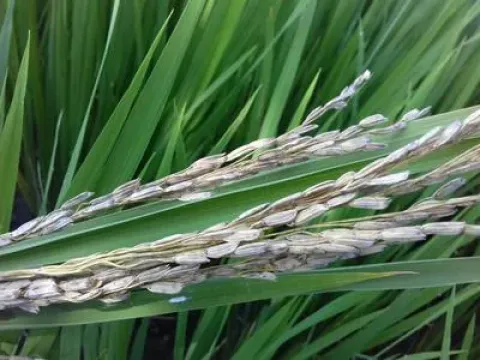
The most diagnostic sign is the appearance of a black, dusty mass of spores erupting from within the glumes, replacing the normal rice grain.
Infected seeds are often slightly enlarged or misshapen, causing the floral glumes to spread apart and exposing the dark contents inside.
- Black powdery masses inside the husk.
- Deformed and darkened grain structures.
- Unpleasant, fishy odor originating from heavily infected panicles.
- Increased brittleness of the grain upon handling.
Visual detection is most effective shortly before or during harvest, when the spores are easily dispersed by mechanical disturbance of the plants.
Management focuses on the use of clean, certified seeds that are free from Neovossia horrida spores to prevent initial field contamination.
Cultural practices such as crop rotation and the destruction of infected crop residues can significantly reduce the local inoculum density in the soil.
Seed treatment with systemic fungicides is a crucial preventive measure, effectively eliminating spores that may be carried on the surface of the seed.
Breeding for host resistance is the most sustainable approach, as resistant cultivars can prevent infection even under high disease pressure.
In regions where the disease is endemic, timely application of fungicides during the boot-to-flowering stage can provide effective protection for the grain.