
Rice kernel smut
Tilletia barclayana
The causative agent of kernel smut in rice is the fungus Tilletia barclayana (syn. Neovossia barclayana), classified within the Basidiomycota division. This pathogen is a specialized parasite of rice, specifically targeting the grain reproductive phase.
What the section contains
Rice kernel smut
The fungus produces microscopic, dark-brown teliospores with a reticulated outer wall. These spores are highly resistant to environmental stress and can persist in the soil for several years, forming a long-term inoculum reservoir.
The life cycle begins when teliospores germinate in moist soil, producing basidia and eventually airborne basidiospores. These spores are dispersed by wind and rain, reaching the rice florets during the flowering stage.
Once inside the floret, the fungus penetrates the ovary. It colonizes the developing tissue, replacing the endosperm with a dense mass of black, powdery spores. This internal replacement process is the hallmark of the infection.
Environmental conditions play a crucial role in disease development. High humidity levels exceeding 85% and temperatures in the range of 20°C to 28°C create the ideal microclimate for successful infection and rapid sporulation.
The primary host is Oryza sativa (cultivated rice). The disease causes direct economic loss by destroying the kernel content, turning valuable grain into useless spore powder. Infected grains are unsuitable for milling or consumption.
In addition to yield reduction, kernel smut compromises the quality of the harvest. A significant percentage of infected grains can lead to the rejection of entire batches during processing due to the presence of spores and unpleasant odors.
The pathogen produces volatile compounds, such as trimethylamine, which impart a distinct fishy smell to the affected grain. This odor persists and can contaminate healthy grain during storage.
Epidemics occur when environmental factors align with the susceptible growth stages of the plant. Field losses are exacerbated by the use of contaminated seed, which facilitates the rapid spread of the pathogen across large areas.
The damage is not limited to the grain mass; it also includes the degradation of the grain’s nutritional profile and germination potential, rendering infected seeds useless for future planting.
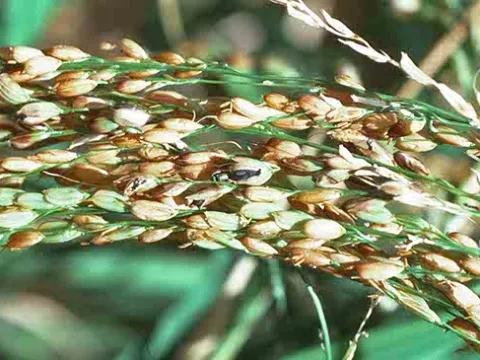
The symptoms of rice kernel smut typically appear during the late milk to dough stages of grain development. The most recognizable sign is the presence of individual grains that turn olive-black and eventually charcoal-black.
Upon maturity, the infected grains rupture, releasing a mass of dark, soot-like spores. A single panicle may have scattered infected grains among healthy ones, creating a mosaic-like appearance in the field.
Under magnifying inspection, the surface of the infected grain appears broken or deformed due to the internal pressure of the spore mass. No significant mycelial mats are typically visible on the leaves or stalks.
The presence of the disease is often detected by a distinct fishy odor associated with the spores, particularly during the harvesting process when the grains are damaged, releasing the fungal content.
In cases of severe infection, the spores can also be observed coating the surrounding florets or leaf sheaths, transferred by rain splashes or wind currents before the final harvest.
The first line of defense is the use of certified, disease-free seed stocks. Seed testing and certification are essential to prevent the introduction of the pathogen into new, clean fields.
Seed treatment with systemic fungicides is a standard and effective practice. Fungicides belonging to the triazole group or other broad-spectrum anti-smut compounds help protect the seedling during the early stages of establishment.
Strategic agronomic practices include the implementation of crop rotation to break the disease cycle and reduce the inoculum load in the soil. Proper irrigation management is vital, as excessive moisture during flowering promotes infection.
Field sanitation is critical; removing and burying crop residues can significantly limit the survival of teliospores in the field for subsequent seasons.
- Selection and planting of rice varieties known for their resistance to Tilletia barclayana.
- Avoidance of excessive nitrogen fertilization, which can create a lush canopy that traps moisture and favors disease.
- Careful monitoring of local weather patterns to time preventative fungicide applications during the critical flowering period.