
Rice black-streaked dwarf virus
Rice black-streaked
The Rice black-streaked dwarf virus (RBSDV) belongs to the Reoviridae family and the Fijivirus genus. It is a systemic pathogen causing significant diseases in major grain crops globally.
What the section contains
Rice black-streaked dwarf virus
The virus is transmitted by small insects known as planthoppers, specifically Laodelphax striatellus and Nilaparvata lugens, through a persistent-circulative mechanism.
This pathogen possesses a complex double-stranded RNA structure, which allows it to thrive and persist within the tissues of both host plants and insect vectors.
RBSDV maintains its presence in the environment by over-wintering in perennial weed species, which serve as primary reservoirs before the planting season begins.
The virus particles are spherical, and its biological strategy relies heavily on the movement and feeding patterns of its insect vectors within agricultural landscapes.
Primary hosts for this virus include rice, corn, wheat, and barley. Infected crops show stunted growth and disrupted physiological processes leading to significant yield reduction.
In rice paddies, the virus causes severe stunting and prevents the proper development of panicles, often leading to total sterility of the affected plants.
Corn crops suffer from stunted ears and poor grain filling, which drastically reduces both the seed yield and the quality of silage for livestock consumption.
Wheat and barley crops are highly vulnerable during the early stages of growth, where infection frequently leads to seedling mortality or stunted development throughout the season.
Economic impact is profound in regions with high vector populations, where yield losses can range from 30% to as high as 70% in severe outbreak years.
The activity and spread of the virus are strictly correlated with the migration patterns of planthoppers, typically peaking during the spring and summer months.
Optimal conditions for vector reproduction—usually warm and humid weather—directly accelerate the spread of the virus within and between neighboring fields.
The critical risk period occurs when winged adults migrate from weed reservoirs to young, succulent crop plants, facilitating rapid primary infection.
During the winter season, the virus survives in the dormant stage within insect nymphs or in the root systems of various perennial grass weeds.
Agronomic monitoring of climate data and local vector population density is essential for predicting the timing and intensity of potential viral outbreaks.
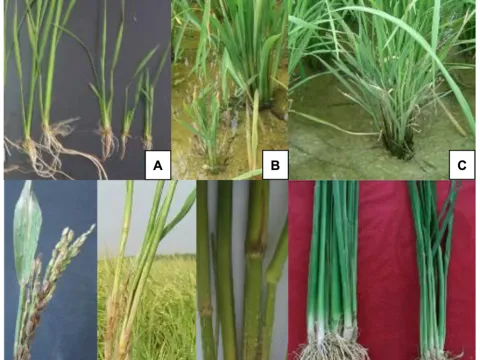
The most diagnostic symptom is the presence of dark, raised, black-streaked lesions along the leaf blades and sheaths, resulting from hyperplastic tissue growth.
Infected plants display distinct dwarfism, characterized by shortened internodes, rigid and twisted leaves, and an unnaturally dark green coloration.
Severe infection inhibits normal tillering, and in many cases, the panicles fail to emerge from the leaf sheath or become severely deformed and sterile.
The root system of infected plants is poorly developed, rendering them susceptible to lodging and secondary environmental stresses.
- Dark, elongated streaks on leaf blades.
- Severe stunting of the entire plant.
- Failure of panicle or ear development.
- Dark green, stiff, and twisted leaves.
Effective control requires a multi-faceted approach, starting with the systemic application of insecticides to manage the population of insect vectors.
Cultural practices, such as the systematic removal of perennial weeds around field borders, significantly reduce the reservoir of the virus.
Utilizing resistant or tolerant crop cultivars is the most sustainable long-term strategy for minimizing the economic damage caused by RBSDV outbreaks.
Employing yellow sticky traps or light traps to monitor vector flight activity allows for targeted and timely pesticide application during peak migration.
Implementing proper crop rotation and maintaining sufficient distance between different grass crops can effectively break the cycle of viral transmission.