
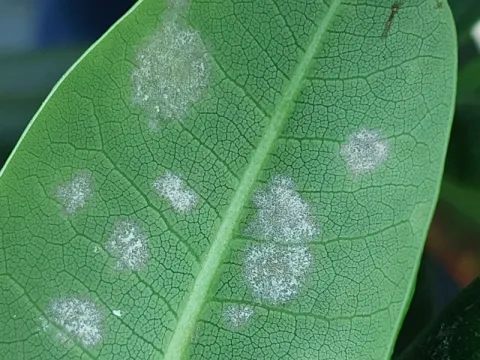
Rhododendron powdery mildew
Erysiphe rhododendri
Rhododendron powdery mildew is a fungal disease caused by the obligate parasite Erysiphe rhododendri. It is a highly specialized pathogen that specifically targets plants within the Rhododendron genus, including azaleas.
What the section contains
Rhododendron powdery mildew
The fungus develops primarily on the leaf surface, creating a distinctive white or grayish powdery layer. This layer consists of mycelium and conidial spores, which serve as the primary means of dispersal for the pathogen during the growing season.
Taxonomically, this fungus belongs to the family Erysiphaceae. Unlike some other powdery mildew species, it prefers environments with moderate humidity and shaded conditions, which is why rhododendrons in dense, stagnant garden settings are most at risk.
By late summer, the fungus produces cleistothecia—tiny, dark fruiting bodies. These structures allow the pathogen to survive the winter in the soil or on plant debris, acting as the primary source of infection for the following spring.
Accurate identification is straightforward: the powdery coating can easily be wiped off with a finger, revealing damaged, chlorotic, or necrotic tissue beneath. This helps distinguish it from other conditions like mite damage or nutrient deficiencies.
The fungus attacks leaves, young shoots, and occasionally flower buds. By penetrating epidermal cells, the fungus drains nutrients from the host plant, significantly disrupting photosynthesis and overall metabolic processes.
Heavy infection causes leaves to yellow, curl, and drop prematurely. This loss of foliage leads to a severe decline in the plant's decorative appearance and hinders its ability to store energy for the coming year.
Weakened plants are significantly more susceptible to winter frost, drought, and secondary infestations. In severe cases, repeated infection over several years can result in stunted growth and the gradual decline of the entire shrub.
For professional nurseries, this disease is a significant threat that can reduce the market value of stock and cause high mortality rates in younger, more vulnerable plants if not managed properly.
Continuous damage to young shoots leads to structural deformity. The plant may lose its characteristic lush, full shape, resulting in an open, unsightly architecture that requires extensive pruning and recovery time.
Disease development typically begins in late spring or early summer when temperatures remain between +18°C and +25°C. Moderate humidity levels provide the perfect conditions for conidia to germinate and spread rapidly.
The life cycle involves multiple generations of conidia throughout the summer. A second peak of infection is frequently observed in late August, driven by cool nights and high dew point levels, which favor fungal activity.
The pathogen overwinters as cleistothecia on fallen leaves. Once warmer spring temperatures arrive, these structures release ascospores, which are carried by the wind to new, succulent spring growth, starting the cycle anew.
Dense plantings, poor ventilation, and excessive nitrogen fertilization are major contributors to outbreaks. High nitrogen levels promote the growth of tender, soft tissues that are highly attractive to the fungus.
While hot, dry weather can slow fungal growth, evening overhead irrigation can create temporary microclimates of high humidity, triggering new outbreaks even during otherwise dry summer periods.
Early symptoms appear as scattered white patches on the underside of leaves. As the infection progresses, these patches merge, covering the entire leaf surface in a dense, felt-like white mycelial mat.
Underneath the white layer, leaf tissues often change color, developing yellow or reddish-brown necrotic spots. This damage leads to the curling of leaf margins and premature leaf senescence.
Young shoots are particularly affected, showing inhibited growth and distorted, shortened internodes. In cases where the fungus colonizes flower buds, they may fail to open or produce deformed, non-viable blossoms.
- White, flour-like fungal growth on foliage.
- Chlorosis and necrosis of leaf tissues under the mildew.
- Distortion and curling of young leaves and shoots.
- Premature leaf drop during mid-summer.
- Presence of tiny black fruiting bodies (cleistothecia) in late season.
Left untreated, the plant becomes unable to thrive, fails to bloom in the following season, and may succumb to winter kill due to its depleted state and lowered resistance to cold.
Sanitation is the first line of defense; remove and destroy all infected foliage and shoots. Never compost infected material, as the spores can survive and re-infect the garden in the following season.
Systemic fungicides, particularly those containing triazoles or strobilurins, are highly effective. It is critical to rotate different chemical classes to prevent the fungus from developing resistance.
Preventative applications of biological controls, such as products containing Bacillus subtilis, can help establish a protective layer on the leaves, preventing fungal spores from gaining a foothold.
Maintain balanced nutrition by limiting nitrogen in late summer and prioritizing potassium and phosphorus applications, which strengthen cell walls and improve the plant's overall resilience against infection.
Ensure proper plant spacing to facilitate air circulation, which reduces relative humidity around the leaves. Always water at the base of the plant to keep foliage dry, as moisture on the leaves encourages spore germination.