
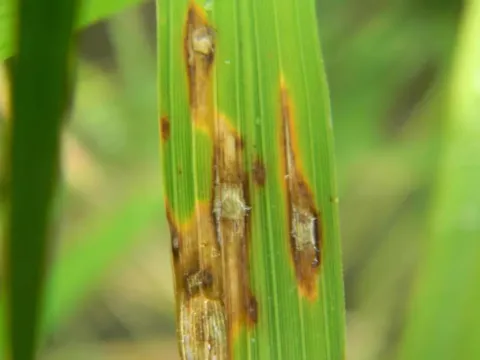
Rice blast
Pyricularia grisea
Rice blast is a destructive plant disease caused by the fungus Pyricularia grisea (syn. Magnaporthe grisea). It is classified as an ascomycete fungus and is recognized globally as one of the most significant threats to rice production.
What the section contains
Rice blast
The pathogen functions by producing conidia, which are asexual spores that spread via wind and water splashes. These spores adhere to plant surfaces, germinate, and penetrate the host tissue through specialized structures called appressoria.
The biology of Pyricularia grisea is characterized by its high variability and rapid lifecycle. Under favorable conditions, the pathogen can complete its cycle in as little as 5 to 7 days, allowing for explosive epidemic growth in field conditions.
Taxonomically, the fungus exists in different physiological races that vary in their ability to infect different rice cultivars. This genetic diversity makes the pathogen particularly challenging for breeders and farmers alike.
Diagnostic verification involves microscopic examination of samples to identify the characteristic pear-shaped conidia and the typical gray, sporulating mycelium that develops on the lesions under high humidity.
The primary host for this pathogen is rice (Oryza sativa), where it causes severe yield losses by affecting all above-ground parts of the plant. If left uncontrolled, the disease can devastate entire fields during periods of high disease pressure.
Besides rice, the fungus can infect various grasses, such as millet and other weed species, acting as an alternative host. These reservoirs allow the pathogen to persist in the environment even when rice is not actively being grown.
The damage caused by the fungus includes the disruption of water and nutrient transport within the plant. As the vascular system becomes compromised, the plant experiences wilting, reduced photosynthesis, and metabolic stagnation.
Yield loss is realized through both quantitative and qualitative degradation. Infected rice produces fewer grains, and the grains that are produced are often shriveled, lightweight, and exhibit poor germination characteristics.
Node infection is particularly lethal, often resulting in complete collapse of the stem (lodging) and the death of the panicle. This condition prevents grain filling and significantly reduces the overall quality of the harvested crop.
Rice blast outbreaks are most common during the vegetative stage, particularly during tillering and panicle emergence. The disease thrives when weather conditions are humid, with frequent rainfall or heavy dew.
Temperature plays a crucial role in disease progression, with the optimal range being between +25°C and +28°C. These temperatures, combined with leaf wetness, create the perfect microclimate for spore germination.
The disease cycle is continuous throughout the growing season. Early infections often start on the leaves and eventually spread to the stems and panicles as the plant matures, causing maximum impact during the reproductive phase.
Extended periods of cloud cover and moderate temperatures are ideal for the development of the fungus. Such conditions delay the drying of leaves, allowing more time for the pathogen to penetrate the epidermis successfully.
In regions with multiple cropping seasons, the pathogen can spread from one crop to the next if sanitation practices are not strictly enforced. The inoculum builds up over time, turning localized spots into field-wide epidemics.
The most recognizable sign of rice blast is the appearance of diamond-shaped or spindle-shaped spots on the leaves. These lesions typically have a gray or white center surrounded by a dark brown or reddish margin.
During periods of high humidity, the lesions will produce a distinct gray-green velvety layer, which is the mass of fungal spores. This sign is a clear indicator that the disease is actively spreading throughout the canopy.
Node symptoms appear as dark, necrotic bands that encircle the stem. As the tissue dies and weakens, the stem often breaks at this point, leading to the white-head symptom, where the panicle dries out prematurely.
Lesions on the panicle branches result in poor grain development and discoloration. The entire panicle may become gray or black, significantly reducing the viability and aesthetic quality of the rice harvest.
Severe infestations give the field a scorched, brown appearance. Leaves curl, dry up, and die prematurely, which limits the photosynthetic capacity of the plants and stops the grain-filling process entirely.
The most effective strategy for managing rice blast is the cultivation of resistant or tolerant varieties. Genetic resistance is the cornerstone of sustainable disease management and reduces reliance on chemical inputs.
A sound agronomic program includes managing soil fertility, particularly avoiding excessive nitrogen fertilization, which creates lush, susceptible foliage. Proper water management and field drainage are also essential to minimize humidity.
Fungicide application is a necessary tool for controlling outbreaks. Systemic fungicides, including those from the strobilurin and triazole classes, are used to prevent infection or limit the spread of established disease.
Crop rotation and the destruction of infected crop residues help break the pathogen's lifecycle. By reducing the primary inoculum source in the soil, farmers can delay the onset and reduce the severity of the disease.
Seed treatment with professional-grade fungicides is a standard practice to prevent early-season infections. Ensuring that the seeds are free from pathogens is the first step in establishing a healthy and productive rice crop.