
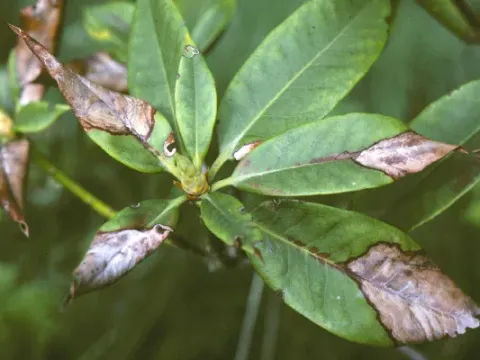
Rhododendron necrosis
Rhododendron necrotic
Rhododendron necrosis is a debilitating disease primarily caused by soil-borne oomycetes, most notably Phytophthora cactorum. These pathogens thrive in moist environments and target the root systems and stems of woody shrubs.
What the section contains
Rhododendron necrosis
Biologically, these pathogens are classified as oomycetes (water molds). They produce motile zoospores that require free water to swim through the soil to infect new hosts.
The infection process begins when the pathogen enters through microscopic wounds in roots or the root collar, subsequently colonizing the vascular system of the rhododendron.
Identification is often challenging because initial symptoms can mimic drought stress or nutrient deficiencies, requiring laboratory testing for definitive confirmation.
Understanding the biology of Phytophthora is crucial, as the organism can remain dormant in the soil for several years, waiting for ideal moisture conditions.
This pathogen impacts a wide range of rhododendron cultivars and azaleas. It is particularly devastating in nursery settings and home landscapes with poor drainage.
The disease disrupts water transport, leading to systemic wilting, chlorosis, and the eventual death of branches or the entire plant if left unaddressed.
Necrotic lesions can appear on leaves and stems, reducing the aesthetic value of the ornamental shrub while serving as an active source of inoculum for spreading.
Economic damage in the ornamental industry is significant, as infected stock often requires complete destruction to prevent the pathogen from spreading to healthy inventory.
Impacted shrubs lose their vigor rapidly, and once the vascular system is severely necrotic, recovery is rarely possible even with aggressive intervention.
The disease is most prevalent during periods of excessive rainfall and cool-to-moderate temperatures, typically in the spring and late autumn months.
Infection cycles peak when soil temperatures reach 15–20°C, providing the energy required for the rapid release and movement of zoosporangia through saturated soil.
The life cycle is characterized by the production of hardy oospores that overwinter in plant debris, ensuring the pathogen persists across multiple seasons.
Summer heat can temporarily inhibit surface symptoms, but the pathogen remains active below the soil line if irrigation practices keep the root zone overly wet.
Spread is facilitated by splashing water from rain or overhead irrigation, which can carry the pathogens from contaminated soil onto healthy foliage or stems.
Early symptoms include the appearance of irregular, dark brown or greyish necrotic spots on leaves, often associated with a water-soaked or wilted appearance.
Shoot dieback is a classic sign, where branch tips suddenly collapse and turn brown, indicating that the vascular pathway to those tissues has been severed.
The root collar and base of the stem may show distinct discolored bark or sunken lesions, which can eventually girdle the plant and cut off nutrient supply.
Infected roots often exhibit a dark, brittle appearance compared to the firm, white appearance of healthy, active root systems in rhododendrons.
- Sudden wilting of new succulent shoots.
- Dark brown necrotic lesions on leaf margins.
- Discoloration of the stem base and bark.
- Progressive chlorosis followed by tissue death.
- General decline and premature shedding of leaves.
Prevention starts with site selection and preparation; ensure the soil is well-drained and amend heavy clay soils to prevent waterlogging around the root zone.
Sanitation is paramount: immediately remove and destroy all infected plant material, including the root ball, to eliminate the reservoir of the pathogen.
Chemical control can be achieved using systemic fungicides, such as those containing fosetyl-aluminum or metalaxyl, applied as soil drenches or foliar sprays.
Always disinfect pruning tools between cuts using a 70% alcohol solution or a bleach-based disinfectant to avoid mechanical transmission of the pathogen.
Implement mulching practices with pine bark to improve soil structure and maintain the acidic pH levels that naturally help suppress certain pathogenic water molds.