
Raspberry bushy dwarf virus
Raspberry bushy
Raspberry bushy dwarf virus (RBDV) is the type member of the genus Idaeovirus. It is a spherical virus with a positive-sense single-stranded RNA genome.
What the section contains
Raspberry bushy dwarf virus
The virus is a systemic pathogen, meaning once it infects the host plant, it spreads throughout the entire vascular system, affecting all growing parts of the raspberry cane.
It is unique among major raspberry viruses because it does not have an insect vector such as aphids or leafhoppers to facilitate its rapid spread in the field.
Transmission occurs primarily through infected pollen, which is carried by honeybees and other pollinators between infected and healthy plants during flowering.
RBDV is also disseminated through infected planting stock, making the use of certified nursery material crucial for the establishment of new plantations.
The virus primarily affects Rubus idaeus (red raspberry) and Rubus occidentalis (black raspberry), as well as blackberry cultivars in many growing regions.
Economic damage is severe, as the virus induces "crumbly fruit" syndrome, where the drupelets of the raspberry do not fuse correctly, resulting in poor fruit quality.
Yield loss can be substantial, often exceeding 50% in highly susceptible cultivars, as the fruits become small, crumbly, and commercially unmarketable.
Growth is significantly stunted, with canes showing shortened internodes and a bushy, proliferated appearance that makes the plant look unhealthy and weak.
The overall longevity of the plantation is reduced, as infected plants become progressively less productive and more susceptible to other environmental stresses.
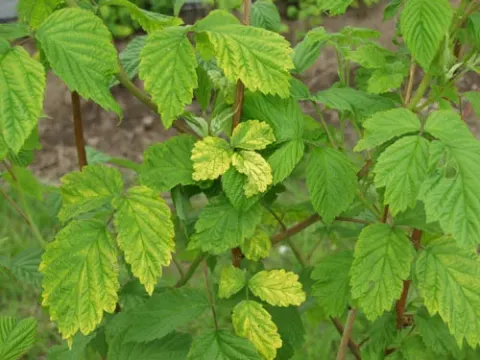
The most common foliar symptoms include chlorotic mottling, interveinal yellowing, or the development of a distinct mosaic pattern on leaves, especially on primocanes.
In some raspberry varieties, the leaves may show a yellowing effect that resembles nutrient deficiency, often appearing in late summer as symptoms progress.
The "crumbly fruit" trait is the most diagnostic field sign, characterized by fruits that fall apart during harvesting due to the poor development of drupelets.
Plants often exhibit a stunted growth habit, with canes showing a high density of lateral branches, leading to the "bushy" appearance for which the virus is named.
Note that many commercial cultivars can be symptomless carriers, meaning they can harbor and transmit the virus without showing visible signs of infection.
The primary control strategy is to source virus-free planting material produced through meristem-tip culture and verified by laboratory ELISA testing.
Eradication is essential: if symptoms appear, infected plants must be rogue out and destroyed immediately, including their root systems, to eliminate the reservoir.
Planting resistant or tolerant cultivars is the most sustainable management practice, as it provides genetic protection against the virus's effects on fruit development.
Maintain proper isolation distances between new fields and old, potentially infected raspberry patches to minimize the risk of pollen-mediated virus transfer.
- Implement rigorous sanitation protocols for pruning tools to prevent mechanical transmission.
- Monitor plantations frequently for signs of poor fruit quality or mosaic foliar patterns.
- Ensure high standards in local nurseries to prevent the circulation of infected stocks.