
Raspberry anthracnose
Elsinoe veneta
The causal agent of raspberry anthracnose is the fungus Elsinoe veneta (anamorph Gloeosporium venetum). It is a persistent pathogen that affects various Rubus species, primarily red and black raspberries.
What the section contains
Raspberry anthracnose
Taxonomically, it belongs to the Dothideomycetes class. The fungus overwinters as mycelium in infected canes, making it a recurrent issue in poorly managed raspberry patches.
The infection cycle begins with the spread of conidia, which are disseminated by rain splash, wind, and irrigation water. These spores enter the plant tissue through stomata or wounds.
Once inside, the fungus colonizes the plant cells, leading to localized tissue death and the characteristic appearance of lesions. This process continues throughout the growing season.
The fungus thrives in high humidity and moderate temperatures. Dense foliage and lack of proper air circulation significantly accelerate the spread and severity of the disease.
Anthracnose attacks stems, leaves, pedicels, and fruits. It causes significant physiological stress, which reduces the plant's ability to survive harsh winter conditions.
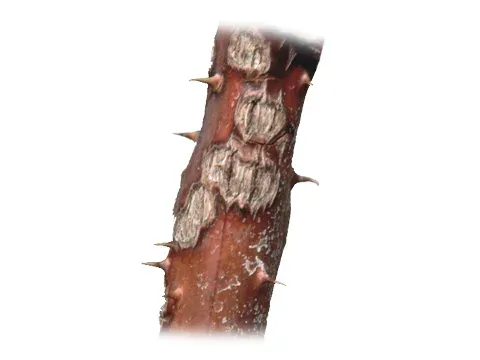
On canes, the fungus causes small, circular, purplish spots that expand and turn grey in the center with a distinct purple margin. These lesions can merge, creating large cankers.
Leaf infection appears as small white or grey spots that may eventually drop out, leaving a shot-hole appearance. Severe leaf infection leads to early defoliation.
Fruits are often deformed, shriveled, or fail to mature properly. The fungus impacts both the physical quality and the chemical composition of the berries.
Ultimately, the damage results in stunted plant growth, reduced fruit production, and in severe cases, the death of individual canes or entire plants if not managed.
The disease becomes active in early spring as soon as temperatures rise. Primary infections start on newly emerging shoots during the growing season.
Rainy periods throughout late spring and early summer provide ideal conditions for the secondary spread of spores. Each rain event facilitates new rounds of infection.
The peak of disease pressure is usually mid-summer when environmental conditions coincide with the fruiting stage, putting the current harvest at risk.
As autumn approaches, the fungus transitions to a dormant state within the hardened canes, preparing for the winter survival phase.
Consistent monitoring during the pre-bloom and flowering stages is critical to preventing large-scale outbreaks that could threaten the year's total yield.
The most distinctive symptom is the grey-centered spots with dark purple borders on the current year's green canes.
Cracking and peeling of the bark on the canes, particularly in areas heavily colonized by the fungus, are clear indicators of deep-seated infection.
Leaves display numerous tiny lesions that look like dark pinpricks, which turn into grey spots and eventually tear, causing a ragged appearance.
Infected berries look underdeveloped, dry out prematurely, and lose their vibrant color and characteristic sweet aroma due to fungal interference with nutrient transport.
Overall plant appearance changes as the infection progresses: vigor decreases, internodes shorten, and the foliage may look yellowed or sparse compared to healthy canes.
Effective management begins with selecting disease-resistant cultivars and sourcing high-quality, certified disease-free nursery stock for planting.
Cultural practices are paramount: prune and remove all infected canes immediately after harvest and ensure the planting site has good soil drainage.
Promote canopy airflow by thinning out overgrown rows and ensuring proper spacing between bushes, which helps keep the foliage dry.
- Apply copper-based fungicides during the dormant season.
- Use recommended systemic fungicides during active growth stages before and after flowering.
- Practice strict sanitation by removing and burning all crop residues to eliminate fungal overwintering sites.
Ongoing maintenance, including balanced fertilization and timely weeding, strengthens the plants' natural defense mechanisms against the pathogen.