
Ramularia nigromaculans
Ramularia nigromaculans
Ramularia nigromaculans is a fungal pathogen belonging to the Dothideomycetes class. It functions as an obligate parasite, primarily infecting the foliage of various host plants by invading the intercellular spaces of leaves.
What the section contains
Ramularia nigromaculans
The pathogen reproduces via conidia, which are tiny asexual spores produced in clusters or tufts that emerge through the plant's stomata. These structures are microscopic and are essential for the rapid dissemination of the fungus throughout the field.
The biological cycle of the fungus is characterized by its ability to survive in organic debris, soil, and sometimes seeds during dormant periods. As environmental conditions become favourable in spring, the fungus reactivates to start a new infection cycle.
Morphologically, the fungus is identified by its colorless, cylindrical conidia organized in bunches. This specific structure distinguishes it from other fungal species that cause similar necrotic spotting on leaves.
Understanding the life cycle of Ramularia nigromaculans is critical for effective management, as the timing of spore release often correlates with specific moisture and temperature thresholds in the plant canopy.
The damage caused by Ramularia nigromaculans is primarily expressed through the formation of necrotic spots on leaves, which reduce the total photosynthetic area. This hinders the plant's ability to produce energy and store vital nutrients.
In severe cases, infected leaves wither and drop prematurely, which is known as defoliation. This process compromises the plant's health, leading to stunted growth, reduced biomass, and lower yields in agricultural settings.
Ornamental plants suffer significantly due to the loss of aesthetic value caused by dark, unsightly spots. The infection can make plants unmarketable and diminish their decorative function in landscaping.
Persistent infection weakens the plant's immune system, making it more susceptible to secondary pests and opportunistic pathogens, further exacerbating the cumulative damage to the crop.
The economic impact can be substantial, as the pathogen spreads quickly under optimal conditions, necessitating costly intervention or resulting in total loss of sensitive varieties in high-humidity environments.
The disease is most prevalent during periods of high humidity and moderate temperatures, typically during the mid-to-late growing season. Rain, splashing water, and dew serve as the primary drivers for spreading fungal conidia.
Infection cycles are driven by climate conditions rather than calendar dates. Prolonged periods of overcast, damp weather provide the ideal environment for the spores to germinate and colonize new tissue within days.
As autumn approaches, the fungus transitions into a survival mode, producing resting structures within plant residue. These structures remain dormant during the winter, protecting the pathogen from harsh conditions.
The pathogen is particularly active in dense canopy environments where airflow is restricted, leading to higher humidity levels that favor fungal development even during drier spells.
By monitoring the weather for extended periods of humidity, growers can predict potential outbreaks and apply preventative measures before the disease reaches an epidemic level.
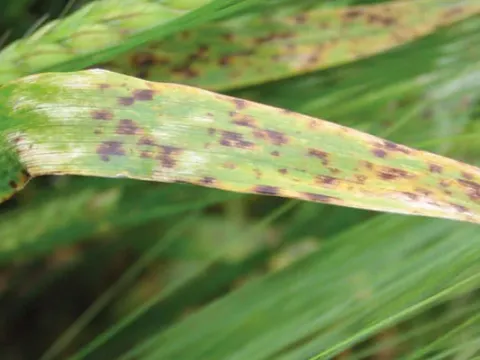
The primary symptom is the appearance of dark, blackish-brown spots on the leaves. These spots are often circular or irregular and may be surrounded by a chlorotic halo caused by fungal metabolites.
Under magnification, a characteristic gray or white powdery growth is visible on the underside of the leaves at the center of the spots. This represents the mass of sporulation produced by the pathogen.
As the disease progresses, the lesions may coalesce, covering large parts of the leaf surface. Eventually, the affected tissue dries out, leading to the curling and death of the leaf blade.
In some cases, stems and petioles can also be affected, showing elongated dark lesions. This can lead to structural weakness in the plant and may interfere with nutrient transportation.
Correct identification is vital, as the symptoms can easily be confused with those of other fungal pathogens like Alternaria. A microscopic examination is often required for a definitive diagnosis.
Sanitation is the first line of defense; removing and destroying infected plant debris eliminates the primary inoculum source for the next season. This drastically reduces the risk of recurrent outbreaks.
Cultural practices such as improving spacing between plants to enhance air circulation and ensuring proper irrigation management can significantly curb the spread of the disease.
Chemical control involving fungicides should be implemented as a preventative measure. Products containing copper or modern systemic fungicides such as strobilurins and triazoles have proven effective in inhibiting fungal growth.
- Practice crop rotation to interrupt the fungal life cycle.
- Avoid overhead irrigation to keep foliage dry.
- Monitor crops regularly and remove symptomatic plants immediately.
- Apply fungicides during peak humidity periods to protect new growth.
Integrated pest management (IPM) strategies, which combine cultural, physical, and chemical controls, provide the most sustainable and effective approach to managing Ramularia nigromaculans infections.