
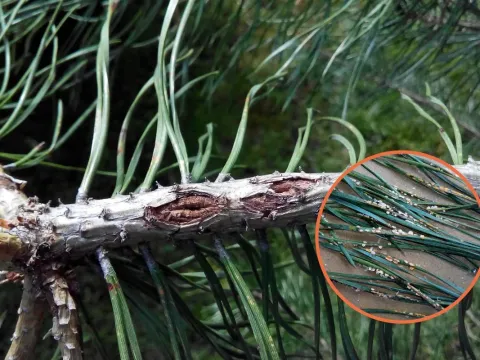
Pyrenochaeta acicola
Pyrenochaeta acicola
Pyrenochaeta acicola is a specialized fungal pathogen belonging to the Ascomycota division. Taxonomically, it is classified as a mitosporic fungus within the order Sphaeropsidales, responsible for causing necrotic diseases in coniferous tree species.
What the section contains
Pyrenochaeta acicola
The identification of this pathogen relies primarily on the detection of pycnidia — small, black, flask-shaped fruiting bodies that form within the necrotic tissues of the needles. These structures produce conidia, which are the main dispersal units of the fungus.
The pathogen utilizes stomata to invade the needle tissue. Once inside, the mycelium colonizes the intercellular spaces, resulting in the breakdown of the leaf structure and the subsequent development of characteristic lesions.
Biologically, the fungus is highly resilient, capable of remaining dormant in fallen needles and forest litter for several seasons, which poses a significant challenge for long-term sanitation in plantations.
In forest pathology, Pyrenochaeta acicola is recognized as a factor that contributes to the decline of stands, often acting in synergy with other needle-blight fungi.
The primary host range of Pyrenochaeta acicola involves various species of the Pinus genus, with the Scots pine (Pinus sylvestris) being particularly susceptible to its debilitating effects.
Infection results in the formation of needle necrosis, which inhibits the tree's photosynthetic activity. As a result, the tree experiences reduced vigor and slower growth rates over time.
Severe infestations lead to massive defoliation, where needles turn yellow, then brown, and fall prematurely. This process is especially detrimental to nursery stock, rendering it unsuitable for sale.
Long-term damage includes weakened immunity, which invites secondary pests such as bark beetles to attack the stressed tree, ultimately leading to mortality in vulnerable stands.
Economic damage is substantial in both forestry and ornamental nurseries, where the aesthetic value and health of the plants are paramount to successful production.
The spread of the fungus is most active during periods of high humidity and moderate temperatures, typically occurring from late spring through the summer months.
Initial infection symptoms usually become visible by mid-summer, when localized chlorotic spots appear on the previous year's needles and eventually transition to larger necrotic zones.
Rain splash is the primary mechanism for the dispersal of conidia from the pycnidia to healthy needles within the tree canopy or to neighboring trees.
The fungus overwinters in the mycelial state within fallen needles. With the arrival of warmer, humid spring weather, the production of new conidia begins, starting the disease cycle anew.
Environmental conditions play a crucial role; while the fungus requires moisture for germination, prolonged drought periods can significantly suppress its spread within the plantation.
The first clinical signs of the disease are small, yellow-to-brown spots that emerge on the surface of the needles, which eventually expand into larger, elongated bands.
Close inspection with a hand lens reveals the presence of tiny, black pycnidia dotting the affected areas, which is the definitive visual marker for identifying this pathogen.
The affected needles become brittle, lose their original orientation, and tend to wither prematurely compared to the healthy growth, often hanging from the branch in a dry state.
Severe defoliation is a key indicator of the disease's progress, leaving large gaps in the crown foliage and causing significant needle litter accumulation beneath the trees.
- Yellow or brown necrotic spotting on needles.
- Development of black pycnidia on the surface of dead tissue.
- Premature yellowing and needle shedding.
- Brittle texture of the diseased needles.
Sanitation is the cornerstone of control. Removing and destroying fallen needles or pruning heavily infected lower branches significantly reduces the primary inoculum source.
Fungicidal applications, particularly those containing copper-based compounds or triazoles, are effective when applied preventively at the start of the growing season.
Improving air circulation within the stand through proper planting density and thinning helps lower humidity levels, creating an unfavorable microenvironment for the fungus.
Maintaining high plant health through balanced nutrition, especially with essential micro-elements, improves the structural integrity of the needles and their natural defense mechanisms.
If an outbreak is confirmed, a scheduled spray program of 2–3 applications, spaced two weeks apart, is necessary to protect new, emerging needles from early-season infection.