
Pustula tragopogonis
Pustula tragopogonis
Description
How to identify
The pathogen Pustula tragopogonis belongs to the kingdom Chromista and the phylum Oomycota (oomycetes). It is an obligate parasite previously classified within the Albugo genus, causing white rust-like diseases.
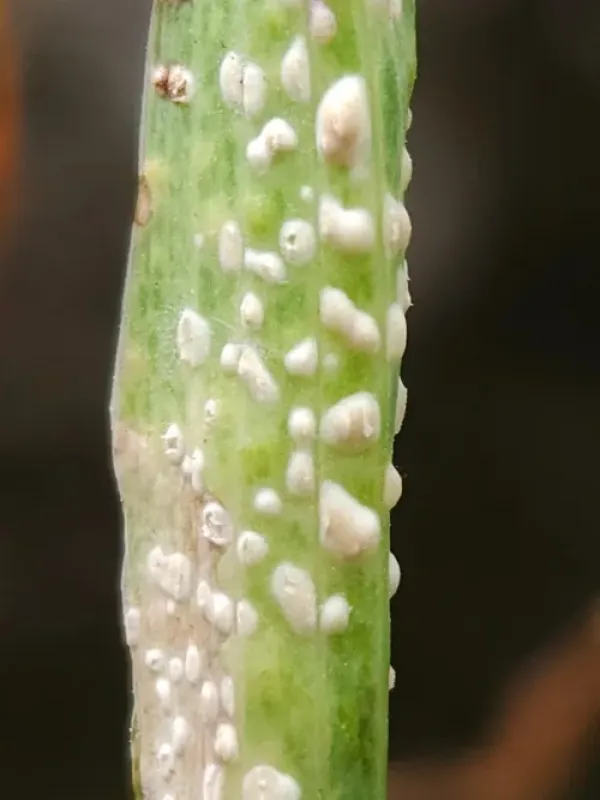
This microscopic organism produces sporangia within subepidermal pustules. Once the epidermis of the host plant ruptures, these appear as white, powdery, or crust-like lesions.
The life cycle involves asexual reproduction via zoospores, which actively move in water films, and sexual reproduction through thick-walled oospores that endure harsh environmental conditions.
Conidia are primarily dispersed by wind or splashing rain, facilitating rapid infection spread across healthy plant tissues in a field.
The oospores are highly resistant to freezing temperatures and persist in plant debris in the soil, acting as the primary inoculum source for subsequent growing seasons.
What it damages
The primary host for this pathogen is the goat's beard genus (Tragopogon), including cultivated varieties used as vegetable or medicinal plants.
The infection affects all aerial parts of the plant, including leaves, stems, and inflorescences, often leading to systemic colonization of the host.
The damage manifests as disrupted photosynthesis, stunted growth, and premature wilting of infected tissues, which significantly reduces plant vigor.
Severe infection of flowering stalks can result in flower sterility or the production of non-viable seeds, leading to substantial yield losses.
In addition to wild species, the parasite poses a significant economic threat to commercial crops of salsify and related Tragopogon species.
Signs of infestation
The first symptoms are small chlorotic spots on the upper leaf surface, which gradually enlarge as the infection progresses within the plant tissue.
On the underside of the leaves, directly beneath the spots, characteristic white, raised pustules develop, resembling a white rust dusting.
Systemic infection often causes visible deformation, twisting, and thickening of the stems, which is a hallmark of advanced pathogen colonization.
Under favorable conditions, these pustules may coalesce, covering large portions of the leaf surface with a dense white mass of spores.
Eventually, the affected plant parts undergo necrosis, turning brown and dying, which leads to premature defoliation and severe plant stress.
Control measures
The primary control strategy is the implementation of a proper crop rotation, avoiding the planting of Tragopogon on the same land for at least 3–4 years.
Thorough sanitation, including the removal and destruction of crop residues, is essential to reduce the carry-over of dormant oospores in the soil.
Sourcing and planting only certified, high-quality, and disease-free seeds is crucial to prevent the introduction of the pathogen into new areas.
Growers should maintain adequate plant spacing to promote airflow, as the high humidity and water films are necessary for zoospore germination and infection.
Chemical control involving copper-based fungicides or systemic products can be effective if applied early, immediately upon the detection of initial symptoms.
Causes diseases · 1
Discussion
No discussions yet — be the first.