
Pyrenochaeta
Pyrenochaeta
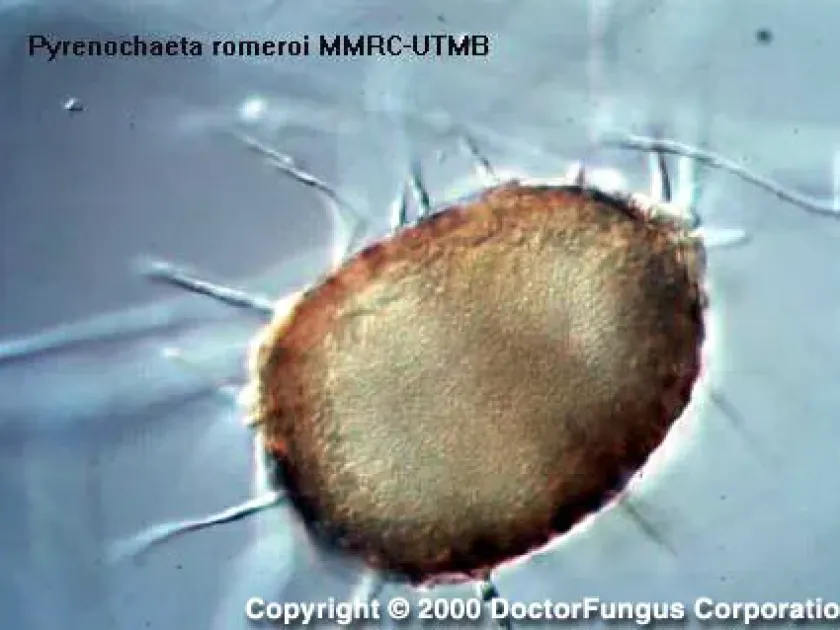
Description
How to identify
Pyrenochaeta is a genus of fungi belonging to the class Coelomycetes. Among its members, Pyrenochaeta lycopersici is the most significant pathogen, primarily known for causing corky root rot in tomato plants, which is a major concern for greenhouse cultivation.
The fungus colonizes the root system, where it produces characteristic fruiting bodies called pycnidia. These structures release conidia (spores) that allow the pathogen to spread within the soil and onto healthy plants through contaminated water or tools.
Pyrenochaeta is highly persistent in soil due to its ability to form dormant chlamydospores. These structures can survive for several years without a host, making it extremely difficult to eradicate from affected fields or greenhouse substrates.
Diagnostic identification typically involves laboratory culture on specific media, where the fungus exhibits distinctive growth patterns and pycnidia formation. Molecular techniques are also increasingly used to accurately distinguish it from other root-rotting fungi.
The fungus is classified under the order Pleosporales and the family Cucurbitariaceae. Understanding its genetic diversity is essential for breeding resistant cultivars and developing targeted management programs.
What it damages
The primary host for Pyrenochaeta lycopersici is the tomato. It thrives particularly well in controlled environments like greenhouses, where continuous cropping provides an endless supply of host tissue and optimal conditions for pathogen proliferation.
Besides tomatoes, the pathogen may affect other Solanaceous crops such as peppers and eggplants. While the symptoms might vary slightly, the root-rotting damage remains a significant threat to production stability in these species.
The damage starts at the root level, where the fungus disrupts water and nutrient uptake. This physiological stress severely restricts the plant's ability to grow, leading to stunted development and drastically reduced yields.
In high-pressure scenarios, corky root rot can cause significant economic losses, sometimes exceeding 40% of the harvest. The damage is cumulative, as each season of infection increases the pathogen population in the soil substrate.
Pyrenochaeta often co-exists with other pathogens, including Fusarium and Verticillium. This synergistic interaction can lead to complex disease syndromes that are much harder to manage than single-pathogen infections.
When it appears
The pathogen is most active during the growing season when soil temperatures are between 15°C and 25°C. These temperatures favor the germination of spores and the rapid colonization of root tissues.
Infection usually begins when healthy seedlings are planted into soil already contaminated with chlamydospores. Once introduced, the fungus quickly infects the tender roots of the young plants, establishing its presence early in the growth cycle.
Spread within greenhouses is often facilitated by irrigation water, movement of soil by machinery, and physical contact via workers. Since the spores are water-dispersed, improper irrigation management acts as a major catalyst for disease outbreaks.
In facilities with multi-year substrate use, the disease pressure builds up incrementally. Farmers often notice that while the first crop might show minimal symptoms, subsequent plantings suffer progressively more severe root damage.
High soil moisture is crucial for the infection process. When soil remains saturated for long periods, the fungus finds optimal conditions to spread its hyphae along the root surface and penetrate deeper into the cortex.
Signs of infestation
The earliest signs of infection include small, yellow, or light brown lesions on the roots. As the disease progresses, these lesions turn dark brown, and the root tissue becomes rough and corky in texture.
Above-ground symptoms manifest as chlorosis (yellowing) of the lower leaves. The plants appear tired, and wilting is observed during the hottest hours of the day, even if the soil is adequately moist.
Microscopic examination of the affected roots often reveals the presence of pycnidia, which appear as tiny black dots on the surface of the corky bark. This is a definitive sign of Pyrenochaeta presence.
Severe root decay results in the loss of fine feeder roots. Consequently, when an infected plant is pulled from the ground, the root ball is significantly smaller, brittle, and often detaches easily from the base of the stem.
As the root system fails, the plant stops producing new growth, fruits remain small or drop prematurely, and the overall plant vigor declines until it eventually dies off entirely under extreme stress.
Control measures
Management of Pyrenochaeta relies heavily on proactive hygiene and site preparation. Steam sterilization of the soil or substrate before planting is the most effective way to eliminate the pathogen from the root zone.
Crop rotation is mandatory in open-field settings to interrupt the fungal life cycle. It is recommended to avoid planting tomato or related Solanaceous crops in the same area for at least three to four years.
- Choosing resistant tomato hybrids or grafted plants on resistant rootstocks.
- Strictly sanitizing all tools, footwear, and equipment before entering the greenhouse.
- Ensuring proper soil drainage to prevent waterlogging and spore dispersal.
- Monitoring soil temperature to keep it within levels less favorable for the fungus.
Chemical control is challenging because the fungus is protected within the root tissue. Applying specific fungicides to the soil can offer some protection, but it is best used as a preventative measure rather than a cure.
Biocontrol agents, such as beneficial Trichoderma species or specific Bacillus strains, can be applied to the soil to compete with Pyrenochaeta and protect the root zone from colonization.
Causes diseases · 1
Discussion
No discussions yet — be the first.