
Plectosphaerella tabacinum
Plectosphaerella tabacinum
Plectosphaerella tabacinum is a microscopic ascomycete fungus belonging to the Plectosphaerellaceae family. It is a persistent soil-borne pathogen known for its ability to survive in organic matter and plant debris for long periods.
What the section contains
Plectosphaerella tabacinum
The fungus produces septate mycelium and generates conidia through asexual reproduction. These spores are easily disseminated by irrigation, splashing water, infested soil, and agricultural machinery, making it highly mobile within a greenhouse environment.
Taxonomically, this species is related to the genus Plectosporium and is often identified as a key component of root rot complexes affecting various horticultural and ornamental species.
The pathogen's life cycle is characterized by rapid sporulation, which allows it to thrive in both moist soil and on the surface of plant tissues when environmental conditions are optimal.
Due to its versatile nature, the fungus can behave as a necrotroph, causing tissue death, or sometimes exist as an endophyte, which complicates early detection during the asymptomatic stages of infection.
The host range of this pathogen includes many commercially important vegetable crops, such as cucumbers, tomatoes, peppers, and various legumes, particularly in intensive cultivation systems.
Infection primarily results in root and crown rot, which disrupts the plant's vascular system, preventing the efficient uptake of water and essential mineral nutrients from the growth medium.
The fungus also attacks stems and lower foliage, causing necrotic spots that can lead to rapid wilting, leaf drop, and eventually the death of the entire plant if conditions favor the pathogen.
Crop losses can be severe, ranging from reduced seedling emergence in nurseries to significant yield drops and lower quality of harvested fruits in greenhouse and field operations.
Infected seeds can act as a vehicle for long-distance transport of the disease, making the selection of certified and treated planting material a critical factor in agricultural disease management.
The most common symptoms include water-soaked lesions appearing at the base of the stem or on the roots, which gradually darken to brown or black as the tissue decays.
Plants often exhibit signs of wilting that resemble water stress, even when the soil moisture levels are adequate, indicating that the root system is failing to supply the foliage.
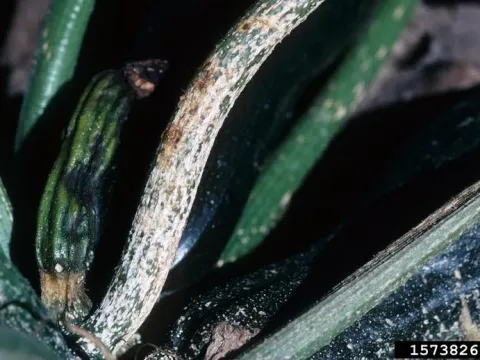
On stems, the disease manifests as elongated necrotic streaks or patches. Under high humidity, a white or creamy-colored layer of fungal spores may become visible on these affected surfaces.
As the disease progresses, leaves on the lower part of the plant turn yellow, lose turgor pressure, and eventually dry out as the infection spreads upward through the vascular tissues.
Laboratory diagnosis is essential, as the symptoms can be easily confused with other root pathogens like Fusarium or Pythium species, requiring microscopic confirmation of conidial morphology.
Integrated disease management starts with rigorous crop rotation, avoiding the planting of susceptible families such as Cucurbitaceae and Solanaceae in infected soil for several seasons.
Using high-quality, treated seeds is a fundamental step to prevent the introduction of Plectosphaerella tabacinum into previously clean growing areas or propagation facilities.
Greenhouse environmental control is crucial; maintaining proper air circulation and avoiding excessively wet soil surfaces significantly inhibits the dispersal and germination of fungal conidia.
Sanitation practices, including the sterilization of tools, pots, and substrates, are necessary to eliminate potential inoculum sources before the start of each production cycle.
Chemical control via systemic fungicides and the application of biological agents, such as Trichoderma species, are effective tools for suppressing the fungus within the rhizosphere and protecting the crop.