
Pleosphaerulina
Pleosphaerulina
Pleosphaerulina is a genus of fungi within the Ascomycota division. These organisms are recognized as plant pathogens responsible for various forms of leaf spots on numerous herbaceous plants.
What the section contains
Pleosphaerulina
The fungus is characterized by the production of pseudothecia, which serve as overwintering and spore-producing structures embedded within the diseased plant tissue. These structures release ascospores that facilitate disease spread.
Taxonomically, the genus is associated with the Dothideales order. Identification often requires advanced mycological analysis to distinguish it from other pathogens that cause similar necrotic symptoms.
The biology of Pleosphaerulina involves a transition from saprophytic survival on crop residues to pathogenic colonization of living host tissues when environmental conditions are suitable.
Research into this genus is critical for understanding the fungal complex that impacts pasture and legume production globally, as it often works in synergy with other leaf-spotting fungi.
The primary impact of Pleosphaerulina infection is the reduction of the photosynthetic surface area due to the development of necrotic leaf spots. This process leads to reduced sugar production and stunted growth.
For forage crops like alfalfa and clover, the damage results in significant leaf drop. This decreases the biomass yield and severely diminishes the nutritional quality of the harvested forage.
The infected plants exhibit reduced vigor, making them more susceptible to environmental stressors such as drought or cold, which can lead to thinning stands in subsequent growing seasons.
Seed production may also be impacted if the infection spreads to the reproductive organs, leading to lower seed set, reduced seed weight, and potentially contaminated seed lots.
Economic losses in agriculture are driven by both quantity loss of forage material and the degradation of silage or hay quality due to the presence of fungal pathogens.
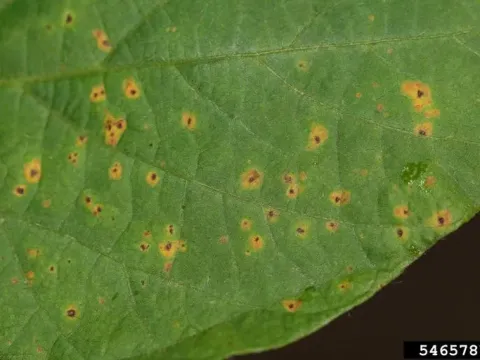
Initial infection signs typically appear as small, light-colored flecks on the foliage that gradually enlarge into irregular spots. These spots often develop a dark margin surrounding a paler, necrotic center.
The presence of tiny black dots in the center of the lesions—the pseudothecia—is a diagnostic feature that can often be observed with a simple hand lens under field conditions.
As the disease progresses, leaves may become chlorotic (yellow) before turning brown and drying out. High humidity levels often encourage the development of fungal spores on the lesion surface.
In dense crop canopies, the lower leaves are often affected first due to higher micro-humidity levels, leading to a general yellowing or browning appearance of the lower portion of the plants.
When examined microscopically, the fungal mycelium can be seen penetrating the epidermis, causing collapse of the underlying mesophyll cells and destroying the integrity of the leaf structure.
Control strategies prioritize sanitation and crop rotation. Removing or deeply burying infested crop residue eliminates the primary source of inoculum for the next growing season.
Maintaining proper stand density and field ventilation is crucial to lower the leaf surface moisture, thereby creating an environment less favorable for fungal spore germination and penetration.
Fungicide applications may be necessary in high-value seed crops or under favorable conditions for disease development, focusing on preventive treatments before the onset of widespread symptoms.
Selection of resistant or tolerant cultivars remains the most sustainable and cost-effective strategy for managing Pleosphaerulina-induced diseases in large-scale forage production.
- Implement a minimum 3-year crop rotation cycle.
- Ensure balanced soil fertility to enhance natural plant resistance.
- Practice early harvesting if disease levels become critical to minimize loss.
- Monitor fields regularly during warm, wet weather conditions.