
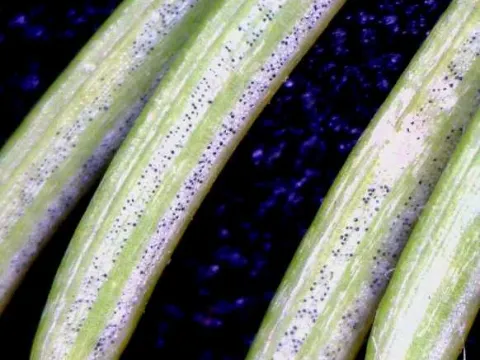
Phaeocryptopus gaeumannii
Phaeocryptopus gaeumannii
Phaeocryptopus gaeumannii is an ascomycete fungus that acts as an obligate parasite, responsible for a condition widely known as Swiss needle cast.
What the section contains
Phaeocryptopus gaeumannii
The fungus specifically targets the needles of the Douglas fir (Pseudotsuga menziesii), colonizing the stomatal chambers of the host plant.
Reproductive structures, known as pseudothecia, develop inside the stomata and emerge as tiny black dots arranged in distinct rows on the underside of the needles.
The organism completes its life cycle by producing spores that are disseminated primarily through wind and splash irrigation during wet spring conditions.
Classification-wise, this pathogen is recognized as a major threat to coniferous plantations, as it remains hidden within the needle tissue for extended periods.
The primary symptom of damage is the premature shedding of needles, which significantly reduces the photosynthetic capacity of the Douglas fir tree.
In forest plantations, heavy infection leads to reduced volume growth and can result in the stagnation of tree development over several consecutive years.
Young nursery seedlings are particularly vulnerable, often suffering from stunted growth and mortality rates that affect the overall quality of reforestation stock.
Trees infected with the fungus become highly susceptible to secondary pests, including bark beetles, due to their weakened physiological state.
The loss of crown density impacts the timber value, making the management of this fungus critical for sustainable forestry and forest economy.
The hallmark sign of the infection is the presence of black pseudothecia emerging from the stomata, visible under a hand lens or low-power microscope.
Affected needles may show chlorosis (yellowing) or necrosis (browning) before they drop prematurely from the branches, usually in the lower crown area.
Growth reduction becomes apparent through shorter annual shoot extensions, which indicates that the tree is diverting energy to resist the fungal colonization.
Severe infestations create a sparse, open canopy appearance, as the tree fails to retain older needles for the required 4- to 7-year duration.
Symptoms are most prominent in late spring, just before the new flush of needles begins to emerge, allowing the fungus to spread onto fresh tissue.
Chemical control involving systemic or contact fungicides is mainly utilized in commercial nurseries to protect young foliage during the infection window.
Cultural management focuses on improving canopy air circulation and reducing moisture, which helps create an unfavorable environment for spore germination.
Sanitation practices, such as removing infected debris or thinning dense stands, are essential to minimize the local inoculum density of the fungus.
The selection and deployment of resistant or tolerant Douglas fir genotypes are considered the most sustainable long-term strategies for large-scale control.
Integrated Pest Management (IPM) strategies, including early detection through periodic health surveys, help in mitigating the impact of Swiss needle cast on forests.