
Phacidium blight
Phacidium abietis
The causal agent of Phacidium blight is the ascomycete fungus Phacidium abietis (also known as Potebniamyces abietis). This pathogen specifically targets trees of the genus Abies (true firs).
What the section contains
Phacidium blight
The fungus is classified as a snow blight pathogen because it thrives in the cool, moist conditions found under a persistent snowpack. Its biological strategy is perfectly adapted to the dormant season of fir trees.
The life cycle involves the development of apothecia (fruiting bodies) on infected needles and bark. These structures mature during the winter and release spores as soon as the snow begins to melt in the spring.
The fungus can persist in decaying organic matter and fallen needles for multiple years, making the soil and debris beneath infected trees a long-term reservoir for the pathogen.
The mycelium colonizes the needles and spreads into the shoots, destroying the cambium and parenchyma tissues. This systemic internal development makes the disease particularly difficult to eradicate once it is established in a plantation.
Phacidium blight causes significant damage in nurseries and natural fir forests. It is especially destructive in areas with heavy winter snowfall, where the pathogen can spread rapidly across the dense foliage of young saplings.
The primary symptom is extensive needle cast, which severely impacts the tree's photosynthetic capacity. Continued defoliation leads to significant growth retardation and eventual decline in tree vigor.
Infection of the shoot bark causes cankers that may girdle the branches, leading to the death of the distal parts of the branch. If the main stem or leader is girdled, the tree may suffer from top-kill and permanent deformation.
Weakened trees are highly susceptible to secondary attacks by bark beetles and other wood-boring insects. The combination of fungal damage and insect infestation often leads to the death of the specimen.
Economic impact is significant in forestry, as nurseries may lose entire batches of seedlings, and timber quality in infected stands is reduced due to stunted growth and irregular crown development.
The disease is most active in early spring, right at the time of snowmelt. The high moisture levels provided by melting snow are essential for the release and germination of the fungal spores.
During the spring period, the spores are dispersed by water splashes and wind, infecting healthy needles and tender shoots of the fir tree. This is the critical window for disease transmission.
In the summer, the fungus remains active internally within the host tissues, although visible external symptoms may be less prominent. The tree continues to show signs of stress, such as yellowing and needle drop.
Autumn marks the phase of apothecia development. The fungus prepares its reproductive structures, which remain dormant under the snow, awaiting the favorable conditions of the following spring to resume its cycle.
The severity of the disease is highly correlated with the duration of the snow cover. Regions with long, snowy winters provide the optimal environment for Phacidium abietis to cause severe outbreaks.
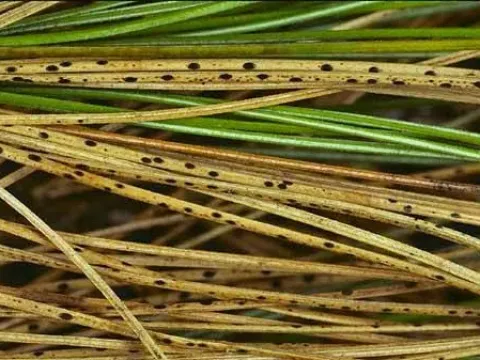
The first signs are needles turning reddish-brown or grayish-brown in early spring. These infected needles are usually brittle and eventually fall off, creating a thinned, unhealthy canopy.
Small black fruiting bodies (apothecia) appear on the surface of the needles or the bark of infected shoots. These are clear diagnostic markers visible upon close inspection of the damaged plant material.
Bark cankers may appear on young twigs, often characterized by resin exudation (bleeding) as the tree attempts to seal off the infection site from further fungal penetration.
- Reddish-brown needle discoloration in early spring.
- Small, distinct black apothecia on infected needles.
- Resin flow and sunken cankers on young branches.
- Premature and massive needle cast.
- Distortion and death of terminal leaders.
In advanced stages, parts of the crown appear dead and barren. The tree loses its typical dense look, branches become brittle, and the overall silhouette of the fir tree becomes ragged and unhealthy.
Sanitation is the most effective control measure. It is crucial to collect and burn fallen needles and prune infected branches to reduce the inoculum load in the plantation or garden.
In nurseries, maintaining adequate plant spacing is vital. Proper airflow reduces humidity around the foliage, which prevents the moisture-dependent fungus from establishing itself on the trees.
Chemical control involves the application of copper-based fungicides in the early spring, just before the growing season starts. This helps to protect healthy tissue from the spores released during snowmelt.
Maintaining high tree health through proper fertilization and watering increases the tree's natural resistance. Vigorous trees are better equipped to wall off localized infections and limit the spread of the fungus.
Sterilizing pruning tools after working with infected specimens is essential to prevent mechanical transmission of spores to healthy trees, especially when managing nurseries or high-value landscape plants.