
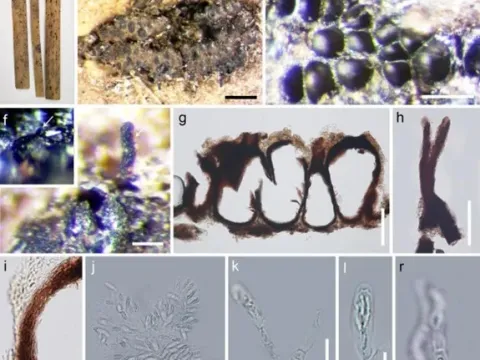
Phaeoacremonium aleophilum
Phaeoacremonium aleophilum
Phaeoacremonium aleophilum belongs to the kingdom Fungi, genus Phaeoacremonium. It is an ascomycete fungus that acts as one of the primary causal agents of grapevine trunk disease complexes.
What the section contains
Phaeoacremonium aleophilum
Microscopically, this phytopathogen is characterized by the production of hyaline or light brown conidiophores. The fungus's spores are primarily dispersed by air currents and rain splashes, entering the plant through fresh pruning wounds.
This pathogen often exists in symbiosis with other fungi that cause grapevine tissue degradation. Its presence can only be confirmed through laboratory methods, such as PCR diagnostics or culturing on specific growth media.
The fungus prefers to develop within the vascular system of the plant, slowly colonizing the xylem. This leads to a gradual disruption of water and nutrient transport, which negatively impacts the overall health of the vine.
Systematically, the species is included in the family Togniniaceae. It is crucial to understand that the pathogen is long-lived in the wood, making it difficult to eradicate with standard control methods.
The main host crop for this pathogen is the grapevine (Vitis vinifera). The fungus is a key agent in initiating the disease complex commonly known as esca and Petri disease.
Beyond grapevines, certain species of the genus Phaeoacremonium can infect various fruit trees, including olive and citrus crops, although P. aleophilum exhibits a strong tropism specifically for grapevines.
Inside the vine tissues, the fungus causes necrosis of the vascular bundles. The infection starts from pruning wounds and spreads throughout the length of the cordons and trunks of the grapevine.
Severe infection leads to the premature drying of individual branches, and in advanced cases, to the death of the entire grapevine. The damage also manifests as reduced berry quality and lower overall vineyard productivity.
The infection can accumulate in nurseries, spreading through infected propagation material, which makes early-stage control critical for the viticulture industry.
Symptoms of the infection manifest as chlorotic spots on leaves, which eventually become necrotic. These spots often display a characteristic "tiger-stripe" pattern, delimited by the leaf veins.
Cross-sections of older wood (cordons or trunks) reveal dark spots, streaks, or necrotic zones. This is a typical sign of xylem tissue degradation caused by the fungus's metabolic activity.
Sudden wilting of the vine or specific parts of it during the hot season is a typical symptom of the acute form of esca. This occurs due to the obstruction of vessels by fungal hyphae and metabolic products.
Berries may sometimes show small dark spots or pustules, which negatively affect the marketability of the harvest. However, symptoms are more frequently observed on the vegetative parts of the plant.
- Yellowing and drying of leaves in mid-summer.
- Presence of brown necrosis on cross-sections of woody tissue.
- Reduced growth vigor and general decline of the grapevine.
Prevention is the primary method of control. This includes mandatory disinfection of pruning tools with alcohol solutions or specialized antiseptics after working on each individual vine.
An important agrotechnical measure is the protection of wounds after pruning. Applying fungicide pastes or sealing paints to pruning cuts prevents fungal spores from entering the open tissues of the vine.
Establishing new vineyards should be done exclusively with certified virus-free propagation material. This minimizes the risk of introducing the infection to areas currently free from the pathogen.
Removing and burning all infected or withered vines is necessary to reduce the infectious pressure in the vineyard. Leaving infected wood on-site facilitates the active spread of spores.
At present, there are no highly effective curative fungicides capable of fully treating an already infected plant, which is why integrated sanitary measures remain the only effective way to suppress the disease.