
Oryctanthus
Oryctanthus
Description
How to identify
Oryctanthus is a genus of hemiparasitic plants belonging to the Loranthaceae family. These plants inhabit tropical and subtropical ecosystems, living as epiphytes on the branches of various woody hosts.
Belonging to the order Santalales, Oryctanthus species are defined as hemiparasites. This means that while they possess chlorophyll and can conduct photosynthesis, they rely on the host plant for water and essential minerals through specialized root structures.
The plants are characterized by succulent or leathery leaves and a complex root system that penetrates the host's bark and xylem via haustoria. These structures ensure a secure attachment and efficient nutrient uptake from the host tree.
Reproduction occurs through the production of berries. These fruits are highly attractive to birds, which facilitate the spread of seeds by depositing them onto the branches of other trees during feeding.
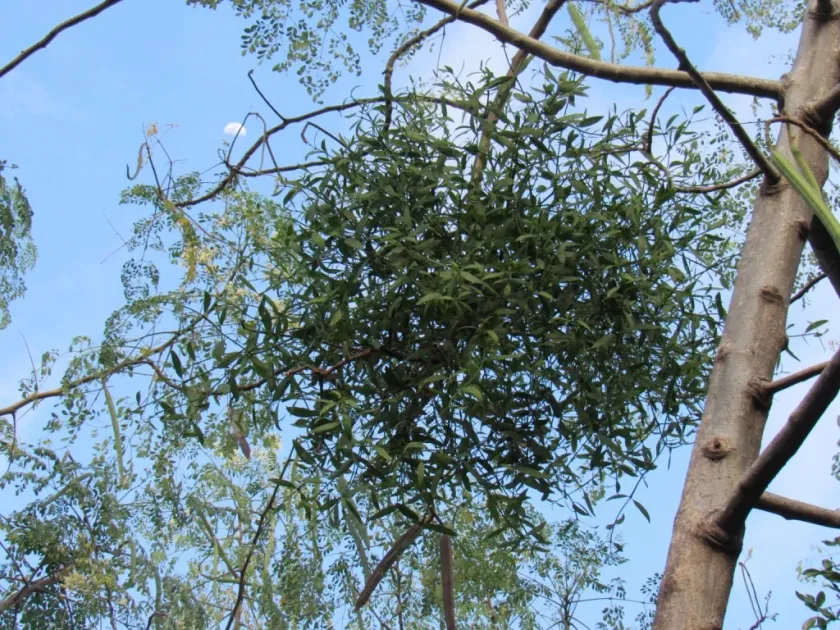
Identifying Oryctanthus often requires close inspection of the canopy. The parasitic foliage often contrasts with the host tree, making the parasite visible as an distinct, localized cluster of vegetation within the larger tree structure.
What it damages
Oryctanthus negatively impacts a wide range of tree species, including fruit trees and ornamental plantations. The parasite diverts water and nutrients that would otherwise support the host's growth and fruit development.
The penetration of haustoria into the host wood causes localized swelling, cracking, and structural weakening. This damage disrupts the tree's vascular system, potentially leading to the death of the distal parts of the infested branch.
Heavy infestations impose a significant weight burden on the branches. Combined with the weakened internal structure of the wood, this increases the risk of branch breakage during high winds or heavy fruit loads.
The long-term impact on the host includes reduced photosynthetic efficiency, stunted growth, lower crop yields, and, if not managed, the eventual decline and mortality of the entire tree.
Economic consequences for farmers include the cost of restorative pruning, the potential loss of high-value trees, and the necessity for constant surveillance to prevent the spread of the parasite across the entire orchard.
Signs of infestation
The most prominent sign of infestation is the presence of atypical leafy clusters within the tree canopy that do not match the morphological characteristics of the host plant's foliage.
Visible changes at the attachment point include bark irregularities, such as bumps or gall-like growths, caused by the host's physiological reaction to the parasite's invasive haustoria.
The appearance of berries or flowers that differ from the host's reproductive structures is a clear indicator of a parasitic presence. These features become more evident during the parasite’s specific reproductive season.
Declining health of individual branches, characterized by yellowing or premature leaf drop, is another common symptom that warrants closer investigation for parasitic attachment.
Observations of increased bird activity near specific branches during berry ripening can often lead to the discovery of the parasite, as birds frequently concentrate their feeding around these clusters.
Control measures
Mechanical removal is the primary and most effective method of control. Infested branches should be pruned at least 20-30 cm below the point of attachment to ensure the complete removal of the internal haustorial system.
Proper sanitation is critical: all removed parasitic material must be disposed of away from the orchard, preferably through burning, to prevent the remaining seeds from germinating and re-infecting the area.
Maintaining optimal tree health through balanced fertilization and irrigation improves the host's natural resilience. Healthy, well-managed trees are less susceptible to severe colonization by parasitic plants compared to stressed trees.
Regular orchard monitoring is essential. A standardized inspection schedule, particularly during the dormant season when the canopy is less dense, allows for the early detection and removal of small parasitic clusters.
If chemical control is considered, it must be highly targeted. Systemic herbicides are rarely effective against established parasites due to the complex vascular connection, making physical pruning the preferred standard for agricultural management.
Causes diseases · 1
Discussion
No discussions yet — be the first.