
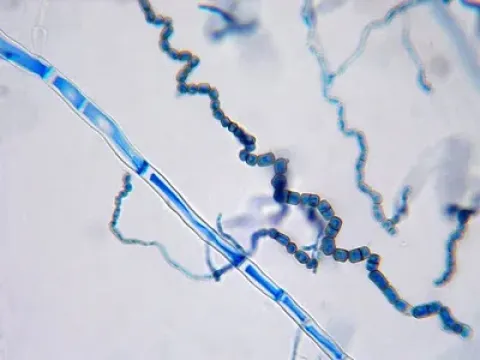
Neoscytalidium dimidiatum
Neoscytalidium dimidiatum
Neoscytalidium dimidiatum is a pathogenic fungus belonging to the phylum Ascomycota and the order Botryosphaeriales. Previously associated with the genus Scytalidium, it is now clearly identified as a distinct species.
What the section contains
Neoscytalidium dimidiatum
The fungus is highly polymorphic, producing different types of conidia. On laboratory media, it forms dark, olive-to-black colonies with a distinct velvety or powdery texture due to abundant spore production.
It is the anamorph of the fungus Nattrassia mangiferae. The mycelium is septate, branched, and possesses the ability to form arthroconidia, which are survival structures allowing the fungus to persist in adverse environmental conditions.
Taxonomically, it is recognized as a significant agent causing wood decay and necrosis in various woody plants. Molecular diagnostic methods are often required to differentiate it from other Botryosphaeriaceae species.
Besides plants, this fungus is known for being an opportunistic pathogen in humans, causing nail and skin infections, which requires strict hygiene protocols when working in fields or laboratories.
This fungus has a wide host range, primarily affecting tropical and subtropical fruit trees. Key hosts include mango, citrus species, fig, avocado, and grapevine.
The pathogen primarily affects the vascular system and bark of trees. It causes severe wood necrosis, resulting in the interruption of water and nutrient transport throughout the plant.
Infection often leads to branch dieback and, if not controlled, the death of the entire tree. Infected wood becomes weak, discolored, and ultimately structurally unsound.
Nurseries are particularly at risk, where the fungus can devastate young seedlings. The pathogen is often transmitted through infected nursery stock or contaminated agricultural tools used for pruning.
In addition to structural damage, the fungus can impact yield quality and quantity, causing premature leaf drop and the eventual loss of the tree's productive capacity.
The fungus thrives in warm to hot climates. The optimal temperature range for mycelial growth and sporulation is between +25°C and +35°C, making it highly active during summer months.
Dissemination occurs through air-borne conidia, splashing rain, and contaminated pruning equipment. Arthroconidia can persist in the soil and dead plant debris for extended periods, serving as a reservoir.
The disease cycle is often triggered or exacerbated by tree stress, such as drought or physical injuries. Once established, the fungus can spread continuously throughout the growing season.
In greenhouses or controlled irrigation environments, high humidity and warm temperatures allow the fungus to remain active and sporulate throughout the entire year.
Primary infections often originate from overwintered inoculum in dead wood or infected pruning stubs, which release spores at the start of the next growing cycle.
The most characteristic symptoms are dark, necrotic lesions on the bark, which may be accompanied by the exudation of gum (gummosis). The bark surface often turns black.
Cross-sections of infected branches show distinct internal wood discoloration, typically dark brown to black, representing the site of fungal colonization and tissue destruction.
Foliar symptoms include yellowing, wilting, and premature senescence. These symptoms occur because the fungus blocks xylem vessels, preventing the movement of water to the canopy.
Small, numerous black pycnidia (fruiting bodies) may appear on the surface of dead bark. Under humid conditions, these structures release masses of spores, which are visible to the naked eye.
As the infection progresses, branches become brittle and die back. In severe cases, the tree exhibits a sudden collapse, significantly affecting its overall health and viability.
Rigorous sanitation is the most effective management strategy. All infected branches must be pruned and burned immediately to remove the source of inoculum from the orchard.
Disinfecting pruning tools between every single cut is crucial. Solutions of ethanol, bleach, or specialized quaternary ammonium compounds are recommended for tool sterilization.
Minimize mechanical damage to trees to prevent entry points for the pathogen. All pruning cuts should be sealed with appropriate wound dressings or copper-based fungicides.
Applying copper-based fungicides as a preventative measure can help protect healthy tissue, especially following pruning or during periods of high environmental risk.
Maintaining optimal tree vigor through proper irrigation and nutrition helps the plant resist colonization. Severely infected trees should be removed and destroyed, including the root system, to prevent further spread.