
Nigrospora
Nigrospora
Description
How to identify
Nigrospora is a genus of anamorphic fungi within the Ascomycota division. While many species are known as saprotrophs, some act as significant plant pathogens causing substantial damage to various agricultural crops.
The fungus is easily identified by its characteristic jet-black, shiny, globular conidia. These spores are produced on short conidiophores and represent the primary diagnostic feature in laboratory identification.
As a pathogen, it thrives in moist environments, utilizing damaged plant tissues to infiltrate the host. Once inside, the mycelium spreads rapidly, degrading cellular structures and absorbing nutrients.
The taxonomic classification places it among the fungi that rely on high humidity for successful infection cycles. It exhibits remarkable persistence in soil and crop debris due to its resilient spore structure.
From an agronomic perspective, Nigrospora is viewed as an opportunistic pathogen that exploits crop vulnerability. Its ability to survive harsh conditions makes it a persistent challenge in integrated pest management.
What it damages
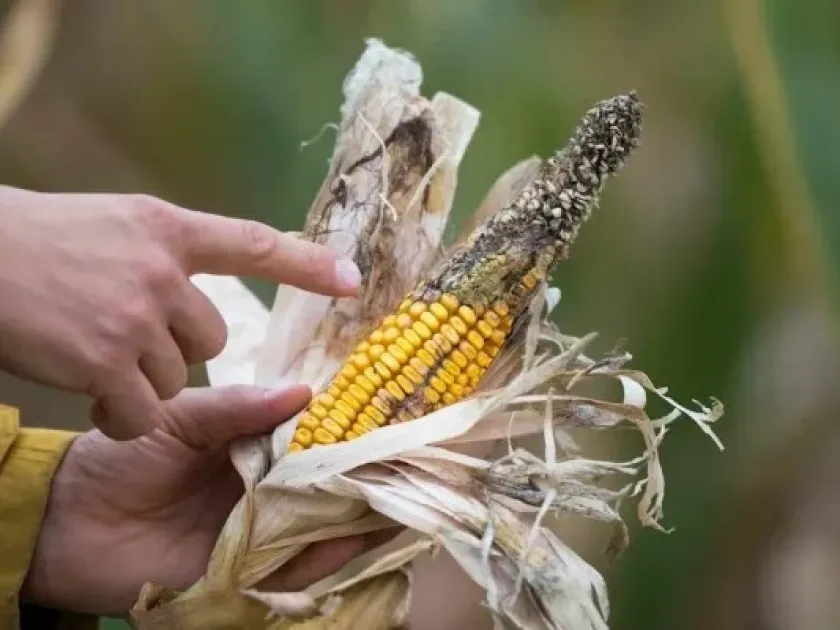
The primary crop affected by Nigrospora is maize (corn), where it is a well-known cause of ear rot. It also impacts sorghum, cotton, rice, and several species of forage grasses.
Infection results in the degradation of kernels, leading to significant weight loss and reduced grain quality. The nutritional value of the harvested crop is compromised, making it unsuitable for premium markets.
Seed germination rates are severely affected when seeds are infected, leading to poor crop establishment. This results in economic losses due to the necessity of replanting or lower density yields.
Mycotoxin production is a critical concern associated with this fungus. Contaminated grain can become toxic, restricting its use in livestock feed and posing risks to food safety protocols.
Furthermore, the pathogen predisposes the crop to other opportunistic infections, creating a synergistic effect that further diminishes overall plant vigor and field productivity.
When it appears
Infection cycles typically peak during the late stages of plant development, coinciding with seed maturation. Warm temperatures (25-30°C) coupled with high humidity are the primary drivers of outbreaks.
Rainy weather during the silking or ripening stage facilitates the dispersal of spores from the soil and crop residue to the plant's susceptible tissues, particularly the cob.
Storage conditions also influence the development of the fungus. If harvested grain is not dried appropriately, the pathogen can continue to grow post-harvest, leading to rot in storage facilities.
Insect activity plays a major role in the seasonal spread of Nigrospora. Boring insects create physical pathways for the fungus to bypass the natural defenses of the plant husk.
Drought stress can weaken plants, potentially making them more susceptible to late-season colonization if humidity spikes, demonstrating the fungus's ability to adapt to varying seasonal patterns.
Signs of infestation
The most visible symptom of a Nigrospora infection is a dense, black, powdery mass covering the infected cob. This mass consists of abundant fungal spores that easily rub off.
Kernels may appear dull, grey, or completely blackened. The infection often starts at the base of the cob, where moisture levels are typically higher, and spreads upward.
Internal cob tissue often shows signs of necrosis, turning brown or dark. In advanced stages, the entire ear structure becomes friable and loses its integrity under physical pressure.
- Black, sooty spores on the kernel surface.
- Discolored or brownish cob core.
- Premature drying of the husk.
- Soft and lightweight grains upon inspection.
Microscopic inspection reveals the typical dark, spherical conidia, which provide definitive proof of Nigrospora colonization during diagnostic testing.
Control measures
Effective management begins with proper crop rotation to break the cycle of infection. Avoiding continuous corn cultivation reduces the pathogen load in the field soil.
Deep plowing of crop residues is essential to bury the fungal inoculum, which otherwise remains viable on stalks and husks during the winter months.
Seed treatment with broad-spectrum fungicides is highly recommended. These treatments protect emerging seedlings from early-season soil-borne infections, ensuring a more uniform stand.
Integrated pest management programs focused on ear-damaging insects are crucial. Reducing pest pressure minimizes the entry points for the fungus, significantly lowering rot incidence.
Post-harvest handling is the final line of defense. Ensuring grain is dried to safe moisture levels (typically below 14%) and maintaining aerated storage units prevents the spread of the fungus after harvest.
Causes diseases · 3
Discussion
No discussions yet — be the first.