
Nigrospora panici
Nigrospora panici
Description
How to identify
Nigrospora panici is a fungal pathogen belonging to the Ascomycota division. It is recognized as a specific parasite of various cereal crops, including millet, maize, and sorghum.
The fungus is identifiable by the production of characteristic shiny, black conidia massed together on infected plant tissue. The mycelium penetrates the host cell walls, disrupting nutrient transport.
The lifecycle consists of asexual reproduction, where spores are wind-dispersed to neighboring plants or fields. The pathogen is highly opportunistic and thrives as a saprophyte on crop residues.
Identification in the field is usually confirmed by the dark, soot-like appearance of affected parts, which indicates the high concentration of fungal spores during the reproductive stage.
From an agronomical perspective, the presence of this fungus signifies a breakdown in plant resistance or an environment conducive to secondary fungal invasion.
What it damages
The primary hosts for Nigrospora panici are grasses within the Poaceae family. It causes severe damage to stalks, leaves, and grain-bearing organs of the plants.
By colonizing the vascular bundles, the fungus severely limits water and mineral uptake, leading to stunted plant growth and overall loss of vigor across the entire field.
The most significant impact is on grain quality; infected grains are often shriveled, discolored, and possess extremely low germination rates, rendering them useless for future planting.
Crop losses can be substantial, as the structural integrity of the stems is compromised, leading to stalk rot and premature lodging of the crops before harvest.
Economic damage is further compounded by the reduction in grain weight and the potential for secondary storage mold issues if the harvest is not properly dried.
When it appears
Infection typically occurs during the maturation phase of cereal crops. High humidity and warmth are the primary environmental triggers for the disease to spread rapidly.
Temperatures ranging from 20°C to 28°C, combined with prolonged periods of leaf wetness, create optimal conditions for conidial germination and host colonization.
Late-season rainfall is a common catalyst for widespread infection, as it provides the necessary moisture for the fungus to develop on the ripening panicles or cobs.
While the disease may be dormant during dry spells, the inoculum persists in the soil and on crop debris, ready to activate as soon as moisture conditions improve.
Monitoring the moisture levels within the crop canopy during the grain-filling stage is essential for timely intervention and disease management.
Signs of infestation
Infection is marked by the development of distinct black spots on leaves and stalks. As the disease progresses, these spots expand and become covered in a velvety black spore mass.
On stalks, the fungus causes internal discoloration and tissue softening. If the stem is cross-sectioned, dark areas are clearly visible, indicating the presence of fungal hyphae.
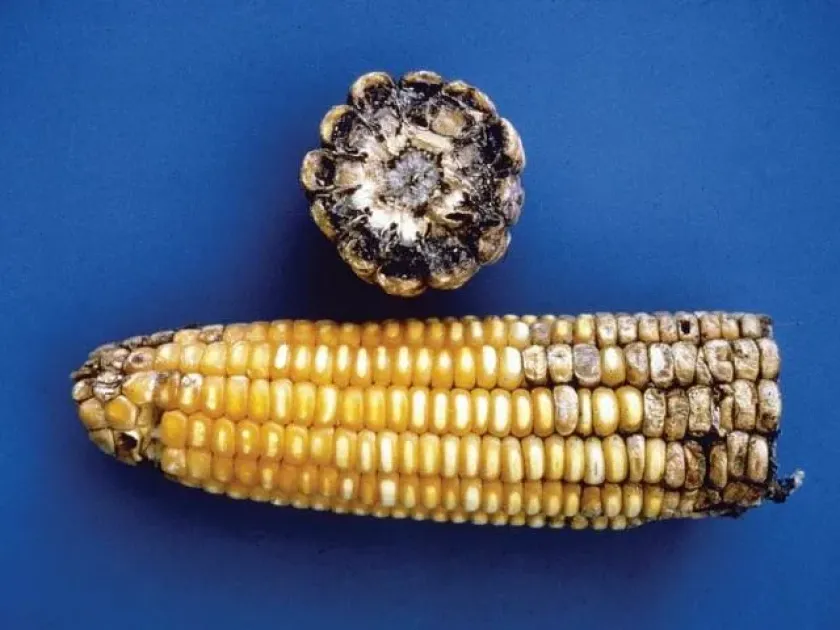
The grain-bearing parts of the plant, such as cobs or panicles, show signs of "blackening," where the kernels appear decayed and covered in fungal growth.
Affected plants often exhibit signs of chlorosis, followed by rapid necrosis of the leaves, which causes the entire crop to look prematurely aged and withered.
- Velvety black fungal colonies on plant tissue.
- Internal browning and decay of stalks.
- Shriveled, discolored, and light-weight kernels.
- Early yellowing and premature leaf senescence.
Control measures
The control strategy for Nigrospora panici focuses on breaking the pathogen’s lifecycle through robust cultural practices and integrated disease management.
Implementing a diverse crop rotation is critical to prevent the buildup of fungal spores in the soil, ensuring that non-host crops are grown between cereal cycles.
Effective sanitation, such as deep plowing to bury crop residues, prevents the fungus from overwintering and reduces the initial inoculum pressure for the next season.
Seed treatment with systemic fungicides is a standard preventive measure that protects seedlings from soil-borne pathogens during the critical early stages of growth.
Finally, maintaining optimal plant nutrition and avoiding nitrogen over-application helps build plant resilience, making crops more resistant to colonization by opportunistic fungi.
Discussion
No discussions yet — be the first.