
Neofusicoccum parvum
Neofusicoccum parvum
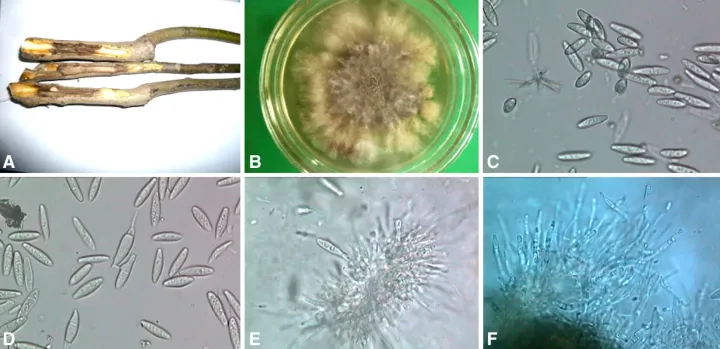
Description
How to identify
Neofusicoccum parvum is a pathogenic ascomycete fungus belonging to the Botryosphaeriaceae family. It is recognized as a major cause of dieback and canker diseases affecting a wide range of woody hosts, including vines and fruit trees globally.
The fungus exists primarily in the xylem vessels of the host plant, effectively clogging them and preventing the transport of water and nutrients. Its ability to remain latent in host tissues makes it a particularly elusive and dangerous pathogen to manage.
The life cycle of N. parvum involves the production of pycnidia, small black fruiting bodies that emerge from dead or dying bark. These structures release conidia during rainfall, which are then disseminated by wind or splashing water to infect susceptible tissues.
Diagnostic identification typically involves isolating the fungus from symptomatic wood tissue on culture media, followed by morphological observation or PCR-based molecular methods to confirm the species identity.
Due to its high environmental plasticity, the pathogen can infect plants across varying temperature ranges. It often thrives in temperate and Mediterranean climates where it causes significant long-term damage to perennial plantations.
What it damages
This pathogen is responsible for severe damage to the vascular systems of crops such as Vitis vinifera (grapevine) and various deciduous fruit trees. Infection leads to stunted growth, reduced photosynthetic activity, and eventual mortality of branches or the entire plant.
The symptoms are frequently manifested as vascular necrosis and cankers on trunks and cordons. As the internal tissue degrades, the plant loses its structural stability, which is especially critical in commercial orchards and vineyards where canopy management is essential.
On young saplings, the infection can cause rapid wilting and death, leading to economic losses due to the need for replanting entire blocks. The systemic nature of the colonization means that once established, the pathogen is extremely difficult to eliminate.
Beyond physical damage, the fungus produces secondary metabolites, including phytotoxins, which spread through the plant and cause distal tissue necrosis and foliar chlorosis. This weakens the host, making it susceptible to secondary pests and environmental stressors.
The cumulative impact of the disease results in decreased yield quality and quantity, requiring growers to invest in constant monitoring, pruning, and costly preventative chemical applications to maintain productivity.
Signs of infestation
Symptoms of N. parvum infection include the development of dark, sunken lesions on the bark and trunk. Upon cutting the wood, one typically observes V-shaped necrotic wedges or irregular brown staining, indicating deep vascular involvement.
Grapevines often exhibit characteristic tiger-stripe foliar symptoms, followed by sudden canopy collapse during the peak of the growing season. This sudden death is a result of the total failure of the water-conducting system under high transpiration demands.
On infected twigs and branches, one can find small, raised black dots, which are the pycnidia releasing masses of spores. This is a telltale sign that the plant is serving as an active reservoir for further disease spread within the plantation.
The internal tissue of heavily infected areas may become dry, brittle, and spongy. In some cases, the wood loses its hardness completely, and the outer layers of the bark may peel away to reveal the degraded, darkened vascular tissue underneath.
During spring, weeping or bleeding from pruning wounds can sometimes be observed, often associated with the early stages of fungal colonization. This sap exudation is a clear signal of tissue distress and pathogen activity.
Control measures
Effective management begins with rigorous sanitary practices, primarily the systematic removal and destruction of all symptomatic wood. Pruning should ideally be carried out during dry periods to reduce the risk of spore germination and infection of fresh wounds.
Sterilization of pruning tools between every single plant is a mandatory protocol to prevent the mechanical transmission of spores. Disinfectants such as ethanol or quaternary ammonium compounds are commonly used for this purpose.
Wound protection is crucial; immediately after pruning, exposed areas should be treated with fungicides or physical barrier pastes. These sealants minimize the chances of opportunistic fungal infections during the vulnerable period after pruning.
Chemical control focuses on preventative applications of systemic fungicides during periods of high humidity and spore release. While chemical methods do not cure established infections, they are effective at protecting healthy tissues from secondary spread.
Maintaining plant health through optimal irrigation and balanced fertilization helps the plant build natural defenses. Minimizing abiotic stress allows the host to better sequester infections and prolong the economic lifespan of the orchard or vineyard.
Discussion
No discussions yet — be the first.