
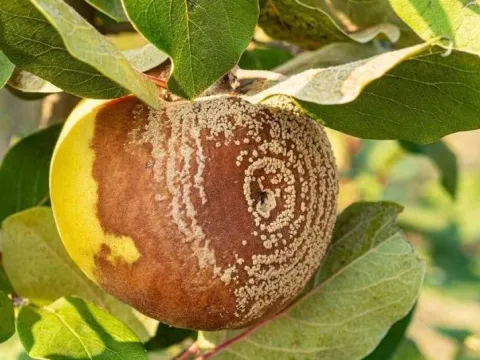
Apple Monilinia
Monilinia mali
The causative agent of this disease is the fungus Monilinia mali, which belongs to the kingdom Fungi and the genus Monilinia. It is a specialized ascomycete fungus known to cause severe damage to apple orchards, particularly in East Asian regions.
What the section contains
Apple Monilinia
The pathogen is highly host-specific, primarily infecting trees of the genus Malus. Unlike other related species, M. mali induces specific necrotic symptoms on vegetative tissues in addition to fruit rot.
The fungus overwinters as mycelium within infected tissues, such as mummified fruits left on branches or infected shoots. As spring approaches, the fungus resumes activity and produces conidia for primary infection.
The development of the disease is closely linked to environmental factors, especially humidity and temperature. Spores are dispersed by wind, raindrops, and insects, landing on young blossoms and leaves to initiate the infection process.
Proper identification is crucial to differentiate this pathogen from other fruit rot fungi, as M. mali requires specific management strategies tailored to its unique biological behavior.
The primary host is the domestic apple tree. The fungus causes significant damage not only to the fruits but also to young shoots and floral buds, severely impacting tree vigor.
The disease leads to the wilting of blossoms and young twigs, a symptom often mistaken for fire blight. If misidentified, the choice of management strategy will be ineffective.
Infected fruits become unsuitable for consumption or storage. These fruits eventually mummify and remain attached to the tree, serving as a permanent source of inoculum for subsequent seasons.
High economic losses occur in dense orchards where poor air circulation promotes high humidity levels, allowing the pathogen to spread rapidly between trees.
Without proper sanitation and management, the pathogen can destroy a significant portion of the harvest, making it a critical threat to commercial and home apple production.
Primary infection occurs in the spring during the apple blossoming stage. Cool and rainy weather during this period provides ideal conditions for spores to germinate on floral stigmas.
Throughout the summer, the infection spreads to developing fruitlets and mature fruits. The fruit becomes increasingly susceptible as it ripens, especially if the skin is compromised by insect feeding.
In the autumn, the fungus continues to colonize remaining fruits, preparing for the winter. This phase is characterized by the widespread formation of mummified fruits hanging from branches.
Disease spread can continue until the first hard frosts. The mummified fruits serve as safe harbors for the fungal mycelium throughout the entire winter season.
Secondary outbreaks are common during late-summer rains, when high moisture allows for easier fungal penetration into the softening tissues of the maturing apples.
The first symptom in spring is the sudden browning and wilting of blossoms. The flowers look scorched as if by fire, yet they remain firmly attached to the branch.
Dark necrotic lesions appear on young shoots, which spread rapidly and cause the tips of branches to die back. Gummosis is often observed at the site of infection.
Small brown spots appear on the fruits, which enlarge rapidly to cover the entire surface, turning the pulp into soft, watery rot.
Characteristically, greyish-yellow tufts of fungal spores form on the surface of the rotted fruit, arranged in distinct concentric circles.
Eventually, the fruits turn black and harden into stiff mummies, which persist on the tree during winter and act as the primary reservoir for the disease.
Sanitation is the cornerstone of control: removing and destroying all infected branches and mummified fruits is essential to reduce the inoculum level in the orchard.
Preventive copper-based fungicide applications should be made in the early spring, before bud break, to suppress overwintering fungal structures.
During the bloom and fruit-set stages, the use of systemic fungicides registered for pomaceous fruits is recommended to protect blossoms from initial fungal entry.
Integrated pest management, specifically targeting insects that damage fruit skin (such as codling moths), is vital, as wounds serve as primary entry points for the fungus.
Maintaining good orchard hygiene, including proper pruning for air circulation, balanced nutrition, and appropriate irrigation, increases the tree's natural resilience to infection.