
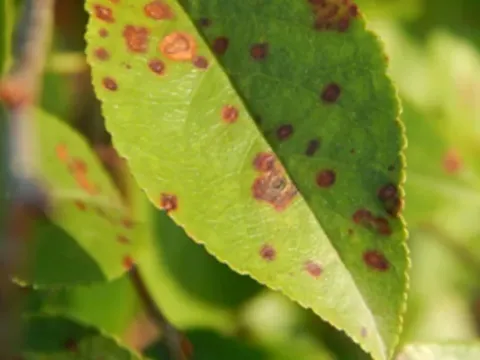
Apple phyllosticta leaf spot
Phyllosticta solitaria
Apple phyllosticta leaf spot is a fungal disease caused by the pathogen Phyllosticta solitaria. This fungus belongs to the Coelomycetes group and is known to cause necrotic lesions on apple tree foliage and fruits.
What the section contains
Apple phyllosticta leaf spot
The pathogen is classified under the kingdom Fungi, phylum Ascomycota. Its life cycle involves the formation of pycnidia, which are tiny flask-shaped fruiting bodies that release conidia under favorable humidity conditions.
Identification in the field is based on the appearance of characteristic spots. Laboratory diagnosis confirms the presence of the pathogen by observing these dark pycnidia embedded in the infected plant tissue under a microscope.
The fungus is highly adapted to temperate climates where it utilizes fallen leaves as a primary overwintering site. It produces spores that spread via rain splashes during the spring and summer months.
Correct identification is crucial for effective orchard management, as the symptoms can sometimes be confused with other common apple diseases like black rot or scab, requiring careful visual inspection.
The primary host for Phyllosticta solitaria is the apple tree (Malus domestica). The disease affects the orchard's overall productivity and vigor by impacting the tree's ability to photosynthesize effectively.
Leaf infection leads to premature defoliation, which causes significant stress to the tree. This loss of foliage reduces the energy reserves needed for fruit development and cold hardiness during the winter season.
Fruit damage is also a major concern, as it directly impacts marketability. Spots on the skin can turn into sunken lesions, making the fruit susceptible to secondary rot during storage and transit.
Young twigs can also become infected, resulting in the formation of cankers. These cankers can girdle the branches, leading to dieback of twigs and smaller limbs within the canopy.
Economic damage is substantial in poorly managed orchards. The cumulative effect of reduced fruit quality and lower yields necessitates integrated pest management strategies to keep infection levels low.
The disease cycle typically initiates in late spring when environmental conditions become warm and moist. Rain splashes move the spores from the ground-level litter onto the lower leaves of the apple tree.
Throughout the summer, multiple cycles of infection can occur. Each rainy period facilitates the spread of spores, potentially leading to an epidemic if the canopy is dense and airflow is poor.
The period of peak susceptibility for apple foliage is during the initial phases of leaf development. However, the disease remains active until the end of the growing season as long as moisture is available.
In autumn, the fungus prepares for winter dormancy. It continues to develop pycnidia within the lesions of fallen leaves, ensuring its survival until the next spring when the cycle begins anew.
Monitoring should be most intense from petal fall through mid-summer. Frequent scouting during this window allows growers to detect initial infections before they spread throughout the entire orchard.
The initial symptoms are small, round or irregular brown spots on the leaves. These spots are often surrounded by a darker purple or brown margin, which is a classic indicator of the disease.
The hallmark sign of Phyllosticta leaf spot is the presence of tiny, black, dot-like pycnidia clustered in the center of the lesions. These are often clearly visible with the aid of a hand lens.
In cases of severe infestation, the leaf tissue within the spots may die and crumble, leaving behind a shothole appearance. This further reduces the effective photosynthetic area of the leaf.
Symptoms on fruits manifest as dark, slightly depressed spots. Over time, these spots can expand, causing the skin to become tough and eventually leading to fruit deformity or secondary decay.
Infected twigs exhibit dark, sunken cankers. These lesions are often rough in texture and can be associated with localized bark cracking, which disrupts the vascular transport in the branch.
Sanitation is the cornerstone of control. Removing and destroying all fallen leaves at the end of the season drastically reduces the initial inoculum source for the following spring.
Proper pruning is essential to improve airflow and light penetration within the canopy. A well-pruned tree dries faster after rainfall, creating an environment that is less conducive to fungal spore germination.
Chemical control involves the application of appropriate fungicides. Timing is critical, with the first applications typically performed during the early growing season to protect developing leaves and fruit.
Copper-based fungicides are often used for prevention, while systemic fungicides are employed to manage active infections. Rotational use of different chemical classes helps prevent the development of resistance.
- Maintain tree health with balanced fertilization and adequate watering
- Ensure wide planting spacing to prevent dense, humid canopy environments
- Select resistant apple varieties whenever possible for new orchard establishment
- Sterilize pruning tools between trees to prevent the spread of spores