
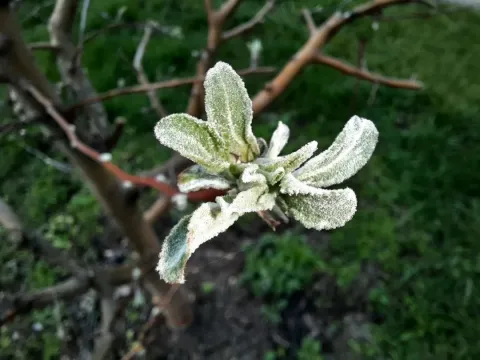
Apple powdery mildew
Podosphaera leucotricha
Apple powdery mildew is caused by the obligate parasitic fungus Podosphaera leucotricha. It is a highly specialized pathogen that exclusively affects members of the Rosaceae family, primarily focusing on domestic apple trees.
What the section contains
Apple powdery mildew
The fungus overwinters as mycelium within dormant fruit and leaf buds. As the trees break dormancy in the spring, the fungus becomes active and produces conidia, which spread via wind and rain to young, emerging tissues.
The disease cycle is rapid, allowing for multiple secondary infection cycles during a single growing season. This quick reproduction can lead to severe epidemics if environmental conditions remain favorable.
Optimal conditions for infection include temperatures between 18 and 25 degrees Celsius and high humidity levels. Unlike many other fungal diseases, it does not require free water on the leaves to infect, as the conidia are adapted to germinate in humid air.
Understanding the life cycle of Podosphaera leucotricha is crucial for orchard management. Because the fungus hides within the buds, preventative treatments starting at the green tip stage are vital for disease control.
The pathogen infects all aerial parts of the tree, including leaves, flowers, shoots, and fruits. The primary damage involves stunting, malformation, and the eventual necrosis of infected tissues.
Leaf infection leads to chlorosis, curling, and premature leaf drop, which significantly reduces the tree's photosynthetic capacity. This limits the tree's ability to produce energy for growth and fruit development.
Infected blossoms often fail to set fruit or produce malformed fruits. This can result in significant yield losses, especially if the infection hits during the critical early flowering stages.
Fruit symptoms include the development of a net-like russeting on the skin. This cosmetic damage reduces marketability and fruit shelf life, making the yield less profitable for commercial growers.
Cumulative damage over several years weakens the tree, making it more susceptible to environmental stress, winter injury, and other opportunistic pathogens, eventually reducing the overall orchard lifespan.
The most distinctive sign is the appearance of white to grayish powdery growth, which is composed of the fungus's mycelium and millions of conidia covering the leaf or shoot surface.
Infected shoots exhibit stunted growth and curled, distorted leaves. The foliage becomes rigid and brittle, often turning brown and dying back if the infection becomes severe.
Flower clusters are covered with the white fungal mats, causing the petals to become pale or misshapen. Stamens and pistils are often killed, preventing successful pollination.
As the season progresses, the white mycelial mats on shoots may turn brownish or gray, indicating the presence of overwintering structures known as chasmothecia.
On fruits, symptoms appear as white patches in early stages, which later develop into a rough, corky russeting pattern that persists until harvest time, effectively ruining the fruit surface.
Cultural management starts with pruning. Removing infected shoots, especially those that appear silvery or stunted in early spring, is critical to reducing the primary inoculum source.
Chemical control involves the use of systemic fungicides, particularly triazoles and strobilurins. Regular applications starting from the tight cluster stage and continuing through petal fall are necessary for adequate protection.
Rotating fungicides with different modes of action is mandatory to prevent the development of resistant strains of Podosphaera leucotricha, which has become a significant challenge in modern pomology.
Optimizing tree nutrition is a key management strategy. Excessive nitrogen fertilizers promote soft, succulent shoot growth that is highly attractive to the pathogen, so balanced nutrition is recommended.
Orchard layout matters; ensuring proper tree spacing and pruning for good air circulation reduces the micro-humidity within the canopy, creating a less hospitable environment for fungal development.