
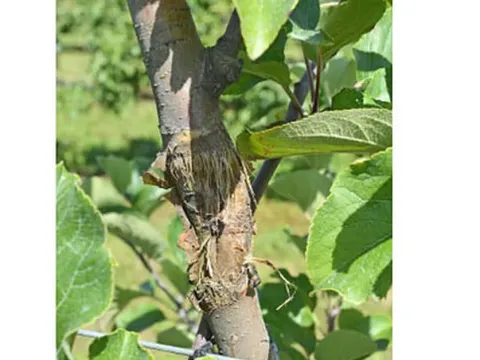
Apple bark canker
Pezicula malicorticus
Pezicula malicorticus is a fungal pathogen belonging to the order Helotiales and family Dermateaceae. It is widely recognized as the causative agent of apple bark canker and bull's eye rot in stored fruits.
What the section contains
Apple bark canker
The fungus is characterized by the formation of apothecia on infected bark tissues during the dormant season. These small, cup-shaped fruiting bodies serve as the primary source of inoculum in the spring.
Microscopically, the pathogen produces conidia in acervuli, which are disseminated by rain splash and wind. This mechanism allows the fungus to spread rapidly throughout an orchard under cool, wet conditions.
Pezicula malicorticus thrives in regions with high humidity and moderate temperatures. Its ability to act as both a parasite on living trees and a saprophyte on dead wood makes it persistent.
Taxonomically, the fungus is known to have a versatile life cycle, enabling it to survive for extended periods on wood debris, which is a major factor in its successful transmission.
The disease primarily impacts apple and pear trees, causing significant damage to branches, trunks, and fruit. In intensive orchards, it can lead to severe crop losses and tree decline.
Bark cankers disrupt the vascular system of the tree, leading to branch wilting, foliage necrosis, and in extreme cases, the total death of scaffold limbs or entire trees.
Fruit infection is a major concern, as the fungus causes bull's eye rot. This rot often develops during cold storage, rendering large batches of fruit unfit for market consumption.
Economic losses are compounded by the costs of orchard sanitation and the necessity of discarding infected produce. The disease is particularly damaging in high-density plantings.
Without intervention, the pathogen gradually colonizes the tree's canopy, resulting in reduced productivity and long-term damage to the tree's structural integrity.
Symptoms on bark typically appear as depressed, brown lesions. As the infection progresses, the bark cracks and separates from the underlying woody tissue, forming a distinct canker.
A characteristic sign of this infection is the formation of callus tissue around the margins of the canker, as the tree attempts to wall off the invading fungal mycelium.
Under humid conditions, small fruiting bodies (apothecia or acervuli) become visible on the surface of the canker, appearing as tiny cream-colored or brown spots.
Infected fruit exhibits brown, sunken lesions with a bull's eye pattern formed by concentric circles. The center of the lesion is often pale, while the edges remain darker.
Internally, affected fruit tissues become soft and bitter. Unlike some other rots, the texture remains somewhat firm, but the bitter taste is a diagnostic feature of bull's eye rot.
Sanitation is the cornerstone of control. All infected branches must be pruned away, ideally during dry weather, and removed from the orchard or burned to reduce inoculum.
Protecting pruning wounds is essential. Applying wound dressings or fungicide-based pastes prevents the entry of spores into exposed wood during the vulnerable healing period.
Chemical control programs involving copper-based sprays or systemic fungicides should be implemented during the growing season, specifically targeting periods of high rainfall.
Effective orchard management, including thinning the canopy for better airflow and maintaining optimal tree nutrition, helps create conditions unfavorable for fungal proliferation.
- Regular monitoring of the orchard for early signs of bark cankers.
- Rigorous disinfection of pruning tools to prevent cross-contamination.
- Post-harvest treatments and cooling to slow down rot development in storage.