
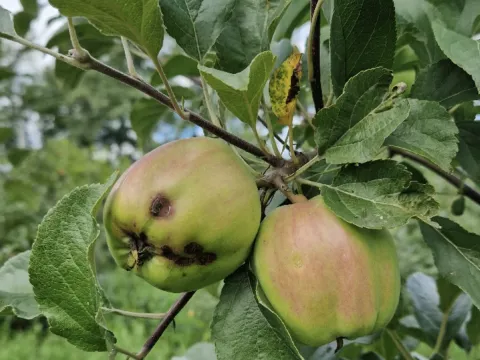
Apple scab
Spilocaea pomi
The apple scab pathogen is the ascomycete fungus Venturia inaequalis, which reproduces via its anamorph stage known as Spilocaea pomi. This pathogen thrives in temperate climates with high moisture.
What the section contains
Apple scab
The fungus overwinters primarily in infected fallen leaves on the orchard floor. In the spring, during wet periods, these leaves release ascospores that travel via wind or rain splash to infect new green tissue.
After the initial infection, the fungus produces conidia, the asexual spores. These spores facilitate secondary cycles of infection, allowing the disease to spread rapidly throughout the summer months.
Temperature and leaf wetness duration are critical factors for development. The incubation period typically lasts between 8 and 16 days, depending on environmental conditions during the wetting period.
Mycelial growth occurs under the plant's cuticle, which protects the fungus from environmental stresses and some pesticides. Once the cuticle is breached, the characteristic spots and spore-bearing structures appear.
Apple scab primarily attacks the leaves, blossoms, and fruits of apple trees. While it rarely kills the tree, the economic loss resulting from fruit damage is substantial.
Fruit infection causes dark, corky spots and deep cracks. Severely affected fruit becomes deformed and is typically rejected for fresh market sale, leading to significant financial losses.
When leaves are heavily infected, photosynthetic capacity is drastically reduced. This leads to poor tree vigor, reduced fruit size, and a weakened ability to set fruit buds for the following season.
Premature leaf drop often follows severe outbreaks. This defoliation makes trees more susceptible to winter injury and general decline over several years of repeated infection.
Susceptible blossoms and young pedicels may drop shortly after infection, resulting in immediate yield reduction even before the fruit reaches maturity.
Initial symptoms on leaves appear as dull, olive-green, velvety spots. These spots are usually found on the underside of the leaf or near the leaf veins in the early stages.
On fruits, lesions are dark, circular, and clearly defined. As the fruit grows, the area affected by the scab becomes leathery or cracked due to the loss of skin elasticity.
Lesions may also appear on the stems and leaf stalks. In some cultivars, the infection causes the fruit to become lopsided or stunted as the fungus inhibits normal tissue expansion.
The velvety texture of the spots is a key feature, caused by the production of conidia. These spots may darken and expand as the season progresses and the fungus matures.
- Olive-green spots on foliage.
- Dark, corky lesions on apple skins.
- Cracking and deformity of the fruit.
- Premature defoliation of the tree.
Sanitation is a vital first step in management. Removing or composting leaf litter in the autumn reduces the amount of overwintering inoculum present in the orchard.
Pruning is essential to open the tree canopy. Improved air circulation helps leaves dry more quickly after rain or dew, which is crucial for preventing spore germination.
A well-timed fungicide program is the standard approach for commercial production. Treatments must be applied during the primary infection season, often coinciding with bud break and bloom.
Planting resistant apple cultivars is the most effective long-term strategy to minimize disease pressure and reduce the need for synthetic chemical applications.
Monitoring weather patterns and using disease forecasting models helps growers time their fungicide applications accurately, ensuring protection during high-risk infection periods.